Every day in the Coachella Valley, hundreds of cameras perched near major intersections capture images of tens of thousands of passing cars, storing data on each car’s license plate, make and model. One person alone could have their car photographed dozens of times a day.
That reality is a relatively new one. Known as automated license plate readers, these cameras — a tool used by police to catch criminals that some criticize as a step toward mass surveillance — have rapidly expanded in the valley and nationwide in the past five years.

More than 700 ALPR cameras are currently operating in the valley, according to figures from local cities and police. The Riverside County Sheriff’s Department has the most, with 564 across four of its contract cities and in unincorporated valley areas.
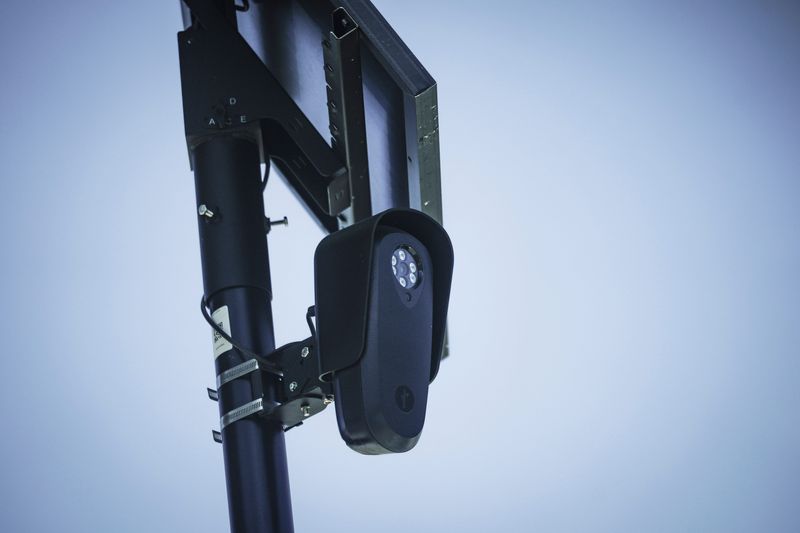
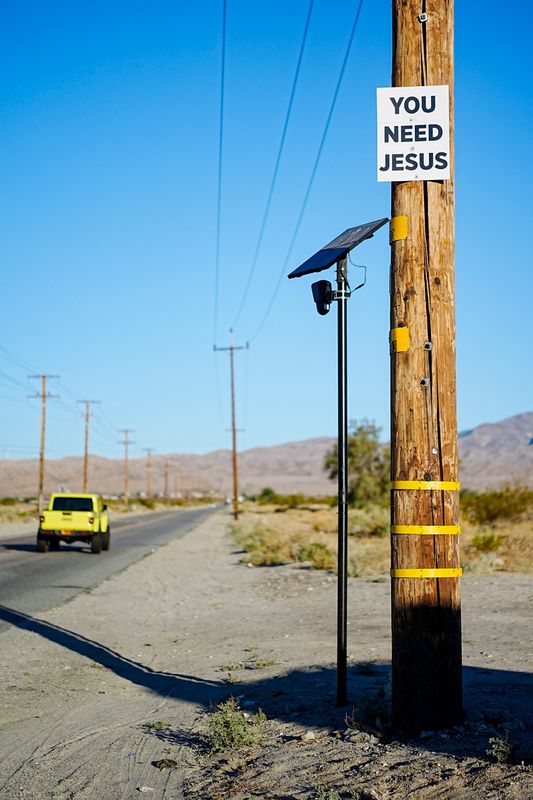
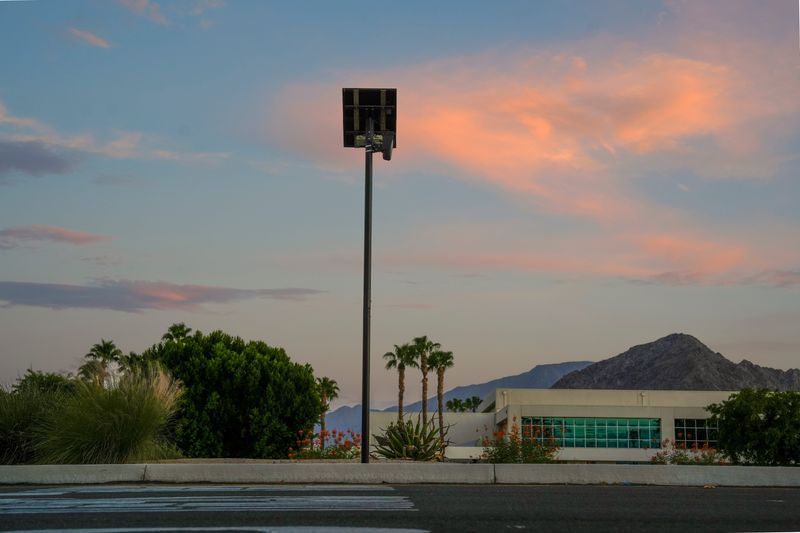
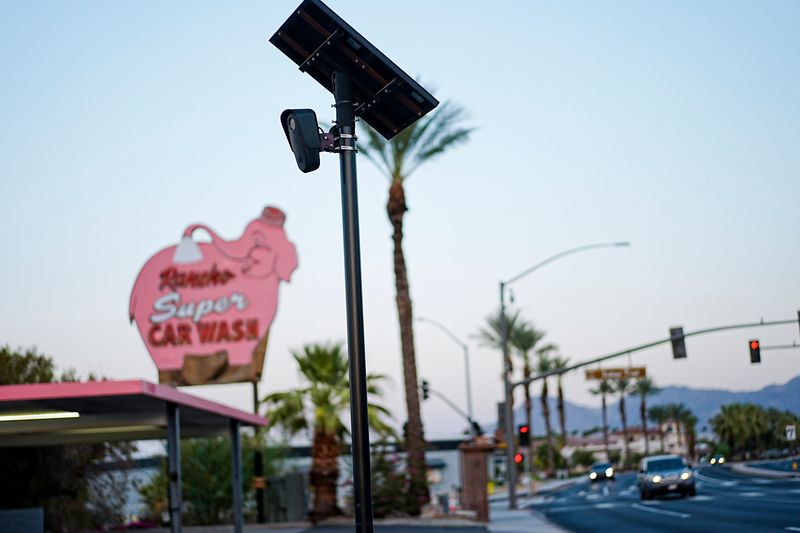
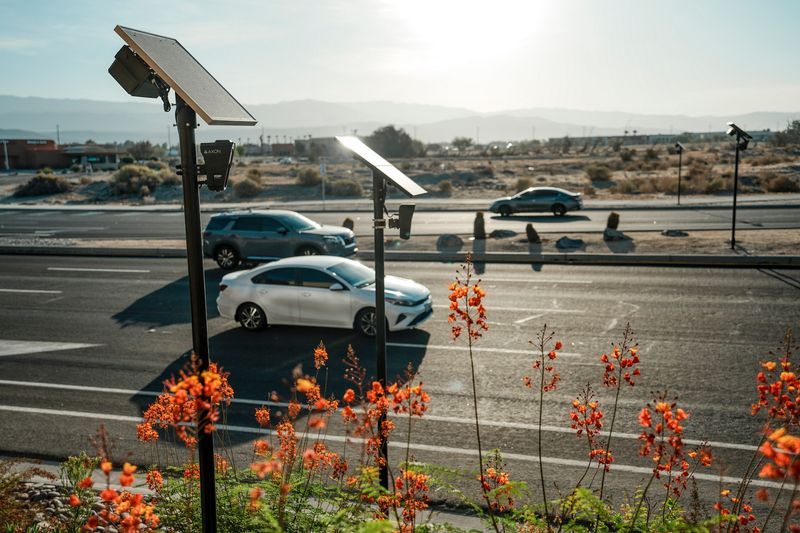
The valley’s ALPR cameras, which are mainly made by a company known as Flock Safety, can be easy to miss while driving around the valley, where many sit inconspicuously near the region’s busiest intersections.
While police and many elected officials say the tools are crucial for catching criminals across the dozens of jurisdictions in Riverside County and beyond, the rising number of cameras has raised concerns from some residents and civil rights advocates.
They say the rapid expansion of Flock cameras — which now operate in more than 6,000 communities nationwide — amounts to a nationwide surveillance system that can be abused for federal immigration enforcement, out-of-state abortion investigations and other uses.
Law enforcement agencies say there are appropriate guardrails in place for oversight, with the data retained for only 30 days unless it’s relevant to a specific investigation, and the cameras don’t include facial recognition. They do, however, record each car’s visible characteristics, such as its color and any bike racks or trailers, in addition to the license plate. California state law generally prohibits the data from being shared out-of-state, though some police agencies have violated that rule in the past, including three in the valley: the sheriff’s department and the Palm Springs and Desert Hot Springs police departments.
The debate over the ALPR cameras has prompted some cities, from New York to Washington, to recently deactivate the cameras or cancel contracts with Flock. So far, cities in the valley have supported the expansion of ALPRs, with one exception: Coachella.
Despite pushback in some places, the cameras are part of a growing effort by local officials to use new technologies to help police with investigations. For example, several valley cities have recently discussed allowing the sheriff’s department to deploy drones to aid in responding to emergencies, with the Palm Springs Police Department already using them.
Based on its population, the Coachella Valley has a high number of ALPR cameras. For example, the eight valley cities with the cameras have a combined population of roughly 341,000 and a total of 575 ALPRs. That’s more than double the number operated by the Los Angeles Police Department, which has 248 of the pole-mounted cameras for a city with a population of over 3.86 million.
Cities and police agencies in the valley declined to share lists of the cameras’ specific locations, with the Riverside County Sheriff’s Department citing a state law that allows it to withhold from the public “intelligence information or security procedures.”
Police say Flock cameras help them find criminals
Since the ALPR cameras expanded into the valley, law enforcement officials say they’ve helped them to make hundreds of arrests and recover millions of dollars in stolen property.
For example, in just the first quarter of 2026, sheriff’s deputies in Palm Desert used the technology to assist with 245 arrests and to recover about $1.27 million in stolen property, according to city officials.
The cameras can play a crucial role in investigations when time is of the essence. In mid-July, the Desert Hot Springs Police Department — which has 23 Flock cameras — used the system to locate and arrest a man suspected in a hit-and-run that injured a pedestrian. During their investigation, police found the man had bought bus and train tickets to apparently evade arrest.
“This case demonstrates how the Desert Hot Springs Police Department’s investment in Flock Safety ALPR cameras, combined with diligent investigative work, enabled investigators to quickly identify the suspect, prevent his escape, and hold him accountable,” the department said in a social media post.
Nearby, the Palm Springs Police Department has 55 ALPR cameras, as well as 169 additional closed-circuit TV cameras that store live footage for 30 days but don’t capture license plate info. Both of the camera systems are provided by Flock, though only the ALPR data is shared with other law enforcement agencies.
Police in Palm Springs have recently used the cameras for a wide range of investigations, including homicides, burglaries and hit-and-runs, according to a public search audit available on the department’s transparency portal.
Police departments also frequently share the records with other law enforcement agencies in California to aid their investigations. Audit logs obtained via a public records request show the Riverside County Sheriff’s Department has shared ALPR data with more than 250 law enforcement agencies across California so far this year.
The expansion of ALPR cameras in the valley has often occurred piecemeal, with many city councils approving a lower initial number of cameras, then later agreeing to add more. Palm Desert, for example, started with 49 ALPR cameras, and it now has 148.
“To this point, at least in Palm Desert, (the Flock cameras) delivered what they’ve promised,” Mayor Evan Trubee told The Desert Sun. He noted property crimes such as car and retail thefts have dipped in recent years, crediting the cameras for having a role in the trend.
“Word is out among criminals that crime doesn’t pay in Palm Desert,” he said.
Trubee said he understands the concerns over potential misuse of the ALPR data, but added he hasn’t learned of any instances of inappropriate uses in Palm Desert.
“I trust our sheriffs not to abuse it,” Trubee said.
Palm Desert also plans to soon install nine live-view cameras along El Paseo, similar to the CCTV cameras in Palm Springs. They’ll be used as a pilot program, allowing police to watch videos and potentially identify suspects in the case of a theft or another crime.
While the council unanimously approved the test run, Trubee was more wary of the live-view cameras, saying they present more opportunities for abuse.
“Tracking a license plate is a whole different methodology than tracking human beings,” Trubee said. “Then, you start getting into facial recognition. To me, that’s just a bit more invasive.”
It’s unclear if Palm Desert or other valley cities will continue to expand the ALPR cameras. Trubee noted the city’s growing northern region, where more housing and retail is planned, could eventually need more cameras.
“But at the current level, 148 is plenty,” he said.
Flock cameras raise privacy concerns throughout the country
As the use of Flock cameras has spread throughout the Coachella Valley and beyond, some residents and civil rights groups have begun to question the new use of mass surveillance by law enforcement.
The American Civil Liberties Union has heavily criticized automated license plate readers for the ability they give law enforcement to view and store personal data for individuals who haven’t been involved in a crime.
“Our position is so long as police agencies have access to this technology at all, it’s vulnerable to misuse, both by internal users and external users, and that compromises the rights, privacy and safety of everyday people going about their daily business,” said Ali Rubinfeld, a staff attorney with the ACLU Foundation of Southern California.
“The only real way to prevent this kind of ‘mission creep’ is to just not use this technology at all,” she added, noting there’s been growing pushback in other Southern California cities like Costa Mesa.
One of the biggest concerns among residents and advocates is that local law enforcement agencies may share their data with federal agencies, like U.S. Immigration and Customs Enforcement.
A 2015 law called Senate Bill 34 bars California law enforcement from sharing data outside of the state. However, an investigation last year by CalMatters found local departments violated the state law more than 100 times in May 2025 alone by sharing data with ICE and Border Patrol agents.
The CalMatters investigation found the Riverside County Sheriff’s Department had searched its ALPR database for the Department of Homeland Security. However, the sheriff’s department told CalMatters it shared license plate data with federal agencies only for criminal investigations, not immigration enforcement.
Attorney General Rob Bonta has issued guidance on how police can comply with state law, but concerns remain over the departments’ adherence to it.
In 2023, the Coachella City Council voted 3-2 to reject a proposal from the sheriff’s department to install 70 license plate readers within the city. At the time, some councilmembers voiced disapproval of the potential for the data to be shared with immigration officials, as well as Sheriff Chad Bianco’s alignment with a political group headed by Florida Gov. Ron DeSantis advocating for more immigration enforcement at the border. Bianco is also a supporter of President Donald Trump, who has led the recent more aggressive immigration enforcement.
“This idea of having a comprehensive record of everyone’s comings and goings, it’s — it feels weird to me. It feels Big Brother,” then-mayor Steven Hernandez said during the meeting, referring to the totalitarian leader in the novel “1984” by George Orwell.
Desert Hot Springs homeowner Joshua Handrich shares those concerns over data protection. Over the last few months, he has been tracking the city police department’s use of Flock cameras and has advocated for a public reckoning on their use.
He is part of a growing number of Coachella Valley residents who have pushed back on the notion that Flock cameras have a significant impact on police’s ability to solve crimes. He notes that Desert Hot Springs’ crime rate had been falling before Flock cameras were introduced to the city.
“I think it’s likely a violation of rights,” he said in a phone interview. “Even if it isn’t, I think departments are giving credit where credit isn’t due.”
Communities adapt to new technology
As Flock cameras have spread throughout the Coachella Valley, there has been no concerted effort by local residents to prevent their use by law enforcement. Still, some communities across the country have been canceling or rejecting Flock contracts, while vigilantes have also taken to vandalizing the cameras so they won’t work.
In mid-July the Los Angeles Police Department suspended its use of the city’s 138 Flock cameras over concerns over how the data is shared with other agencies. The department is now renegotiating its deal with Flock to add more protections to the contract, the Los Angeles Times reported.
The disagreement highlights the challenges communities face as automated license plate readers become more commonplace.
Partially in response to growing uneasiness over Flock cameras, the Palm Springs Police Department announced on Wednesday, July 30 it would soon establish a citizens oversight board for its Flock system. The seven-member board would have access to in-depth audits of the department’s Flock data tools and would provide community updates on police practices.
“Because there’s such an inconsistency across the country with this technology, we want to build something that’s a framework that could be modeled nationwide,” said Lt. William Hutchinson, who oversees the department’s Real Time Operations Center, which uses license plate and drone technology. “We don’t want to shut (ALPRs) down and go into the stone age of policing.”
Although law enforcement says the cameras help solve crimes and find missing persons, the mass collection of data from people not involved in a crime has become a rising concern.
Critics like Handrich believe law enforcement’s rapid expansion of Flock has not been adequately vetted by the public. He hopes more people will become aware of the ALPR expansion and that more community oversight and discussion will take place across the Coachella Valley and beyond.
“Half of them think they’re traffic cameras,” he said of the community’s impression of automated license plate readers. “The more you educate people, the more people tend to be against it.”
(This story was updated with new information.)
Tom Coulter covers local government and politics. Reach him at thomas.coulter@desertsun.com. Sam Morgen covers local government for The Desert Sun. Reach him at smorgen@gannett.com.
This article originally appeared on Palm Springs Desert Sun: 700 Flock cameras watch desert drivers, fuel privacy debate | Exclusive
Reporting by Tom Coulter and Sam Morgen, Palm Springs Desert Sun / Palm Springs Desert Sun
USA TODAY Network via Reuters Connect
By Tom Coulter and Sam Morgen, Palm Springs Desert Sun | USA TODAY Network