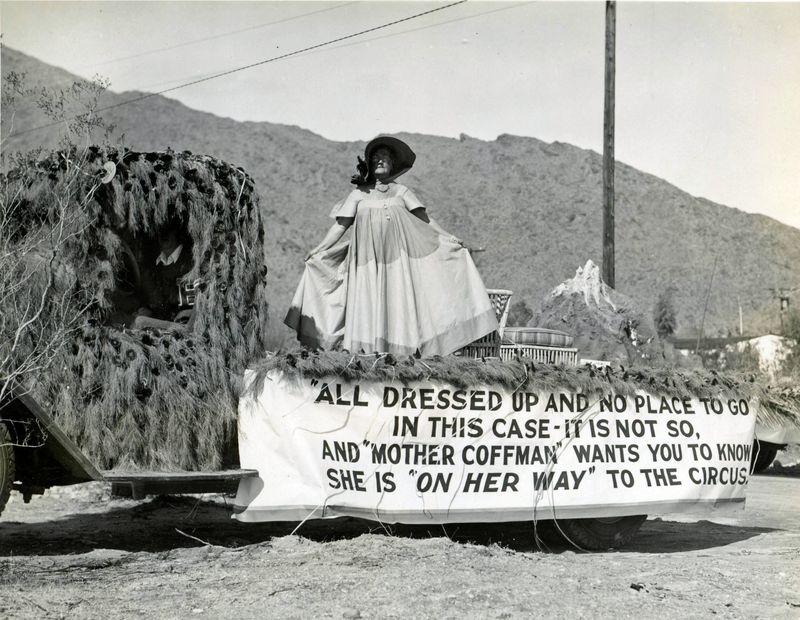
Across the country, and probably across the world, women have been the unsung heroes in the development of their communities. The woman credited as the “Mother” of Palm Springs and the driving force behind the growth of tourism is Nellie Coffman. Her tenacity and resourcefulness are legendary. Coffman gently and sometimes not so gently nurtured the advancement of the little village that would eventually become a resort destination known throughout the world.
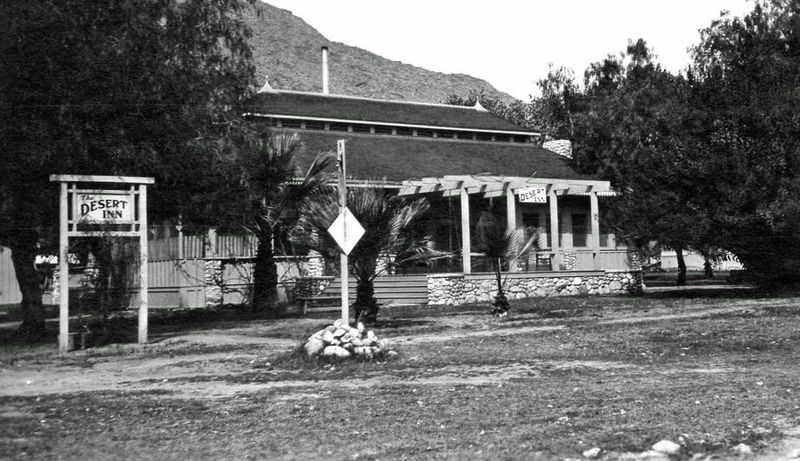
In the fall of 1909, 42-year-old Nellie Coffman arrived in Palm Springs with her husband, Dr. Harry Coffman, and her two sons. The Coffmans’ plan was to open a sanatorium for “lungers” who came to the desert to try to regain their health. The property they purchased, which was less than 2 acres, was located across the street from the Palm Springs Hotel at Main Street (Palm Canyon) and Spring (Tahquitz Canyon) Dr. Coffman added tent houses with wooden floors and ramadas, providing shady, relaxing places for his patients to mix and mingle.

In the early years of The Desert Inn, Dr. Coffman treated his patients, and Nellie Coffman pampered her guests. She prepared meals and set the tables for dinner with all the special touches. Her son George would take the buckboard wagon out to the train station and pick up their guests. The guests were welcomed with fresh flowers, jams, jellies, pickles, and relish set out on every table. After their meal, they were escorted to their accommodations, where their beds were made with crisp linens.
In 1914, Dr. Coffman and Nellie went their separate ways. He moved to the eastern end of the Coachella Valley and continued treating patients with respiratory illnesses, and she transformed the sanatorium into a first-class hotel. She was quoted as saying, “With good food, clean lodgings, and warm hospitality, the roads and automobiles will come.”
Both of Coffman’s sons served in World War I, and she was left to run the hotel alone. During that time, Dr. J.J. Kocher arrived and opened a pharmacy across from The Desert Inn. Kocher and Coffman worked together to establish the Board of Trade, a precursor to the Chamber of Commerce and the Welfare and Friendly Aid Society. Their efforts organized the business community and provided for those who were less fortunate and in need of help.
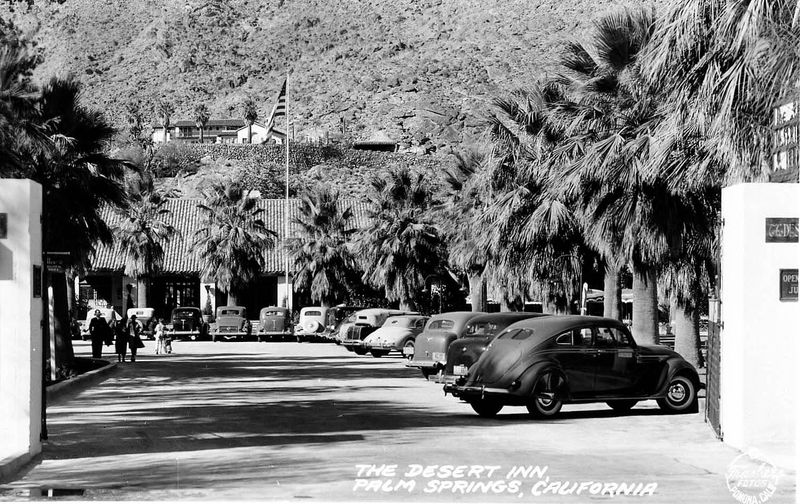
When the war ended in 1918, Coffman’s sons returned, and with their help, The Desert Inn continued to change and grow. The hotel grew to encompass 27 acres on the desert floor and 8 acres on the mountainside. Together, they created a highly successful operation. Many of the visitors who had come during the war, when travel to Europe was impossible, fell in love with the warm winters and Coffman’s hospitality and returned year after year, often spending the entire winter season.
During the post-war financial boom of the ’20s, a guest named Thomas O’Donnell offered Coffman a business arrangement: he would lend her money to renovate and expand The Desert Inn if she would allow him to build his home on the side of the mountain overlooking her hotel. He also wanted a private golf course nestled in the protective shadow of Mt. San Jacinto. The expansion of The Desert Inn featured extensive gardens and Palm Springs’ first swimming pool.
Palm Springs was affected by the economic downturn of the Great Depression, but its experience differed because it was a resort destination for wealthy visitors and moviemakers, a business that flourished during the 1930s.
Nellie Coffman was one of the locals who headed the campaign for Palm Springs to become a city. After much discussion and debate, the city of Palm Springs was incorporated in 1938. Nellie Coffman tightened her belt and made it through the war years, which were an economic whirlwind for the city.
The Desert Inn lost many of its employees to the war effort, and as more servicemen and their families came to town, the city saw a shift from laid-back luxury to a much more transient clientele. The town was flooded with those involved in the war effort. The Desert Inn extended its hospitality to servicemen, opening its pool to those who were on leave or working on the new airport runway.
At the age of 80, Nellie Coffman successfully led a fight to prevent a cement manufacturing plant from locating in Palm Springs. She said that it would pollute the air, a fear she expressed long before it was fashionable to do so. Her last public appearance was on Nov. 1, 1947, when she was honored by the people of the city of Palm Springs for her accomplishments for the community.
Nellie Norton Coffman died on June 10, 1950, at 82 years of age, and her death sent shockwaves of sadness throughout the community.
This article originally appeared on Palm Springs Desert Sun: Nellie Coffman, the ‘mother’ of Palm Springs
Reporting by Renee Brown, Special to The Desert Sun / Palm Springs Desert Sun
USA TODAY Network via Reuters Connect
By Renee Brown, Special to The Desert Sun | USA TODAY Network