

By Kathleen Knowles

There is much confusion today as to the difference between Service Dogs, Emotional Support Animals, and Certified Therapy Pets. There are rules for each of these canines (and other therapy animals) that assist those in need. Unfortunately, there are some out there abusing it and making it harder for people who depend on these animals to navigate everyday life.
To understand the difference between these and the importance they serve in the lives of those who need them, I’ve listed an explanation of each below.

Certified Therapy Pets
Certified Therapy Pets normally are dogs but can be other species of animals as well. Cats and rabbits are two animals that are certified by some organizations. However, therapy pets are not limited to those species by other recognized organizations.
Despite what some people will tell you, they are not legally defined by Federal Law. Nor are they protected by the Americans with Disabilities Act of 1990. They, as well as their owner-handler, must pass the evaluations of the organization. Certification normally includes behavior, health, and cleanliness guidelines. With the permission of the facility, (such as hospitals, nursing homes and sometimes in schools) their main job is to provide emotional and physical support.
They do not have the legal right to be in all public places, unlike Service Dogs. Nor are they allowed to accompany a disabled owner on commercial flights. No dog or other animal is a therapy pet unless certified by an accepted organization for therapy pets.
Emotional Support Animals
Emotional Support Animals require no training. They simply provide their owner with companionship and comfort to those with emotional or psychological problems. They may accompany a disabled person on a commercial flight, but proof must be provided if required by the airline. (Air Carrier Access Act) Also, Emotional Support Animals are protected (Fair Housing Act) and with verification that the owner has a disability, they must be allowed into housing which would not otherwise allow dogs.
Service Dogs
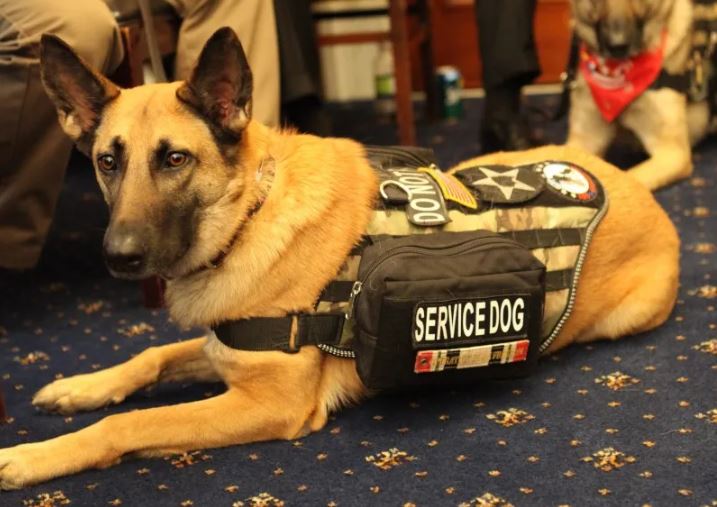
The Americans with Disabilities Act defines a Service Animal as a dog. No other animal is protected by the Act. They are trained to perform tasks a disabled person is no longer able to do. They go through extensive training before being placed with the individual they will assist.
Service dogs duties may include assisting the blind with everyday navigation as well as other tasks. They also alert the hard of hearing (or deaf) of sounds such as a ringing doorbell. They are capable of pulling wheelchairs as well as retrieving items for their disabled partner. Service dogs can detect an oncoming seizure. Another important task is helping those with a psychiatric disability up to and including stopping them from harming themselves. These are but a few of the tasks they can perform but are not limited to. Emotional support, companionship or comfort are not part of the Service Dog definition.
Service Dogs are specifically trained to assist one person. They are not subject to pet housing rules. They cannot be refused. Nor are they limited to size, weight or breed restrictions the housing unit may impose on pets. Service Dogs have a legal right to be in all public areas and are allowed on commercial airlines with the person they are assisting.
Remember, there are disabled people in society who depend on these dogs and animals to assist them in their daily lives. It is important that we all respect the use of Service Dogs, Emotional Support Animals, and Certified Therapy Pets. Do not make it harder for them by declaring your pet as a Therapy Pet or Emotional Support Animal just so your pet can accompany you somewhere they are not supposed to be.
Kathleen Knowles
Contributing Writer
