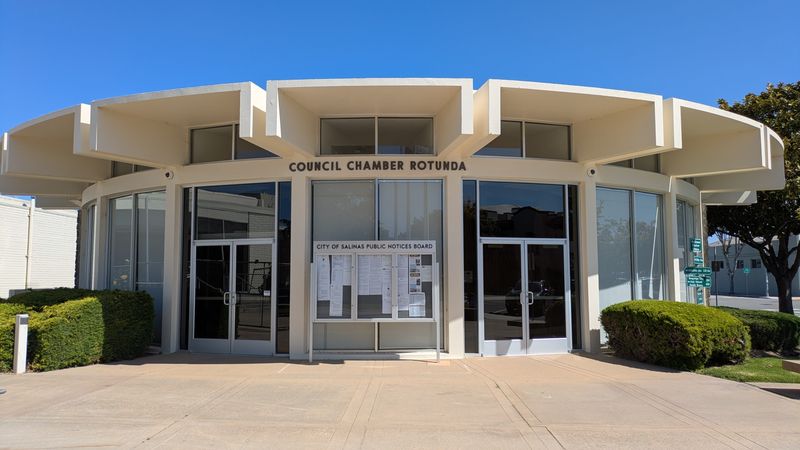
Concern over reallocations and the mystery of a missing $10 million from Amazon marked the introduction of the City of Salinas presentation of the city’s first ever biennial capital improvement budget.
The proposed biennial budget released on Tuesday, covers the first two years of the city’s 5-year Capital Improvement Plan (CIP), which outlines the city’s long-term infrastructure projects.

Over the course of the five-year plan — July 1, 2026, to June 30, 2031 — the staff report estimates potential investments totaling $265.5 million.
Funds used to pay for CIP projects have to be used for their specific purpose and are derived from different buckets of money: assessment districts, development fees, gas taxes, Measure X Transportation, Safety, and Investment (Measure X), SB 1 Road Maintenance and Rehabilitation (SB 1), special construction assistance grants, and City enterprise funds.
The budget for Year 1 totals nearly $47.2 million, according to the staff report, an increase of $17.8 million or 61% from the prior year and $40.3 million in Year 2.
Major investments, according to the two-year proposed budget include $31.8 million in sewer infrastructure, streets and sidewalks totaling $27.3 million, $16.5 million on safe routes to school improvements at two locations, and an additional $4.5 million for the Boronda Road Congestion Relief project.
The city also has nearly $66 million in unspent appropriations as of May 1, amounting to 123 projects citywide. About $29.3 million of that amount is earmarked for street and sidewalk upgrades, and $8 million for a recreation center in district 5.
Councilmember Andrew Sandoval highlighted the nearly $2.6 million in reallocated funds for pavement and sanitary sewer improvements on Abbott Street and possibly Harkins Road to the north if pricing allows, according to the staff report.
The proposed biennial budget includes $3.4 million in reallocated funds, pockets of money that had been approved for one use that now staff recommends be used for another purpose.
Sandoval said the city “shouldn’t be at a position where we’re picking and choosing between striping and certain improvements in our community.”
Sandoval said while he is in support of reallocated funds for traffic calming, he wanted more information from staff on traffic impact fees from Amazon, which is building a 3-million-square-foot distribution warehouse near Abott Street.
Councilmember Margaret D’Arrigo also wanted to know why the Amazon traffic fees were not identified in the budget document and wanted greater scrutiny around reallocated funds. Sandoval said the fees from Amazon amounted to $10 million.
“Abbott is going to be heavily trafficked by Amazon and continue to be used by the Ag industry and I think it’s fair to say that those two industries should be contributing to the repair of Abbott Street,” said Sandoval, who has floated a special tax on agricultural businesses in Salinas to cover infrastructure costs.
City manager Rene Mendez said the traffic impact fees from Amazon had been received but was not reflected in any budget because the projects that they are expected to support are “not yet fully developed,” and the city council should expect a presentation from the Public Works director “over the next year or so.”
In regards to the reallocated funds, Mendez said a more detailed report on the proposed reallocations will be provided. “It’s not being taken away from projects that are in the queue,” said Mendez, adding that a lot of what has been taken away are “from projects that have already been done and had some remaining amount.”
This article originally appeared on Salinas Californian: Mystery over Amazon millions unfurls at Salinas budget workshop
Reporting by Roseann Cattani, Salinas Californian / Salinas Californian
USA TODAY Network via Reuters Connect