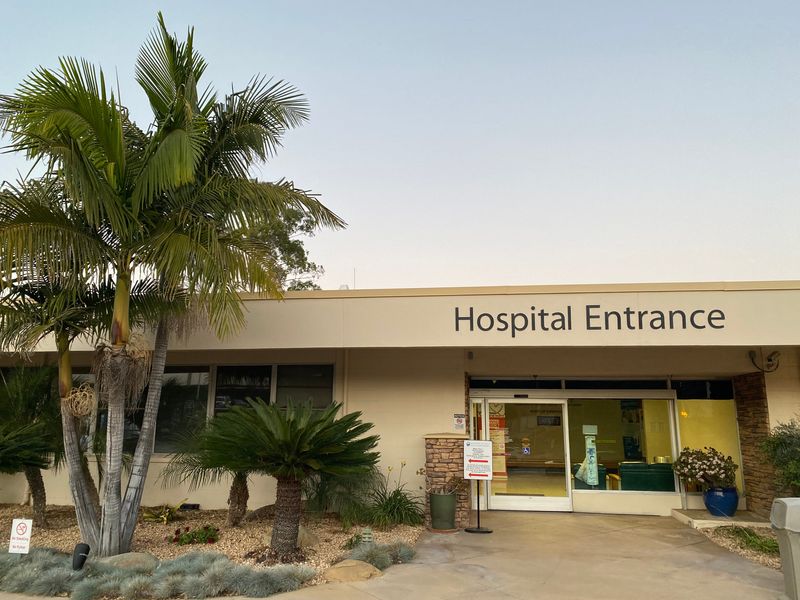
Santa Paula, Fillmore and Piru residents worried about a county-run hospital set to shut its doors in 2030 were told coming decisions involve a difficult balancing act.
The health care model ultimately decided upon for Santa Paula Hospital will have to meet the needs of the 55,000 people in the Santa Clara River Valley. But it will also have to be sustainable in an health care environment beset by massive funding cuts, Ventura County leaders told area residents on Jan. 29.

“Nothing is off the table,” County Executive Officer Sevet Johnson told a blue-ribbon committee of community members of a menu that could include a new hospital or expanded urgent care or a different health system model. “But what we are saying is we have to work together.”
The 65-year-old hilltop hospital, mired by financial losses and low patient admission counts, will no longer meet state seismic requirements in 2030. County leaders have said the hospital licensed for 49 beds will not be retrofitted, meaning it will have to close.
That fate has ignited anxiety and rumors across the rural, mostly Latino Santa Clara River Valley where residents say they are too often overlooked. The frustrations emerged during the Jan. 29 community meeting with county health system leaders.
“The Santa Clara Valley has been so left out it’s immoral,” said Laura Espinosa of the Santa Paula Latino Town Hall organization, adding that people are fed up. “The expectation is that we get health care services, educational services and cultural services like everyone else.”
For years, the plan had been to open a new full-scale hospital and medical office building along Highway 126 in Santa Paula. It would be constructed by a developer and then leased at a price the county estimated at $22 million a year.
County leaders have questioned the financial impact of such an investment. They’ve cited federal funding cuts from President Donald Trump’s budget reconciliation act — the “big beautiful bill” — projected to cost the county health system $400 million over six years.
“I don’t know that a 49-bed hospital is sustainable in this community,” Johnson said at the blue-ribbon meeting.
Citrus grower Limoneira owns the land off Highway 126 that had been pegged for a new hospital. Company CEO Harold Edwards said financial realities make it all but certain the originally proposed hospital won’t be built.
“I kind of moved past that idea long ago,” he said, supporting the possibility of instead building a medical office building that would serve as a health care campus including clinics and possibly an urgent care or an emergency room.
After the meeting, Ventura County Health Care Agency Interim Director Dr. John Fankhauser said the option of running stand-alone emergency rooms, known as a rural emergency hospital, is likely not possible. California does not use the model and Santa Paula Hospital was not federally designated as a rural hospital in 2020.
He said possible health systems that will be examined in a report expected to be presented to the Ventura County Board of Supervisors in the summer could include operating a standard hospital and a scaled-down hospital that would focus on essential needs.
Other systems that could be explored include a standard urgent care center and an extended-hours urgent care that could include additional services like imaging, Fankhauser said.
He said an average of 42 patients visit Santa Paula Hospital’s emergency room daily. Many of them have less severe conditions or illnesses that could be treated at an urgent care.
County officials also noted only one urgent care, run by Community Memorial Healthcare, operates in the Santa Clara River Valley.
The community meeting was a preview of staff findings that will be presented to the Board of Supervisors on Feb. 10. Health officials focused on health care needs and demographics in Santa Paula, Fillmore and Piru.
About 14% of the residents in Santa Paula, the valley’s largest community, live in poverty, compared to 9% across Ventura County, data presented by the county showed. More people are uninsured and more qualify for Medi-Cal insurance.
Ambulance response times are prompt, Fankhauser said. It can take about 30 minutes for Santa Paula patients to be delivered to an emergency room and 52 minutes in Piru. That time includes care received at the scene and during transportation.
About 7 of 10 patients in the valley are taken to Santa Paula Hospital emergency room.
“It will (take) 10 minutes longer to get to Ventura,” Fankhauser said, adding that the additional time is unlikely to make a person’s health condition worse.
Admissions at the Santa Paula Hospital have fallen. Data on admitted patients being discharged from hospitals, suggested more than three times as many people from the Santa Clara River Hospital use hospitals other than Santa Paula.
That number is influenced by insurance, care preferences and the loss of services at the Santa Paula Hospital. The county closed the hospital’s birthing and intensive care units in 2024.
People at the meeting expressed worries about community health needs, the time it takes ambulances to deliver people to hospitals and finding solutions before the hilltop hospital closes. Maria Munguia of Santa Paula said the anxiety and fear is fed by uncertainty.
“We don’t have answers,” she said.
Tom Kisken covers health care and other news for the Ventura County Star. Reach him at tom.kisken@vcstar.com.
SUPPORT LOCAL JOURNALISM: To see more stories like this, subscribe.
This article originally appeared on Ventura County Star: Clock ticks on Santa Paula Hospital as leaders weigh what comes next
Reporting by Tom Kisken, Ventura County Star / Ventura County Star
USA TODAY Network via Reuters Connect