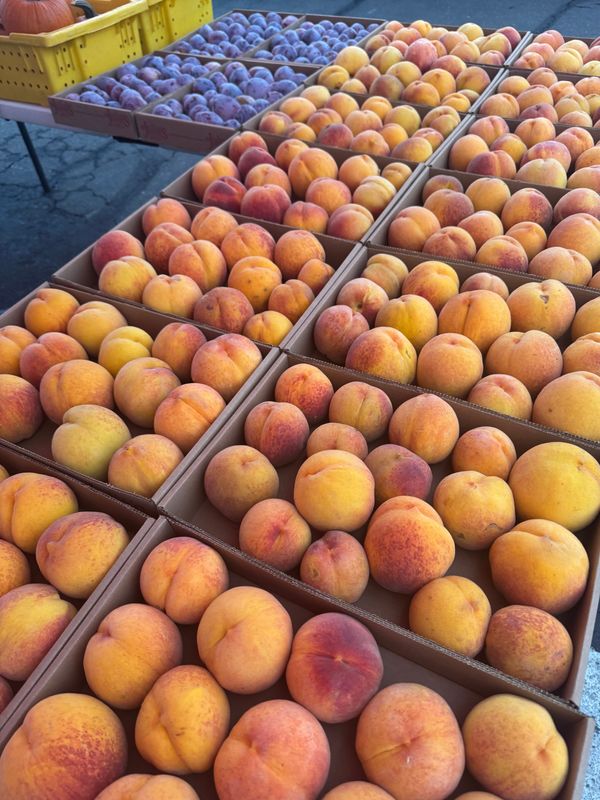
California peach growers left without a market after the sudden closure of Del Monte’s Modesto processing plant will receive up to $9 million in federal assistance to help limit losses and transition to new crops, according to California lawmakers.
U.S. Sen. Adam Schiff, D-Calif., and Reps. Mike Thompson, D-St. Helena, and David Valadao, R-Hanford, said the U.S. Department of Agriculture approved funding for a clingstone peach tree removal program aimed at growers whose long‑term contracts were canceled following Del Monte Foods’ bankruptcy and plant shutdown.

The Modesto facility processed roughly 30% to 35% of California’s cling peaches, and no comparable processing capacity is currently available, leaving growers across the Central Valley and Yuba‑Sutter region with fruit they cannot sell.
Schiff, Thompson and Valadao led a bipartisan group of 38 California lawmakers urging Agriculture Secretary Brooke Rollins to provide emergency assistance. The letter cited the lack of alternative processing capacity and warned of cascading impacts on rural economies.
“California is the nation’s largest agricultural state, and I’m glad USDA is engaging with us to support our producers,” Schiff said.
Here’s what to know about the California peach farmer bailout.
Why did California peach farmers lose their market?
Del Monte Foods filed for Chapter 11 bankruptcy in 2025 and later announced the permanent closure of its Modesto cannery, one of the last remaining peach processing plants in California. The move voided many 20‑year grower contracts and eliminated the primary buyer for clingstone peaches, which are grown almost exclusively for canning.
Industry groups and farm leaders warned that without immediate intervention, tens of thousands of tons of peaches would go unsold and growers would face severe financial losses. The California Canning Peach Association estimates statewide losses tied to the closure could exceed $550 million.
How much USDA assistance will California peach growers receive?
USDA approved up to $9 million to fund the removal of approximately 420,000 clingstone peach trees, covering about 3,000 acres before the 2026 harvest season, according to lawmakers and USDA analysis.
Federal officials estimate that removing about 50,000 tons of peaches from production could help growers avoid roughly $30 million in projected losses as orchards transition to alternative crops, according to industry groups.
“This investment will give producers the time they need to adjust and plan for the future,” Valadao said in a statement.
What will the peach tree removal program do for farmers?
The USDA-funded program helps offset the cost of removing unmarketable peach orchards, a step many growers say is financially unavoidable yet costly. Tree removal allows farmers to replant with crops such as pistachios or walnuts, though those investments can take years to generate income.
“When a processing facility closes, and tens of thousands of acres of fruit suddenly have nowhere to go, that’s not something a family farm can absorb,” Thompson said.
How large is California’s peach industry?
California is the largest peach‑producing state in the nation, accounting for roughly 70% to 75% of U.S. peach production by volume far surpassing other producing states such as South Carolina and Georgia, according to the USDA Economic Research Service and National Agricultural Statistics Service.
Recent USDA data shows California produces about 475,000 to 550,000 tons of peaches annually, including both freestone peaches for the fresh market and clingstone peaches for processing.
Clingstone peaches — the type most affected by the cannery closure — are grown primarily in the Central Valley and are not suited for fresh retail sales.
This article originally appeared on The Record: California peach farmers get $9M USDA bailout after cannery closure
Reporting by James Ward, USA TODAY NETWORK / The Record
USA TODAY Network via Reuters Connect