(This story was updated to add new information)
There are mixed reviews from community leaders on the new temporary summer curfew for kids and teens. Indianapolis City-County Council passed Proposal No. 99, sponsored by councilors Leroy Robinson and Dan Boots, on May 4, which is a temporary adjustment to the curfew already in place.

Because youth violence is on the rise, according to Indianapolis Metropolitan Police data, councilors feel the curfew was one way to keep kids and residents safe during the summer months, when more crime statistically happens.
“This curfew adjustment, along with the work of the Connection Center and our community partners, ensures that when young people are out late, we’re not just responding, we’re intervening in a way that supports them and their families,” Robinson, chair of Public Safety and Criminal Justice, said in a news release.
The Juvenile Connection Center was set up last month by the city as a place where youth out after curfew would be taken until their guardians arrived. It is also meant as a centralized place to connect people to resources, IMPD announced earlier this year.
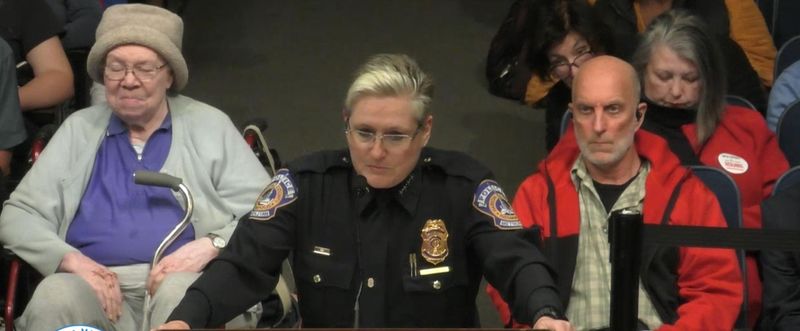
In the meeting before the proposal was decided on, IMPD Chief Tanya Terry reminded everyone of the mass shooting downtown over the Fourth of July weekend last year that involved numerous young people, which led to a temporary curfew then, as well.
Terry said the department has seen a 3% increase in youth homicides from last year and a 4% increase in youth involved in non-fatal shootings. Terry highlighted situations, including a 13-year-old who was out at 1 a.m. armed during a street takeover, and the numerous teen suspects who have been arrested in connection to recent homicides.
“While a curfew is not a cure-all, it is just one tool used to keep our kids out of unsafe situations late at night,” Terry said. “We encourage parents and guardians to stay involved by knowing where their children are, who they are with, and when they are coming home.”
Juvenile Connection Center will sometimes be implemented
Terry said arrests are the last thing they want to use, and the Juvenile Connection Center will serve as a resource for youth and families. Chosen youth and community programming will be available at the center.
IMPD said the center will be implemented sparingly on days and weekends when big events or holidays are happening.
If found violating curfew, teens and kids will be taken to the center, which has always been located downtown. Officers will attempt to notify their parent or guardian, who is given time to pick them up. If parents can’t be contacted, youth are taken to the Marion County Juvenile Detention Center.
Terry said violating curfew is a status offense, and not a criminal charge.
Community leader, Anthoney Hampton, who works with youth, agrees that a curfew should be in place, but wants more efforts and funding to go into giving children safe places.
He also questions whether the curfew will be enforced across Indianapolis, or if it’s a tool to keep youth from just being downtown.
“They won’t enforce it on 40th and Park, where a recent shooting took place in my community after a prom,” Hampton told IndyStar. “As long as they keep those kids and those guns from downtown, then everything else doesn’t matter, it feels like.”
In response to that criticism, an unnamed person with IMPD’s Public Affairs Office said via email that officers will be monitoring public areas throughout Indianapolis during curfew hours.
Officers can use their discretion in how to handle a young person who may be out past curfew.
If the center isn’t open, parents can’t be contacted, and the youth can’t be dropped off somewhere, they could be taken to the Juvenile Detention Center, which can take up to two hours to be processed in.
Mixed reviews on the youth organization
Youth leader Brandon Randall opposed the proposal because he says that, where city leaders normally host listening sessions to discuss topics similar to the curfew, no one was consulted.
“They simply went with IMPD’s recommendation,” Randall said. “And the frustrating part is last night, the chief even said herself that most of the crime committed by young people is not even happening after a curfew.”
During questioning by counselors, Terry said that “admittedly, the majority” of crimes she brought up involving youth did not happen during curfew hours.
“But, we’ve had 1 out of 3 homicides involving juvenile victims this year that have been during curfew hours,” Terry said. “That’s one… That’s somebody that lost their life… Maybe it would have made a difference. Maybe, not, I don’t know.”
Randall doesn’t feel that enforcing or modifying a curfew is an effective strategy.
“And the unfortunate reality is, the young people who are out at 1 o’clock, 2 o’clock, 3 o’clock in the morning, there’s already a challenge there of parents being involved,” Randall said. “So changing the curfew isn’t going to create an epiphany of parental responsibility.”
Summer 2026 curfew hours for youth
The summer curfew rules state:
Jade Jackson is a public safety reporter for the Indianapolis Star. You can email her at Jade.Jackson@IndyStar.com and follow her on X, formerly Twitter @IAMJADEJACKSON. IndyStar reporter Jordan Smith contributed to this article.
This article originally appeared on Indianapolis Star: Youth leaders question summer curfew council passed behind IMPD data
Reporting by Jade Jackson, Indianapolis Star / Indianapolis Star
USA TODAY Network via Reuters Connect