In the five months since Riverside County took temporary control of Blythe’s troubled Palo Verde Hospital, much has changed for the rural medical facility.
At the start of the year, the 51-bed hospital faced imminent closure due to years of financial instability (the Palo Verde Healthcare District filed for bankruptcy in October). The building itself was in disrepair, and morale among staff and residents was at a new low as they faced an ever-changing and uncertain situation. With few options available, PVHD approved a management agreement with Riverside County on Feb. 19 to stabilize and manage the emergency department for approximately six months.

A recent visit to the hospital’s emergency department showed significant improvements in just the past few months. Small changes, such as implementing new organizational systems and updating equipment, have had tremendous impacts on daily operations and the type of care available. Additionally, Riverside County has secured millions of dollars in funding and brought in 26 emergency medicine residency-trained physicians through a partnership with Vituity physician group.
“It feels good to see the positivity of the changes,” triage nurse Liana Hernandez said. “The worry was that we weren’t going to have anything for the community, and when (the county) stepped in, it felt like some relief that the community still had a saving point.”
The Desert Sun recently toured the hospital with Leah Patterson, interim chief nursing officer, and Lisa Mackie, interim director of operations and emergency department nursing director, who highlighted changes that have been made and what’s to come for the Blythe facility. Riverside County was meant to oversee operations for approximately six months, but leaders say their work is not yet done and additional updates will be made in months to come.
The public will have an opportunity to see the changes during Palo Verde Hospital’s The 180-Day Scoop community open house, which will take place between 5:30 and 7:30 p.m. Thursday, July 30. The free, family-friendly event will feature conversations with hospital leadership, opportunities for feedback and ideas, activities and free ice cream.
A tumultuous year
2025 was a tumultuous year for the Blythe hospital, with limited cash on hand, a bankruptcy filing, notices of potential closure and funding roadblocks. As a result of increasing instability, Riverside County proposed a plan in January to help keep the doors open.
The plan consisted of implementing a stakeholder “strike force” to independently stabilize and manage Palo Verde Hospital’s emergency department for approximately six months to maintain emergency medical services, assess current conditions and develop recommendations for next steps. Under the management plan, the county has assumed day-to-day operational control of the emergency department, clinic and related support services, such as lab, radiology and pharmacy services. However, PVHD retains ownership of the hospital and remains the licensed operator.
Riverside University Health System staff members have led the charge to provide management services, clinical services, hospital leadership, staffing support and other related operational assistance to stabilize hospital operations. Interim leaders were also appointed, which were deemed “necessary and essential to ensure patient safety, regulatory compliance and uninterrupted hospital operations,” according to the agreement. It was announced in April that the hospital’s chief executive officer Sandra Anaya, who served in the position for nearly 13 years, was stepping down.
In addition, the county has helped secure various types of funding for the hospital, including a $1 million loan to the emergency department and nearly $10 million through California’s Medi-Cal Intergovernmental Transfer program, administered by the California Department of Health Care Services.
Small changes, big impact
Changes big and small have come in various forms at Palo Verde Hospital.
“We started with highest level risk to patient safety and facility safety/staff, and then we’ve been trickling down from that,” Patterson said.
Among the first tasks was to provide newer equipment for staff, such as ventilators, baby warmers with ventilation capabilities and two arterial blood gas machines. Staffing levels have also increased. There are on-site radiologists available now, Patterson said, which was not always the case previously. Without access to specialized technicians, the nearest hospitals offering those services are about a two-hour drive to the Coachella Valley or an hour away in Arizona.
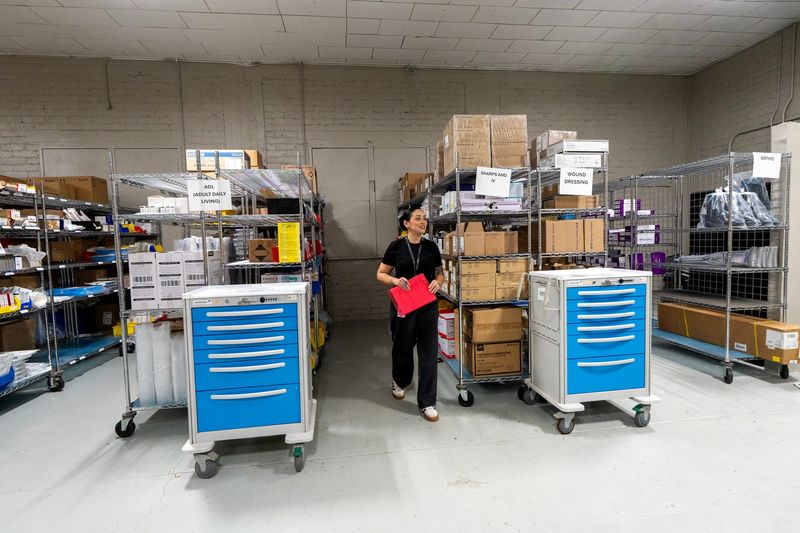
Some improvements have also come in the way staff do their work. The area where medical supplies are housed was recently renovated (a hole in the roof was fixed and space was cleared), which has led to more room to organize supplies, keep shelves fully stocked and make it easier to pull items if there are recalls issued. Demisia Rodriguez, materials manager, said things were organized “to the best of their ability” previously, but lack of ample space made the task difficult.
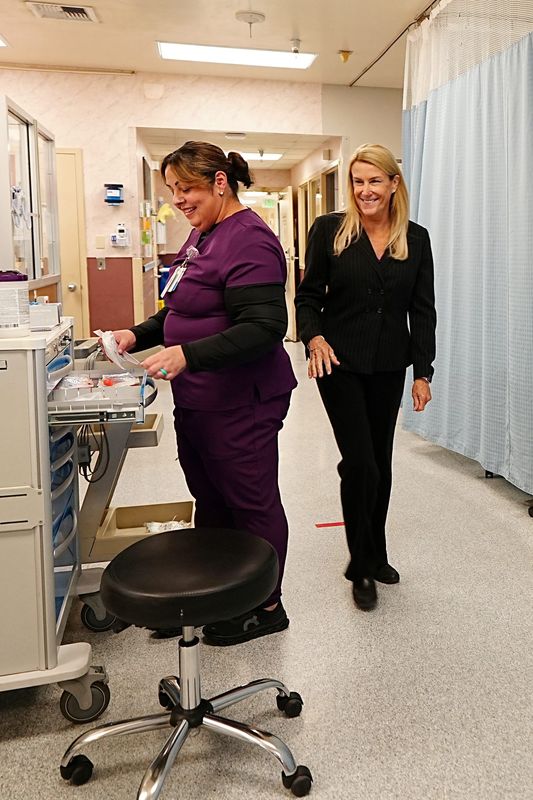
Three IV rotating carts filled with necessary supplies, such as IV start kits, needles and alcohol pads, have also been implemented and are used daily in the emergency department. Previously, Rodriguez said staff would have to go into the emergency department, do an inventory count of supplies in cabinets and bring back needed materials. Now with the carts, she said staff have easier access to what they need, and they can be more easily restocked.
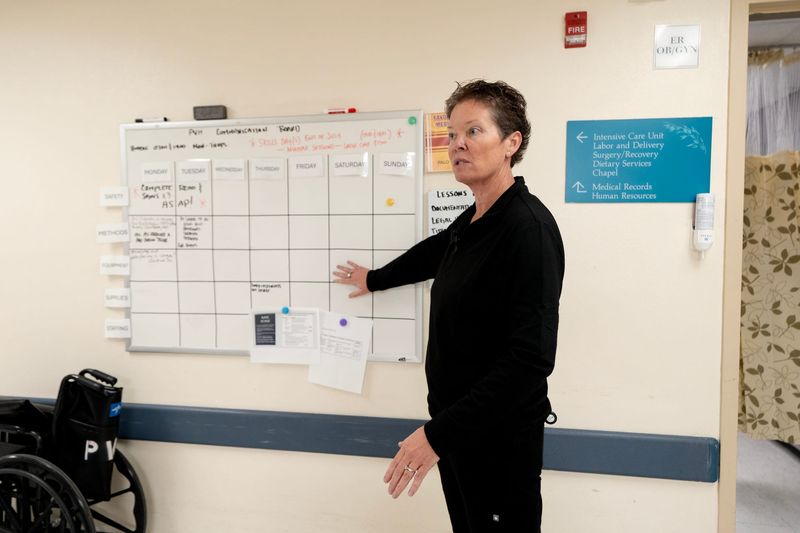
In the emergency department, Mackie explained that a large whiteboard, used as a communication board, was added as a way for each shift to communicate effectively with each other. Staff mark down any safety concerns, equipment and supplies that need to be ordered or general issues that people need to know in order to run the hospital.
“It really takes away that telephone, where if I’m off for a couple of days, I don’t have to go to someone and say, ‘Did you hear about this?'” Mackie said. “It’s all consistent, it’s all closed-loop communication and it’s been really effective and the staff have loved it.”
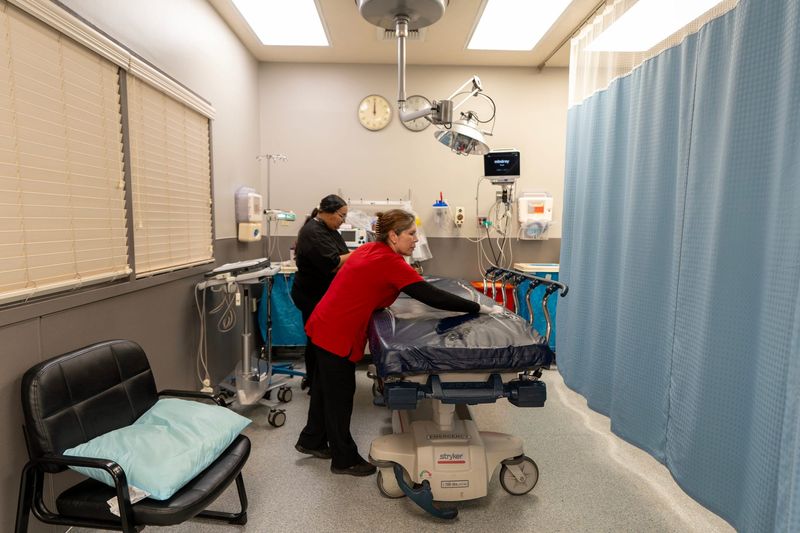
Additional equipment, such as EKG machines, oxygenation tools and more, were also brought into the emergency department.
There has also been an emphasis on education and training. One of the patient rooms, equipped with a mannequin doll, is now being used for those purposes.
“In health care, nothing stays the same. It’s always advancing, evidence-based practice, standard of medicine,'” Patterson said. “You also want to provide a safe environment for people to be able to learn, ask questions, practice without fear of making a mistake.”
Patterson added that a small emergency department, such as Palo Verde’s, does not see as many patients as a larger one, which means staff don’t get as much practice with patients or certain medical ailments. That makes hands-on education all the more critical to sharpen skills.
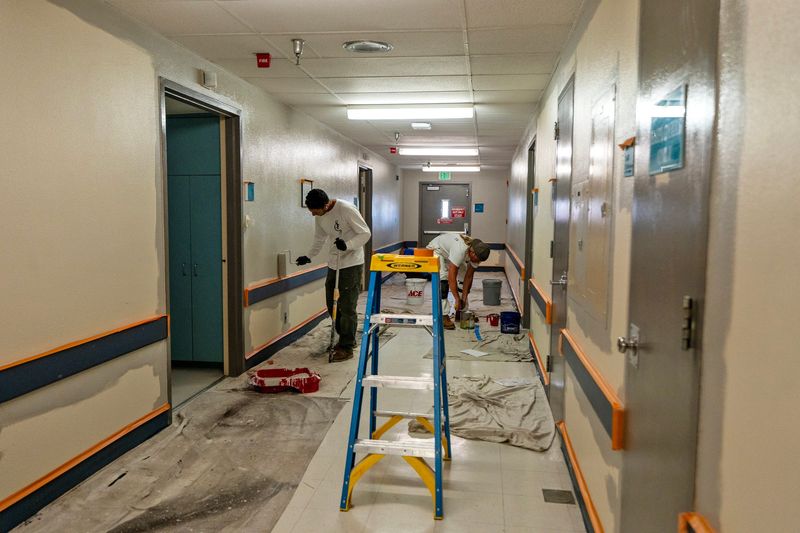
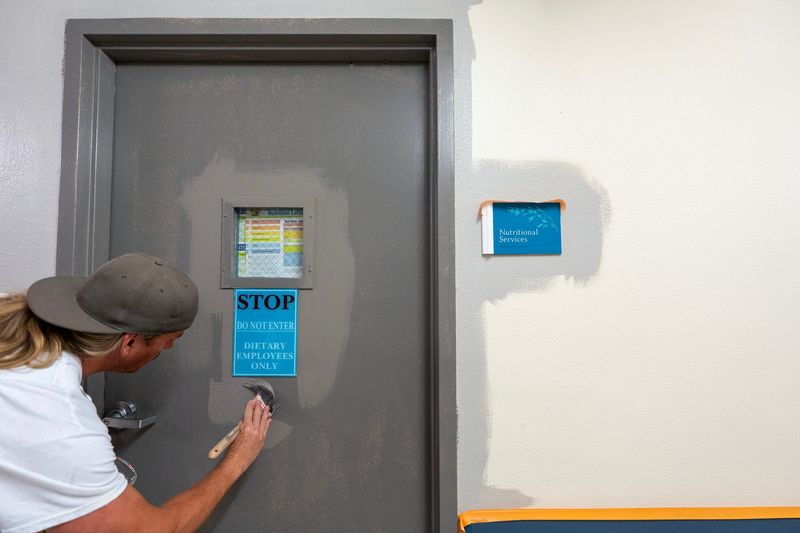
Other updates have come in the form of cosmetic repairs. The cafeteria features new flooring and paint, and interior and exterior walls have also gotten fresh coats of paint.
With all the upgrades, Mackie said “staff has been hungry for it.”
“They were providing great care before we got here, and now we’re just complementing the good work that they do,” she added.
What’s next for Blythe’s hospital
While the Blythe community will be able to take a look inside the hospital on July 30, more work is still on the horizon.
There are renovations to come with patient rooms, which will receive updated bedside drawers and cupboards, Patterson said. Financial stabilization and consistent revenue streams continue to be areas that the county will focus on, as well as working with suppliers and vendors to secure materials at reasonable costs.
It remains to be seen what will happen next for the rural medical facility, but PVHD board member Sandra Hudson has been impressed with the “remarkable progress” made under the county’s leadership.
“It has been truly encouraging to witness the positive changes taking place, and to see our community receiving the quality health care it deserves,” Hudson said in a statement. “While there is still important work ahead, the progress achieved so far gives us confidence and optimism for the future. We are grateful for the leadership currently in place and hope to see this positive momentum continue. Together, we can ensure that Palo Verde Hospital remains a strong, reliable health care resource for the Blythe community for many years to come.”
As far as when Riverside County’s oversight of the hospital will end, Patterson said there’s no final date at the moment as the assessment is ongoing. Previous conversations revolved around whether the hospital would remain under PVHD’s control or if another entity would take it over. Patterson said all of that is still up in the air and open for discussion.
“In the next few months there will be announcements by the boards to provide more definitive (answers) because that is everyone’s question,” she said. “But we’re not quite there yet.”
Ema Sasic covers entertainment and health in the Coachella Valley. Reach her at ema.sasic@desertsun.com, on X @ema_sasic or on Instagram @emasasic.
This article originally appeared on Palm Springs Desert Sun: Blythe hospital nearly closed last year. Riverside County offered hope
Reporting by Ema Sasic, Palm Springs Desert Sun / Palm Springs Desert Sun
USA TODAY Network via Reuters Connect
By Ema Sasic, Palm Springs Desert Sun | USA TODAY Network