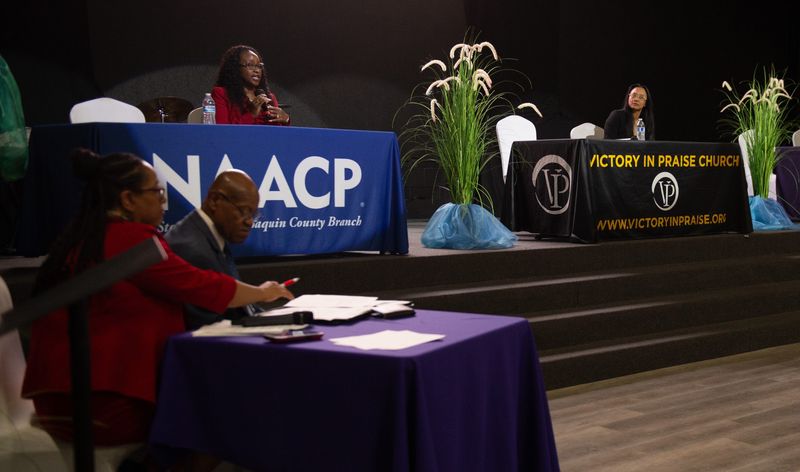
Two candidates for California State Assembly District 13 presented their views on education, housing and economic equity during a forum at Victory In Praise Church ahead of the June 2 primary election.
The forum on May 4 was organized by the Stockton branch of the NAACP, Black Women Organized for Political Action, Faith in the Valley and Victory in Praise Church.

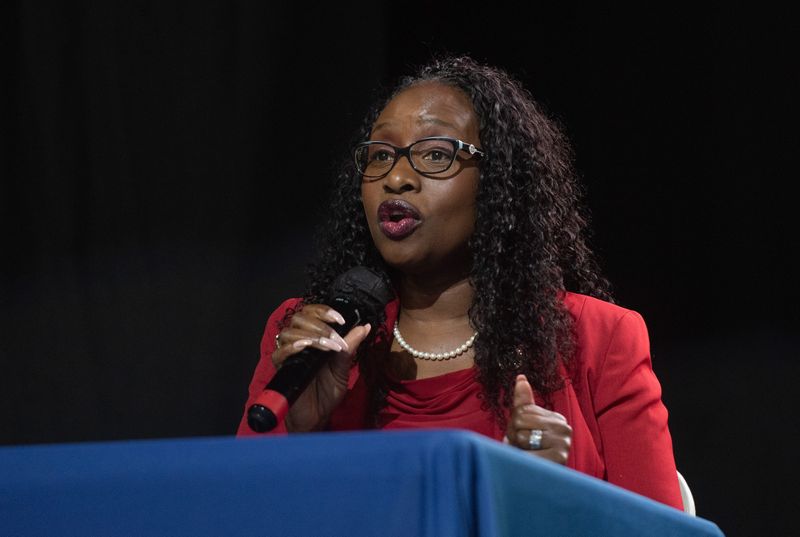
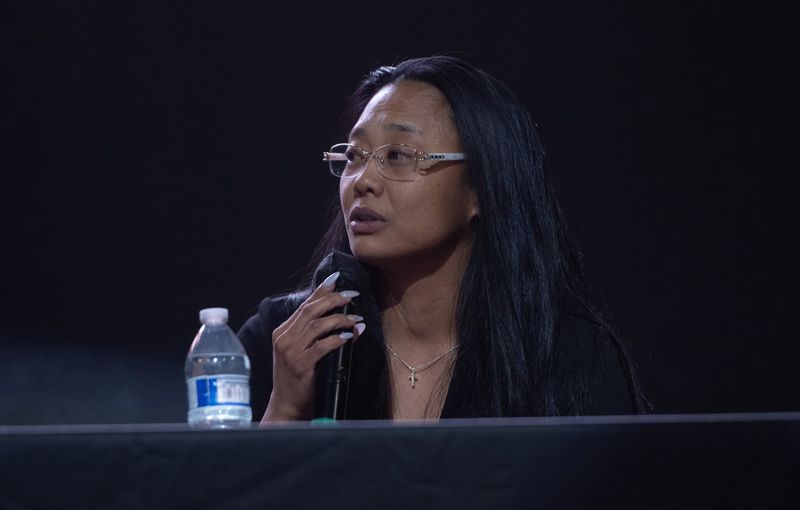
The forum featured incumbent Rhodesia Ransom, a Tracy Democrat who has held the seat since 2024, and Eliza Dy, a Stockton no party preference candidate who is an adjunct faculty member and basketball coach at San Joaquin Delta College.
Visit our Elections page throughout the day Tuesday, June 2, for the latest news, results and more as the California 2026 Primary gets underway.
Ali Jafri, a Republican whose ballot designation is accountant, father and farmer, and Tom Patti, a Republican whose ballot designation is businessman and father, are also challenging Ransom. Neither attended the forum.
The district consists of western San Joaquin County, including the southeastern quarter of the Sacramento-San Joaquin River Delta. It serves as a major gateway between the rest of the Central Valley and the San Francisco Bay Area.
Ransom highlighted her legislative record and said she has focused on affordability, education and constituent services during her first term.
“In just one year, the first term, not only have we returned over $1 million to constituents in this district, including 3,000 constituents here in Stockton, I make it my business to drive home from Sacramento every day, to be in our community, to make sure that I’m showing up,” Ransom said. “In the Legislature, I’m passing legislation. I’ve been able to beat that broadband to make sure that we are lowering the cost of internet services. I’ve stood up bills to make sure that we are standing up against high-cost utility bills.”
Dy described herself as a lifelong Californian who has called Stockton home for the past 20 years. She said she is a single mother of two daughters and a small business owner of Fitness Works Lodi, which helps create job opportunities and provides a safe space for youth, young adults and older adults to work on fitness and mental health.
“Through sport and teaching at the high school and college level, I’ve been able to reach them, speak to them, hear everything that’s going on, whether it’s in-house, whether it’s in education, whether it’s with their own personal lives,” Dy said. “I’ve been able to impact the community just based on sports and volunteering within the community. I also volunteer with local nonprofits. I am the president of a couple of schools in the area that I help represent their booster programs. I maintain their balances for all their sports and clubs.”
The forum’s first question asked candidates how they would address inequities in California’s education system to ensure African American students have access to quality schools, resources and opportunities.
Dy drew on her personal experience, noting that her daughter is half African American and has faced barriers enrolling in certain school programs and accessing school opportunities. She also said families often struggle to access information about available programs and resources and called for greater healthcare and mental health support within schools.
“Putting a California healthcare worker in there who can evaluate whether it’s mental, physical or emotional distress and help these families maintain a healthy lifestyle,” Dy said. “It allows them to not only go to school healthy and feeling good. They’re not sitting here struggling outside of the education system, trying to figure out resources because they might be sick or ill and don’t have resources to stay healthy and educate themselves.”
Ransom pointed to her background working with students for two decades and highlighted upcoming bills, including one addressing the achievement gap sponsored by the California School Boards Association, a measure to increase transparency on how investments are helping through new dashboards, and a bill supporting career technical education that Gov. Gavin Newsom has said he would support, which would provide an additional $150 million for career technical education programs. She also said state policymakers should have greater flexibility to address achievement gaps affecting African American students.
“Proposition 209 took away the ability to say, ‘Help Black students,'” Ransom said. “Right now we have what’s called ACA 7. That’s something that voters are going to be able to vote on to say that if kids are struggling, African American kids, any kids, that we can name them. Right now we cannot name them. We can name English language learners. We can name immigrants. We can name foster students. We can name homeless students. We can’t name Black students.”
California Assembly Constitutional Amendment 7 (ACA 7) would ask voters whether to amend Proposition 209, which prohibits the state from considering race, sex, color, ethnicity or national origin in public employment, education and contracting.
The candidates were also asked about economic investment and state resources for African American communities.
Ransom said the California Legislative Black Caucus regularly works with state officials to ensure communities of color are included in grant programs, procurement opportunities and other state-funded initiatives. She said lawmakers also seek data to determine whether resources are reaching underserved populations.
“We are always making sure that when it comes to the Black community, the Black Caucus is calling the governor, the treasurer, everyone to the table, to ensure that any program that has funding has also set aside dollars for the African American community,” Ransom said.
Dy said public officials should prioritize transparency and accountability when distributing state funds and grants and closely track how investments affect local communities.
“It’d be about policy, implementation and results, data transparency, actual response on where it’s going and how it’s affecting the African American community,” Dy said.
The final question asked candidates what state policies they would support to ensure safe, habitable housing and prevent displacement, particularly in communities facing corporate ownership, rising costs and inconsistent code enforcement.
Dy said California should reduce barriers to housing construction, support local contractors and address rising costs that contribute to housing shortages.
“It goes back to being able to give jobs to the local construction companies,” Dy said. “Limiting their obstacles that they’re facing, whether it’s costs, certifications and permits.”
Ransom said corporate ownership of residential properties has contributed to rising housing costs and argued for policies that discourage large investors from purchasing and holding homes. She also called for stronger tenant protections and enforcement of housing laws.
“We have big corporations coming in, purchasing up blocks and then holding them empty because they can afford to and driving up the cost of housing,” Ransom said. “Those are policies that even the Association of Realtors agrees with me on this one. We have to do something about it in the state of California.”
In her closing remarks, Dy said elected officials should remain actively involved in their communities and focus on delivering measurable results.
“I want to not only be a voice to the community, but I’m not showing up to just have a title,” Dy said. “I’m going to be the one that’s saying, ‘Oh, you have an event? Let me help you set up.’ Let me be involved as much as I can to not only help cater to your needs, but also to show you that we, as a community, can only help each other if we actually help each other and not just showing up and saying that we’re here.”
Ransom used her closing statement to highlight actions during her first year in office, including efforts that led to $870 million in federal assistance dollars being returned, $20 million for local family justice centers, and her efforts to maintain a visible presence throughout the district.
“I drive home every single day to make sure that I am showing up for your events, that I am showing up to make sure that people still have that relationship with me, because when I go back to Sacramento, I represent you,” Ransom said. “I get to stand up and say, ‘That bill that my colleagues in Sacramento want to pass is not going to work for us in the Central Valley.'”
Record reporter Hannah Workman covers news in Stockton and San Joaquin County. She can be reached at hworkman@recordnet.com or on Twitter @byhannahworkman. Support local news, subscribe to The Stockton Record at https://www.recordnet.com/subscribenow.
This article originally appeared on The Record: Assembly candidates pitch housing, equity plans in Stockton ahead of vote
Reporting by Hannah Workman, The Stockton Record / The Record
USA TODAY Network via Reuters Connect