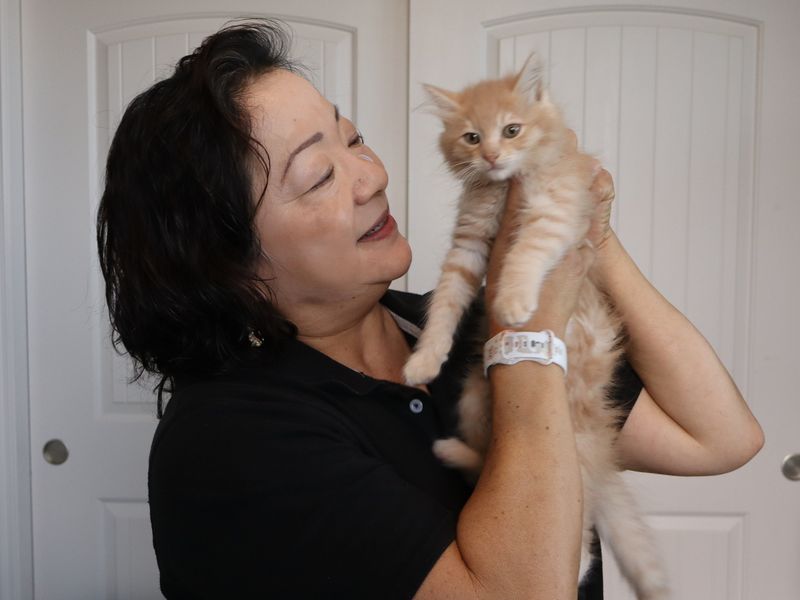
Growing up with dogs, Walan Chang never imagined she’d one day become a champion for cats. The Air Force veteran and super foster has spent 14 years caring for hundreds of kittens, including 11 currently tumbling through her East Garrison home.
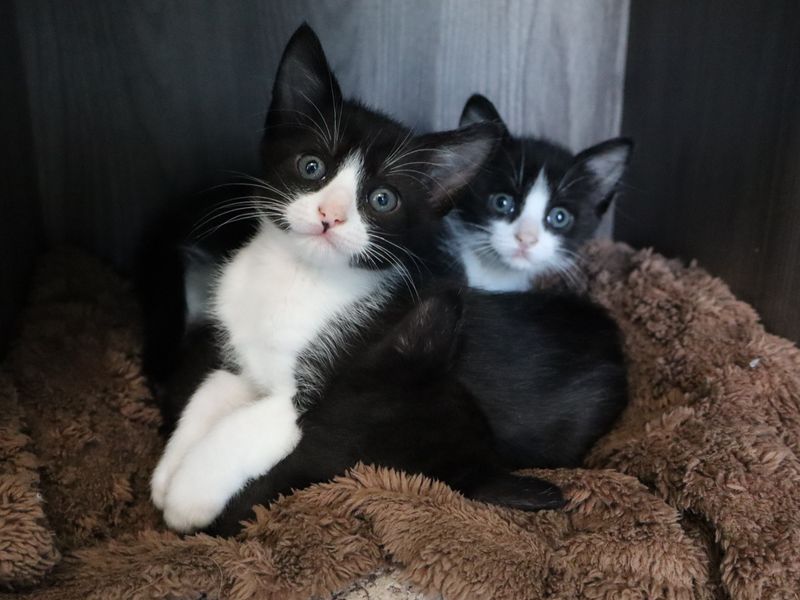
“I never owned a cat until we fostered a kitty,” Chang said, as a lapful of tuxedo and smoky black kittens curled against her.

She and her husband, Randy Phares, were looking for a volunteer opportunity when they came across an advertisement for Animal Friends Rescue Project and soon became a foster for a senior cat. Six months later, the cat would become what is popularly called a “foster fail” as the couple had decided to keep her.
“We were, ‘Oh well, we have a cat now,’” said Chang. The next placement, a 12-year-old cat with a chronic illness, also became a permanent addition.
“I was like, this is really not going to work if we keep foster failing every animal that we foster,” she said.
The couple shifted course and became “bottle baby” fosters, caregivers for newborn kittens too young to be weaned.
“They are hard to find because you have to be willing to feed them around the clock,” Chang said, adding that over the past 14 years she and Phares have fostered nearly 300 cats.
“It would not have been possible without my husband—round the clock feeding is hard for just one person to do,” said Chang, who volunteers with the Neighborhood Pet Project. “The first five weeks are the hardest—you feed them every two hours, then its every three and then four hours.”
In addition to providing kittens a dedicated room in their house to sleep, eat and play, including how to socialize safely until they find their forever home, Chang, through her years of experience, also advises the group’s team of 35 volunteers, including fosterers.
“Every foster is different because it is based on what your abilities are,” Chang said.
Chang and her husband usually foster to adoption, which can be weeks or months. A recent adoptee, Valentini, was at their place for 15 months before getting adopted. Other fosterers will take animals after they are weaned or for a limited time.
Fosters are in high demand this time of year said Chang, especially people who are interested in learning about or have experience with caring for kittens or puppies and have a separate room in their home for fostering animals.
While its primary service area is south Monterey County—Chualar southward, said Chang—the Neighborhood Pet Project receives calls to help animals in need on a case by case basis throughout the county.
On a Tuesday afternoon in May, Chang pointed out foster kittens from Soledad, Gonzalez and a pair of long haired yellow kittens just shy of 3 months old named Sweetie and Reba, named after Sweet Reba’s bakery in downtown Salinas, near where the pair were rescued.
“We try to respect the fact that there’s a lot of rescues out there and everybody has an area that they’ve carved out and focus on because its impossible to do everything,” said Chang, referring to it as a divide and conquer approach. “Anytime animals are coming from out of our area we always defer to that organization first and if they say they are full then we will see if we can do it.”
Our Neighborhood Pet Project in 2025 saved 264 cats and 139 dogs that were brought into their care, with 403 fosters, according to their annual report.
After spending 8 to 10 weeks in bucolic foster heaven, the kittens in Chang’s care will be spayed or neutered, microchipped and vaccinated before being made available for adoption.
About 80% of dogs and cats are adopted by local people within 50 miles, Chang said. Some animals found their forever families in farther flung locations: San Jose, Sacramento, San Diego and Texas.
“We’ve even had people fly in from New York to adopt our dogs,” Chang said.
Kitten season is underway
Kitten season, which usually begins in the spring and continues into October and beyond, depending on the weather, is in full swing.
“This is the time of year when a lot of people start finding kittens,” said Chang. What sounds like the most adorable Easter Egg hunt ever, has serious implications. A mother cat could abandon a litter if well-intentioned humans interfere.
“We advise people if they find a kitten in a nest or underneath a bush, especially if its a group of them, to leave them in place,” Chang said. “Then step away 50 feet and wait 20-30 minutes to see if the mama cat comes back because she won’t come back if she sees a human standing next to it.”
Chang said folks should also note the condition of the kittens. If the kittens look healthy and are not crying, the mom is likely still around. Removing the kittens in that state would take them from their mother’s milk, which is the best nutrition for them at that stage and keep a fosterer from attending to emergency calls.
“We get calls when a cat gets run over, hit by a car or gets attacked by another cat and is injured,” Chang said. “If they are little and can’t feed on their own, we like to save our limited resources to help those that really need it, not the ones that are healthy and could stay a little longer with their mama.”
That isn’t to say they do not help feral cats, about half of the group’s resources said Chang goes toward TNR initiatives, which is Trap Neuter Return. The group sponsors spay and neuter clinics and works with colony feeders to track community cats to trap and fix. Last year the group’s trappers fixed 571 feral cats.
“We can’t possibly know every colony in every city in the county so we work with colony feeders with the goal of getting the mama cat with her kittens when they are between six and eight weeks old,” Chang said. “That way we can safely fix mama cat, send her back to the colony, then take the kittens and bring them into foster care.”
Folks can learn more about fostering, adoption or what to do if you come across a litter of feral kittens by visiting the Neighborhood Pet Project website or attending an adoption event. The group with be at the Salinas Farmers Market on June 6 from 9 a.m. to 2 p.m.
“Even if they end up foster failing the first time and never foster again, there is still a kitten that found a home,” Chang said.
This article originally appeared on Salinas Californian: Air Force veteran answers the call of kitten duty
Reporting by Roseann Cattani, Salinas Californian / Salinas Californian
USA TODAY Network via Reuters Connect