She does not remember being told about the murders. Marella Biondo Diakonov can only say, looking back, that she always knew.
Three men dead in a neighborhood market on the east side of Detroit. Four convictions. Her mother haunted, literally until her dying day.

“It was always within our family,” said Diakonov, 35, of Grosse Pointe, “even when it wasn’t spoken about.”
Every holiday, every gathering. Two generations of men, the patriarchs and the future voice of a large, buoyant Italian clan.
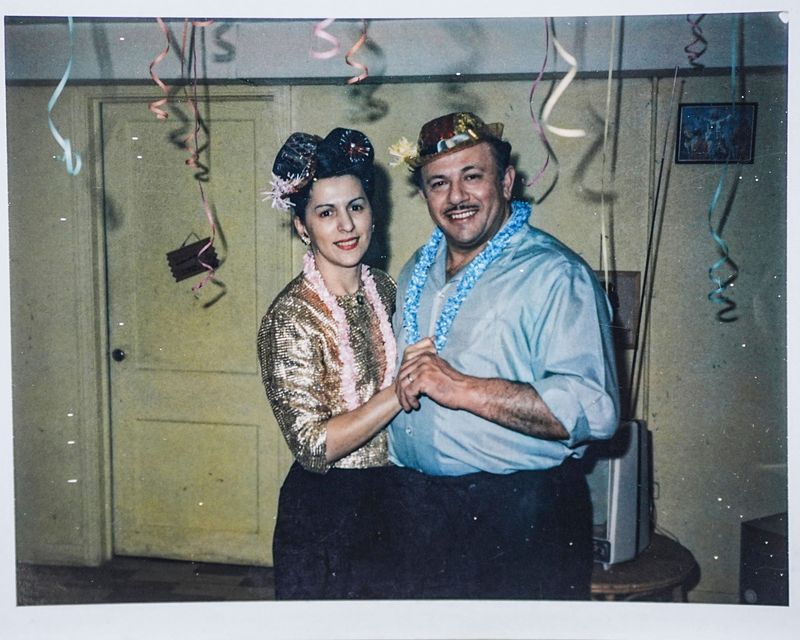
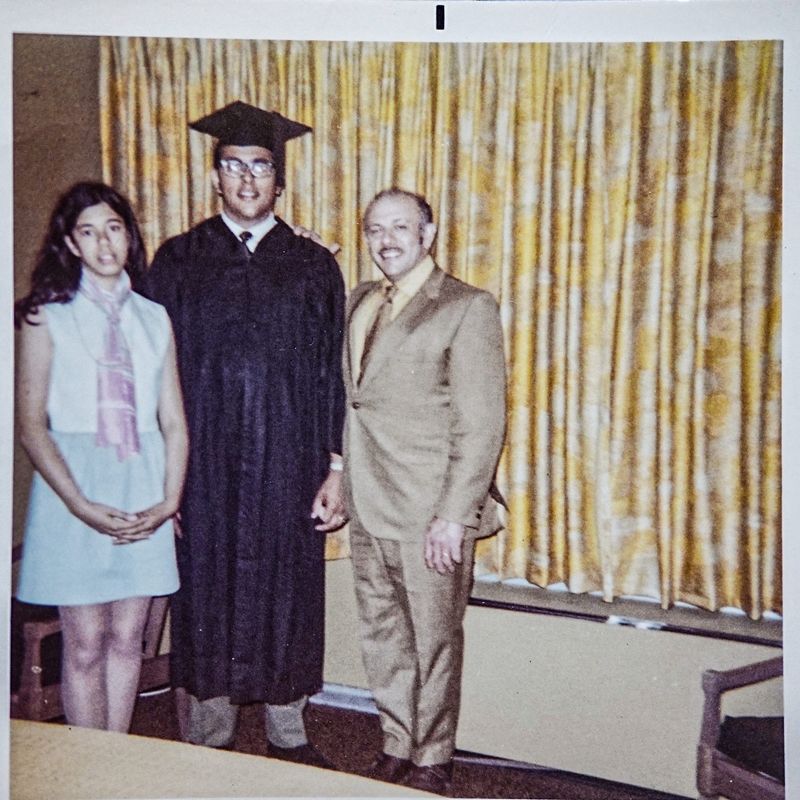
Her grandfather, store owner Joseph Biondo, 54. His brother, Salvatore, 45. Joseph’s son, Michael, 27, a victim of both violence and fate; a law student at Marquette University, he was home for a quick visit and had only popped in to say hello.
The bullets from the gun of a 19-year-old named William Irby cut them down on Oct. 1, 1974. Diakonov knows them only from stories and photographs. She also knows this:
It is her responsibility to keep William Irby in prison for as long as she can.
He was sentenced in May 1975, nearly 51 years ago. Life without parole, the judge said, for Irby and the three other young men who set out to rob Joe’s Market.
But there’s a resentencing hearing on the docket for Friday, March 13, before Judge Kelly Ramsey of the Michigan 3rd Circuit Court.
Two U.S. Supreme Court rulings and a few more from the Michigan Supreme Court have led to sentence reviews in the past few years for nearly 500 young lifers in Michigan, with some 730 pending. The result, in most cases, has been a reduction from eternity to a set number of years, possibly well distant but at least offering hope for eventual release.
The theory behind the recalibrations — or rather, the fact — is that adolescents are biologically different from adults, more impulsive and less responsible for their actions, with brains still developing into their mid-20s.
Now Irby, 71, will make his case for not dying behind bars.
Diakonov will ask the judge to make sure he does.
She acknowledges that Irby has become a better man than he was a boy. She recognizes the science behind next week’s hearing.
“I don’t want people to think this is about anger or vengeance,” she said.
Rather, it’s about what happens when rehabilitation collides with responsibility. About deciding how much punishment is enough for a crime whose impact still reverberates.
“It’s about justice,” she said.
Making noteworthy improvements
In the mug shot that appeared in newspapers in 1974, William Henry Irby is slender faced, with a moustache and a stylish Afro. In his most recent prison photo, the moustache remains, but he is wide-shouldered and heavy, with his hair close-cropped and graying.
His attorney, Erin Bartels of the State Appellate Defender Office, has met with him several dozen times the past few years at Lakeland Correctional Facility in Coldwater, where inmates mostly live in dormitories and there are two volunteer programs for training rescue dogs.
Bartels is adamant that he has earned his release, devoted to making that happen, and careful about preserving what there is of his privacy.
He earned a bachelor’s degree in prison, she said, and the Department of Corrections confirms that it came from what’s now Spring Arbor University in 1984. A guitarist who also plays the trombone and baritone horn, she said, he has taught music to other prisoners and led the jazz band in any of the 11 prisons he has cycled through where those programs exist.
He has 29 violations on his misconduct record, an unremarkable number across half a century when it’s viewed by a judge or a parole board. Eleven of them are for simply being out of place. Eight are for substance abuse — alcohol, heroin/morphine, “other substance” — but only one has been logged in the last eight years.
There tend to be commonalities among young murderers, Bartels said, including problems in home and environment, and Irby’s story “is unfortunately not an unusual one for these types of cases.”
Again, she was guarded with details, but said that if he is ever released, he’ll have support from her office, the prison system and his family.
As for her family, Diakonov said, “even when I was young, I recognized there was a hole that couldn’t be filled.”
“The one thing people continued to have trust in,” she said, “was consequences.”
From robbery to ruin
Joe’s Market stood at Benson Street and Ellery. On the unusually cold Oct. 1 when everything changed, a day when light rain mixed with a trace of snow, Lanetia Averyette pulled to the curb outside in a Mercury Marquis.
Her passengers were her cousins, LaMarr Leatherwood, 21, and Tyrone Peters, 27, along with Ivie Bowen, 24, and Irby.
As she told the court when she became the prosecution’s star witness, Bowen left the car and strolled into the market alone. He returned a few minutes later and reported, “everything is just like I said it was.”
He stayed behind with Averyette while the others, all armed, entered the store. When they raced back, she testified, they were angry because Irby had “emptied his gun.”
“Not only do we have a robbery,” Leatherwood complained, “but we have murder on our hands.”
Leatherwood was seven months and seven days past his 21st birthday. He is not covered by the landmark case of Miller v. Alabama, which prompted resentencing hearings for juvenile lifers nationwide, or the Michigan rulings that first extended the scope of Miller to 18-year-olds, then 19- and 20-year-olds.
Now 73, he resides at the Muskegon Correctional Facility.
Bowen died in 2006, and Peters in 2007.
Rose Biondo, Diakonov’s mother, died of breast cancer in 2020 — the co-owner of an advertising agency, grateful for 66 well-spent years, but very much aware of who had outlived her.
The trap doors of time
Rose Biondo was a 21-year-old Wayne State student when her brother Michael was murdered. He was supposed to pick her up at school, and when he didn’t show, she took a bus home and walked in on her mother and grandmother being sedated.
Rose married Yuri Diakonov, a concert pianist, four years later. They had three children, with Marella, who co-owns a tennis club, the second of them.
All three kids have Biondo as a middle name, in tribute to the three men who never met them. Michael had been a pipe smoker, and Rose kept some of his favorites, just to savor the smell.
“In every room,” Marella said, “there was a nod to keep their memories alive” — a photo, a paperweight, a gift.
In every calendar, there was a land mine.
“She could never talk about what happened without breaking down,” said Patricia Mills Janeway, one of Rose’s best friends.
At one point, Janeway said, Rose heard incorrectly that one of the four prisoners had been released. Unable to bring herself to check the online Offender Tracking Information System, she asked Janeway to do it for her.
After that, Janeway said, “Every Oct. 1, I would look on OTIS.”
As Rose neared the end, Janeway said, her friend spoke of the unfairness of Irby and Leatherwood outliving everyone who felt the most piercing anguish of that day.
The last word her mother spoke, Marella said, was “Michael.”
Adding to an ugly toll
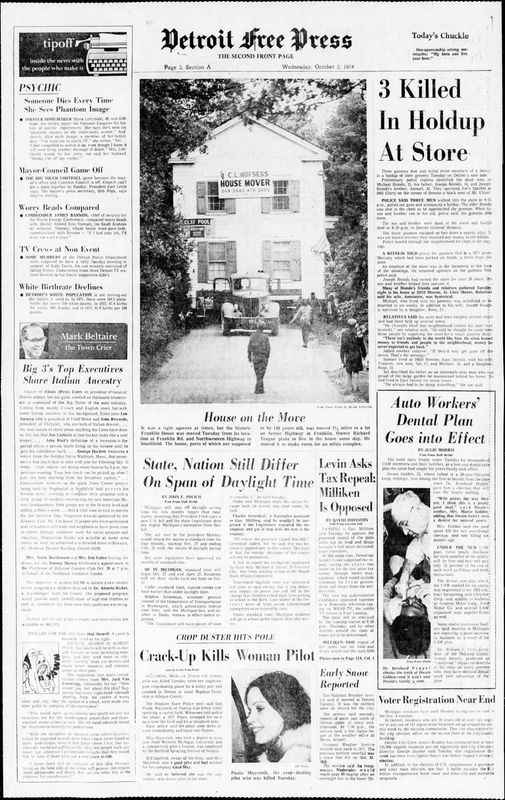
The murders made the New York Times: one paragraph from an Associated Press report, on page 34, beneath a tiny headline that said, “3 Slain in Detroit Holdup.”
They were bigger news in Detroit, but they were not uncommon. In a city of 1.5 million, 1974 saw 714 criminal homicides, still a record, capping a decade of annual increases. By comparison, albeit in a city of half the population, the total in 2025 was 165.
The first year of Coleman Young’s five terms as mayor had included other robberies gone bad, drug-related shootings, stabbings, and the particularly hideous April murder of a 6-year-old in which her mother’s boyfriend threw her out a third-floor window.
The story of two well-liked grocers and a future lawyer resonated, even amid the other 146 homicides in retail locations. The Detroit Free Press devoted stories to the arrests of each of the four suspects — Irby first, identified by police as “William Irvy,” on Oct. 7, followed by Peters, Bowen and finally Leatherwood.
Police said they had “tremendous cooperation” from the nearby residents who depended on the market.
No neighbors and a new road
Five decades later, there’s a tourist attraction nearby, but no neighborhood to speak of.
The market has vanished. On the short block between Benson and Arndt, there are no houses standing on its side of the street and only one on the other. The next block, it’s the reverse. With the snow cover melted away, the yellowed grass looks like prairie.
A minute’s walk to the northwest, there’s what seems like a mirage, all bright colors and fanciful shapes. But it’s real: the Heidelberg Project, artist Tyree Guyton’s outdoor installation, with a section of actual and pretend clocks he calls “The Time Is Now.”
Years have drifted by. The city has changed. The crime is in the distant past.
William Irby is in prison.
The prosecutor’s office can’t speak ahead of the hearing, and Bartels is too cautious to venture a prediction.
Marella Biondo Diakonov has forwarded the judge 30 letters from friends and relatives, all asking that the life sentence be kept in place. But she can read the tea leaves and the periodic stories about old men set free, operating without barriers for the first time since they were fiery and strong and wrong.
The recidivism rate for ex-lifers is only 3%, compared with 22.7% overall in Michigan. Irby has done everything the system has asked of him except die.
Chances are still remote that he will be set free. They are better that his sentence will be sliced from life to, say, 60 years, putting parole in reach before the end of the decade.
Rose Biondo attended every day of the trial, her daughter said, and the two of them look startlingly alike.
She’s planning to speak at the hearing, and she hopes that’s a vision Irby will take with him to the outside — one last reminder to carry as he seeks a better path, while she shoulders burdens of her own.
Reach Neal Rubin at NARubin@freepress.com.
This article originally appeared on Detroit Free Press: He murdered her relatives in 1974. She’s fighting to keep him in prison
Reporting by Neal Rubin, Detroit Free Press / Detroit Free Press
USA TODAY Network via Reuters Connect