Dry beans are a fun and satisfying crop to grow. You are rewarded at the end with a food product that is all ready for storage; no special equipment or refrigeration is needed. There are hundreds of varieties of dry beans, many of them are heirloom varieties, for example, Jacob’s cattle. Some have their own distinct flavors. The most commonly grown dry beans, Phaseolus vulgaris, include navy, kidney, small red, great northern, small white, cranberry and black turtle. Other types of beans, such as garbanzo and black-eyed peas, are entirely different species.
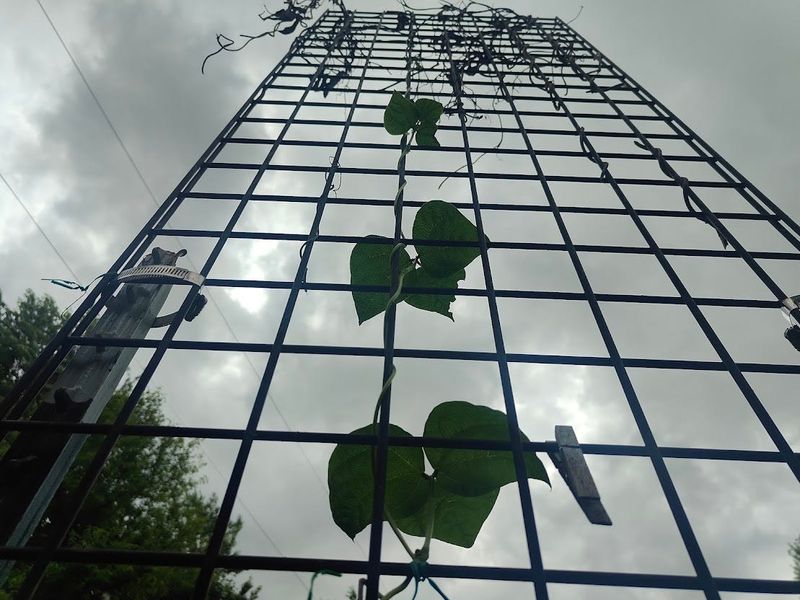
Easy to grow dry beans grow on short bushy plants called bush beans, or as pole beans, which twine up supports. Best results need at least six hours of sun, good garden soil, consistent water and timely weeding. Very sandy soils do not hold enough moisture, so add organic matter to act as a sponge to hold water. Beans are not adapted to heavy clay soil.

Beans are legumes; they extract nitrogen from the air with the help of rhizobia bacteria that live in plant root nodules. Adding extra nitrogen fertilizer can damage these bacteria, reducing yield. Instead, add seed inoculants.
Beans are planted mid-May to mid-June or slightly later and will mature in as little as 85 days, depending on the variety.
Bush bean seeds are planted about one-and-one-half inches to two inches deep, three inches apart. Pole beans are often planted on a four-pole teepee with six seeds per pole. Do not pre-soak bean seeds. In warm soil, seeds will emerge in about six days.
Weed control is essential. Newly emerged seedlings are easily broken. Wait until the first two leaves are full-sized before hoeing. Beans have small, shallow roots, so do not chop deeply; instead, scrape off weeds at the soil surface. Hoe two or three more times in the next few weeks until the plants’ leaves form a good canopy to shade out weeds.
Avoid working with your beans when the leaves are damp from dew or rain to help prevent disease.
If rainfall is less than one inch per week, apply water at the base of the plants, especially at flowering time.
Temperatures over 95 degrees F will cause flowers and developing pods to fall off.
In the fall when their leaves begin to turn yellow, the beans have matured physiologically. They will still need to dry down until they become hard. When the seeds can be rattled inside their pods, test by biting on a bean. If the bean seed is too hard for your teeth to make a dent, then it is ready to harvest. If a frost is predicted and the beans are still soft, cut the entire plant early and hang them in a dry space to harden.
With a small crop, you can simply pick the pods and shell them at your kitchen table.
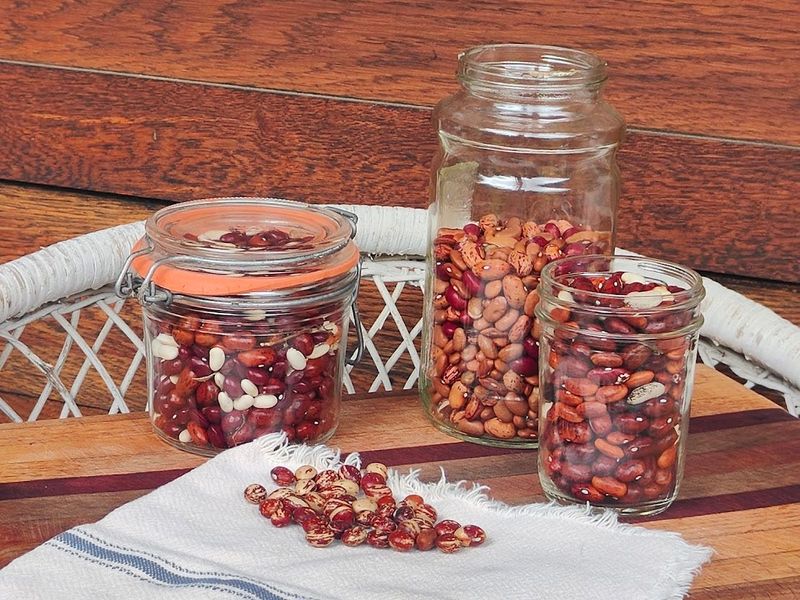
During the winter, glass jars filled with dry beans grown in your own garden is a satisfying part of vegetable gardening.
This article originally appeared on The Detroit News: Dry beans are one of the most gratifying crops to grow in the garden
Reporting by Bob Dluzen, The Detroit News / The Detroit News
USA TODAY Network via Reuters Connect
By Bob Dluzen, The Detroit News | USA TODAY Network