Danasha Tidwell is the first in her family to have a seat at the table with Detroit’s mayor.
The 16-year-old youth organizer, who took part in a large April “teen takeover” gathering in downtown that rattled some business owners and visitors before being met — and disbanded — by a heavy police response, is now working with Mayor Mary Sheffield to represent her family and her peers on city hall’s new Youth Cabinet, helping to identify the spaces and opportunities her generation says it needs to feel like a part of Detroit’s continued resurgence.

Detroit’s glow-up has seen the arrival of many new restaurants, boutiques, entertainment venues and housing. But very few of the city’s recent improvements — save for the riverfront parks — have come to fruition, specifically with young people in mind. And that is a major issue, making many youths feel unwelcome in these sparkling new spaces.
So, in some instances across the country — including in Detroit — they are creating their own spaces, using social media as their concierge to make events for them. And not always with the best results. Some of the so-called “teen takeovers,” have resulted in violence, mayhem, destruction of property and even shootings and arrests.
And, as the weather and the lineup of summer events heat up, so have concerns about escalating violence. The city is tightening curfew rules for youths ahead of the June 22 Ford Fireworks display, which brings tens of thousands of spectators to Detroit’s riverfront from across the metro area each year.
With that big event, and more still to come, city officials knew they had to be proactive: Enter the Youth Cabinet.
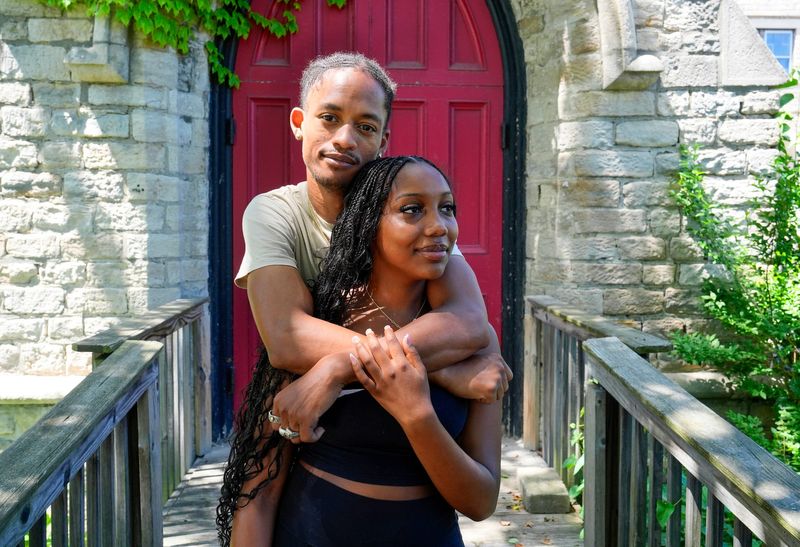
The roughly 50 cabinet members, ages 14 to 26, got to work last month with informational sessions and discussions about the greatest needs facing Detroit’s young people. Tidwell serves alongside Melvin Alston, 20, who is also a special projects fellow in the city’s Youth and Education Department.
Both said they noticed the same gap inside city hall — almost no one their age was in the room.
What they want, Tidwell said, is simply “someone here that’ll listen to us, and listen to what we have to say about our youth.”
“I’m representing my younger youth,” she said. “Not a lot of people that’s my age have this opportunity to sit down with the mayor and, one-on-one, get to talk to her and let her know how we really feel about this. I really feel like that’s, like, a big flex, to even be talking to the mayor.”
For Alston, the difference is who else is in the room. He has competed in national chess and coding competitions and held a string of internships, but said he rarely saw himself reflected in them.
“There are kids of all different cultures and races, and people who come with all these different experiences and share their experiences with each other,” he said. “I think that’s really important. I think that is what’s different for me.” In his other internships, he added, “a lot of the kids didn’t look like me. I was in rooms where I kind of felt uncomfortable, because that was the sad reality. And now I get to see other leaders who are my color, or even different colors, come together and really create something very, very powerful.”
From ‘teen takeover’ to a seat at the table
Sheffield’s Youth Cabinet grew out of an April “teen takeover” in downtown Detroit, a gathering that startled nearby business owners and patrons before police moved in. The large gatherings reignited a debate over the city’s youth curfew.
The “takeover” label, however, says more about social media than about Detroit, said Chanel Hampton, the city’s new Youth and Education Director. Such gatherings have become a nationwide trend, she said — and the crowds are not who people assume.
“When we look at our curfew violations … we have young people that are coming from across metro Detroit,” Hampton said. “Oftentimes, when you have hundreds and hundreds of young people coming downtown — when it’s in Detroit, we tend to generalize and say it’s all Detroit kids.
“We have young people coming from West Bloomfield, Farmington Hills, Southfield, Lincoln Park, you name it. And about half of those kiddos make up our curfew violations. I say that to say: when we talk about Detroit youth, every negative thing that happens, it is not just Detroit kids.”
Hampton, who has more than 20 years in education, said she made one thing clear to the teens from the start: They were not in trouble. When Sheffield announced the cabinet alongside young people downtown in April, Hampton told them they were being invited to be a “part of the squad.”
“If we are saying that we are making decisions, and they impact young people, they must be at the table,” Hampton said. The cabinet, she said, gives the city a standing body of young people who “feel seen, valued and heard, and are actually helping us make executive-level decisions within the city — not just for my division, but across the entire city.
“We also want to make sure we have a group of young people that we are able to consistently and deeply invest in.”
Downtown gets the attention, Hampton said, but teens are gathering in parks and neighborhoods across Detroit, too. The city’s answer this year is “Occupy the Summer,” a six-point plan meant to head off violence during the months that historically bring the most bloodshed and to create safe places for young people to gather, including Saturday basketball events and Friday programming around the city.
“I think Occupy the Summer, the basketball events … and the Friday events — I think this will give them the opportunity to have a space, have fun and let their hair down around their peers,” Alston said.
What the cabinet is working on
The cabinet expects to hold its second meeting later this month. So far, members have discussed the so-called takeovers, how to use social media as a positive platform, and ideas for youth programming the city could carry into next year.
Alston said the cabinet also will soon launch its own newsletter and social media page to keep young people informed about curfew rules and activities across the city.
Under current rules, curfew for 15-year-olds runs from 10 p.m. to 6 a.m.; for 16- and 17-year-olds, it runs from 11 p.m. to 6 a.m. Parents can be fined $250 for a first offense and $500 for a second if their child is caught out past curfew.
There has not been much pushback on the curfew itself from the cabinet, Hampton said.
“Sometimes, you’ll hear a young person say, ‘Well, I’m not causing any trouble,’ but we remind them, ‘We want you to be safe,’ ” she said. “Sometimes, it’s not that we’re worried about you and what you’re doing. It’s not safe for a young person to be out at 1 o’clock, 2 o’clock in the morning. We haven’t heard a lot of pushback there.”
Where the teens say they do want change is in how the curfew is enforced. Tidwell and Alston said the cabinet is exploring reforms that would lean on community service rather than fines. And Tidwell said she wants later curfews, with room for exceptions.
For teens, “the night is still young. They want to be out, have fun with their friends and stuff,” she said. “But, like, special events — if they have an adult with them, they can stay out a little later. I do also think the parents should not have to suffer for what the kids have done.
“The parents should not have to pay a fine for what their children have done and made a bad mistake. … If they vandalize the community, did something bad to the community, the teens have to pay that price, not the parent.”
For Hampton, the answer is not enforcement or prevention, but both.
“I understand that some people want to see enforcement, and intervention is necessary. A holistic approach, which includes prevention, is always necessary,” she said, noting that her team reminds young people an hour before curfew to start heading home. “Things do look different in Detroit, and they look different, in part, because Mayor Sheffield brought young people to the table.”
And the teens never expected to be at that table at all.
“Oftentimes, young people can size you up in a second, and they know if you genuinely care,” Hampton said. “And, sometimes, we don’t even stop to ask a young person what they want, how they feel, what they want to see.
“I genuinely believe that if you ask people what they want — young people, adults, elders — they will tell you. It is simply on you, and your duty, to listen.”
But do curfews actually work?
Preventing youth violence prompted heavy debate last summer, after a nine-day stretch of gun violence left at least 13 Detroit youths injured or dead.
The city’s response was to crack down on curfew violations and parental responsibility laws — an approach critics said served to criminalize Black youths and penalize poor parents. Detroit police rejected that, describing curfews and higher fines as another “tool in the toolbox” against youth violence.
According to Detroit Police data for June 1 through Sept. 30, 2025:
For the shorter, earlier window of April 1 through June 4, 2026, the department reported:
The two periods cover different spans — roughly four months last summer versus about two months this spring — so the figures are not a direct comparison. And the city has not released any data on the effectiveness of the curfew itself. Some research cuts the other way: A 2016 review by the global research organization Campbell Collaboration found that curfews are ineffective, and that juvenile crime during curfew hours actually rose after curfews were imposed.
Tidwell argues the problem is smaller than the headlines suggest — that only a small share of young people are getting curfew violations.
And many parents say even doing everything right is no guarantee.
Tracey Clark said she imposed a 9 p.m. curfew on her 14-year-old son and knew exactly where he was and who he was with. But it didn’t stop him from being shot in downtown Detroit in May during a “Teen Takeover” — a bullet just missed his heart.
‘It’s summer’
When the Free Press spoke with Detroit teenagers last summer, they asked for one thing above all: more to do. A year later, they said the same.
Uriel Bath-Yahweh, 17, said she thinks curfews can work, but only “to an extent.”
“Of course, people break rules, people will sneak out, and they will break curfew. It just really depends,” she said. But the issue, she added, is bigger than any curfew.
She and her father, Dwight Roston, 32, said they are deeply involved in community service through their church, the Church of the Messiah, and in their neighborhood.
“If there were more programs and opportunities for people in their own neighborhood that they are interested in, then they would be more likely to be at home and enjoy the stuff around them, rather than going out and doing other things to fill the time,” Bath-Yahweh said.
Her father agreed.
“If there are no community centers, if there are no basketball courts and things like that … if they are not functional, or safe, then this could lead to a bunch of young people not having things to do in their own neighborhood,” Roston said.
“And then, that can cause them to get together — and, obviously, a bunch of young people with no direction in one area is going to cause a problem.”
Speaking of community centers, Taniya Diamond, 37, said she brought her family to Sheffield’s Occupy the Summer kickoff event on Friday, June 12 at the Adams Butzel Complex recreation center, on the city’s northwest side, to expose them to more activities in the city.
“I think this is a good thing, it gives the kids a chance to get out and do something; it gives different resources, and this is good for the city,” Diamond said. “This definitely helps fill the gaps in the summertime, especially with the sports community taking over for the kids in the summer.
“This is definitely something to give them an alternative, something good and uplifting to look forward to, so I’m happy about this. I would love to see more.”
Even with increased activities for young people, Diamond said she still believes things like curfews and enforcement are necessary.
“Teenagers can’t take over the city in a negative way. We need to take over in a positive way,” she said, adding that she tries to keep her kids engaged in sports, travel and various activities throughout the summer to keep them from mischief.
The expanded hours for using the city’s recreations centers that are a part of the Occupy the Summer plan, also are a huge plus, she said she is planning to take advantage of. “So, I’m happy to see that,” Diamond added.
Such intentional summer programming — meaning actually putting in the effort to make it interesting and useful — is something that has been lacking, Bath-Yahweh said.
So are spaces like the once-popular Monroe Street Midway downtown, an outdoor recreation area she and her friends said they “loved” before Bedrock closed it in 2023. And the resources that do exist don’t seem to be widely known within their community.
Which is why the city has been doing all it can to announce and highlight the Occupy the Summer initiative at different locations, in the neighborhoods, across the city.
“I think the teen takeovers continue to show us that young people want safe spaces; they want to get out, have a good time, but it has to be done in a safe way. That is what Occupy the Summer is about, providing and curating a space where they can have fun, connect with resources, and be kids,” Sheffield said at the kickoff event. “They’re young people. They should have the opportunity to have safe spaces to do that.”
One other thing that would help — that Roston added and said his daughter failed to mention — is ways for teens to earn money. The city does have the Grow Detroit’s Young Talent summer jobs program, but more opportunities are needed, he said.
“That would incentivize them. They are teenagers. They do want to have some money in their pocket to do what they need to do, but they need to understand how to be responsible with the things that they have,” he said.
Not everybody is trying to “tear stuff up,” Roston said. Most teens just want to be “out and about.
“It’s summer.”
Dana Afana is the Detroit city hall reporter for the Free Press. Contact: dafana@freepress.com. Follow her: @DanaAfana. Andrea Sahouri covers criminal justice for the Detroit Free Press. Contact her at asahouri@freepress.com.
This article originally appeared on Detroit Free Press: Detroit youths want city to ‘listen to us’ as they navigate curfews
Reporting by Dana Afana and Andrea May Sahouri, Detroit Free Press / Detroit Free Press
USA TODAY Network via Reuters Connect




By Dana Afana and Andrea May Sahouri, Detroit Free Press | USA TODAY Network