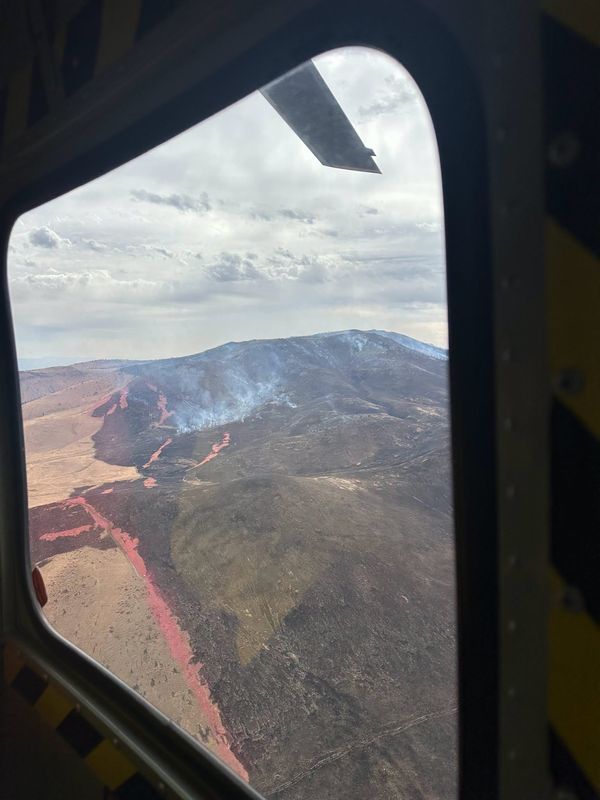
A fast-moving wildfire burning near the Sierra-Plumas County in Northern California has grown to more than 12,000 acres and remains largely uncontained, though firefighters are getting some help from cooler temperatures, cloud cover, and overnight moisture.
The Elephant Fire, burning about 2 miles from Loyalton and less than 14 miles from Cold Springs, had scorched 12,303 acres and was 5% contained as of Tuesday, July 14, according to the Tahoe National Forest. About 500 personnel are assigned to the fire.

Fire officials said crews are taking advantage of overcast skies and overnight showers to strengthen fire lines and continue containment efforts. The cause of the fire remains under investigation.
The blaze is burning in parts of Sierra Valley, including areas affected by the 2020 Loyalton Fire, which charred more than 47,000 acres and forced evacuations near the Nevada-California border.
Elephant Fire evacuations
An evacuation order issued Monday for portions of Lassen County west of U.S. Highway 395 has been lifted, according to fire officials.
However, evacuation warnings remain in effect for portions of Lassen and Plumas counties near the fire.
Residents are encouraged to monitor local emergency management agencies and Cal Fire evacuation resources for the latest updates, as conditions can change quickly.
The fire is not currently threatening the town of Loyalton directly, but smoke and fire activity continue to affect nearby communities.
Elephant Fire road closures
Several public lands near the fire are closed.
Portions of both the Tahoe National Forest and Humboldt-Toiyabe National Forest within and around the fire area remain closed to the public while firefighting operations continue.
Officials have also warned motorists traveling through Sierra Valley that visibility may be reduced because of smoke.
Drivers are urged to slow down and be prepared for changing conditions, especially during the morning hours when smoke tends to settle into lower elevations.
Elephant Fire weather report
Weather conditions have provided firefighters with a temporary advantage.
The Tahoe National Forest said overcast skies and light overnight showers helped moderate fire behavior and allowed crews to continue securing containment lines.
Still, officials cautioned that fuels remain receptive to fire. The southern portion of the blaze is burning primarily through sagebrush and grass, while northern sections are burning in timber litter, dead vegetation and other forest fuels.
As weather dries out later this week, fire activity could increase in areas where containment lines are not fully secured.
Smoke from the fire continues to affect air quality across the region. AirNow reported moderate air quality Tuesday morning in the Reno-Sparks area, while visibility in parts of Sierra Valley remained reduced.
Elephant Fire burns through footprint of 2020 Loyalton Fire
Part of the Elephant Fire is burning within the scar left by the Loyalton Fire, a major 2020 wildfire that scorched more than 47,000 acres near the California-Nevada border and forced evacuations in communities including Cold Springs and Bordertown.
Fire officials said fuels in that area now consist largely of sagebrush and grasses that have regenerated since the earlier fire, creating a different fire environment than the surrounding forested terrain.
The overlap highlights how previously burned landscapes can continue to influence future wildfire behavior, even years after a major blaze.
Elephant Fire by the numbers
Fire officials continue to urge residents and visitors to avoid closed areas and check for updated evacuation and closure information before traveling in the region.
This article originally appeared on Redding Record Searchlight: Elephant Fire in Northern California balloons to 12,000 acres
Reporting by Carly Sauvageau and James Ward, USA TODAY NETWORK / Redding Record Searchlight
USA TODAY Network via Reuters Connect
By Carly Sauvageau and James Ward, USA TODAY NETWORK | USA TODAY Network