Panama City biologist Brittney Brown is speaking out eight months after she was fired for sharing a meme on social media following the death of Charlie Kirk.
Brown was one of hundreds of employees across the country terminated or otherwise disciplined after posting about the conservative commentator.

Scores of public employees — nurses, journalists, scientists, professors, teachers, public defenders — were fired for posts considered to be making light of a violent assassination, in which Kirk was shot in the neck and killed in front of hundreds of Utah university students at an outdoor event.
Brown, however, was vindicated, but only after a lengthy battle.
Why was Brittney Brown fired?
Whales aren’t biologist Brittney Brown’s specialty. But they’re why she got fired.
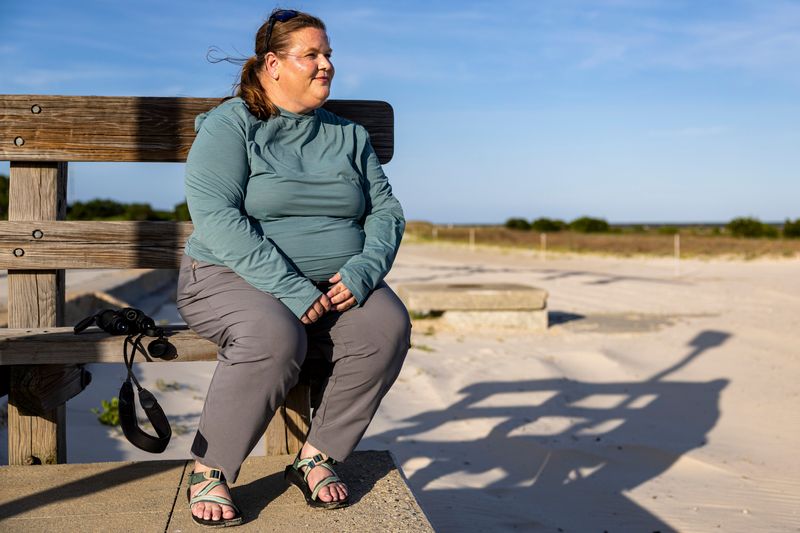
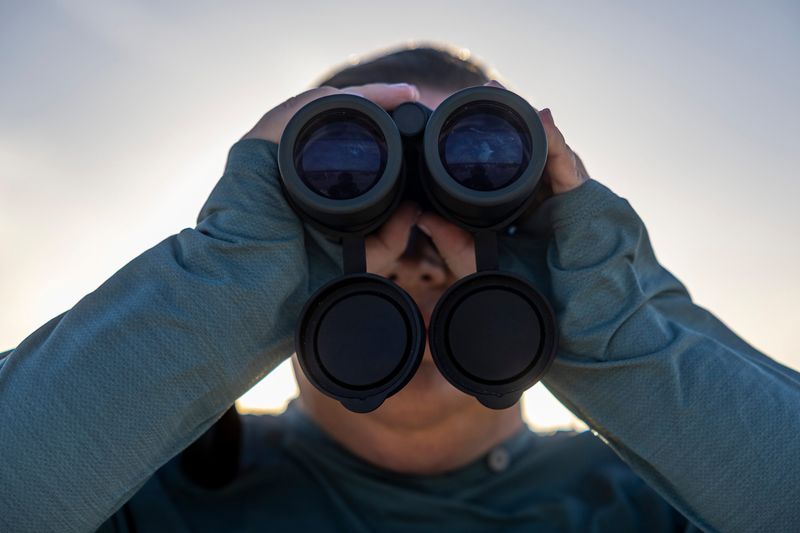
For nearly eight years, Brown has spent her early mornings on Florida’s coast, marking off barriers to protect nesting birds, listening to seabirds chattering and brushing sand off her face from the gusts of wind hugging Panama City’s beaches.
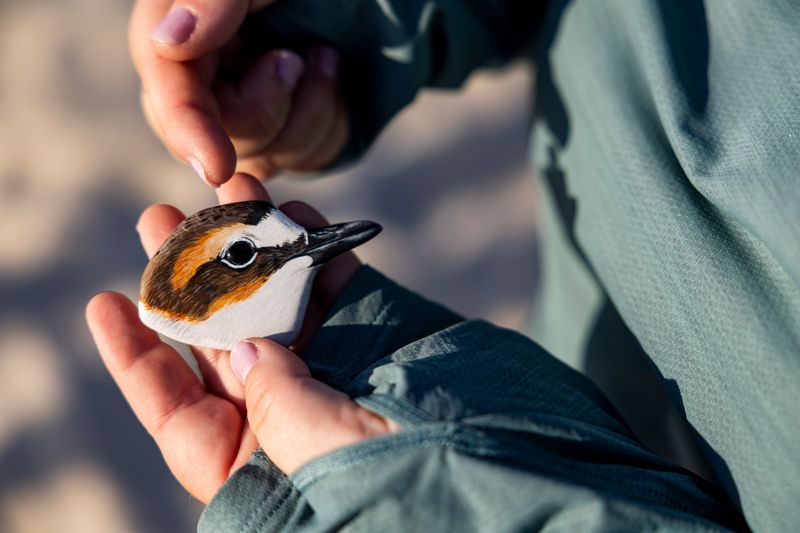
She’d been most excited to see her favorite bird: the Wilson’s plover, which frequents Florida’s coasts and happened to be the first wild bird she’d ever held.
But she hasn’t seen them this season, since her Instagram repost about whales reacting to Charlie Kirk’s death led to her losing her job, moving to Mississippi for new work and settling for $485,000 in a free speech lawsuit — all within eight months.
Brown previously worked as a biologist specializing in bird conservation for Florida Fish and Wildlife Conservation Commission, until she was fired for reposting a meme about whales feeling indifferent to Charlie Kirk’s assassination.
It read: “the whales are deeply saddened to learn of the shooting of charlie kirk, haha just kidding, they care exactly as much as charlie kirk cared about children being shot in their classrooms, which is to say, not at all.”
Her critics contend that Brown’s predicament was, at least in part, self-inflicted. They say that although the First Amendment may protect controversial speech from government retaliation, exercising that right can still carry personal and professional consequences. It did for Brown, and many others.
Fired for online speech in the ‘free state’ of Florida
Brown, 36, then faced an eight-month halt in her 14-year career starting in September. She spent it in courtrooms and meeting with attorneys to fight for getting her job back and, in a broader way, for the life she built in Florida.
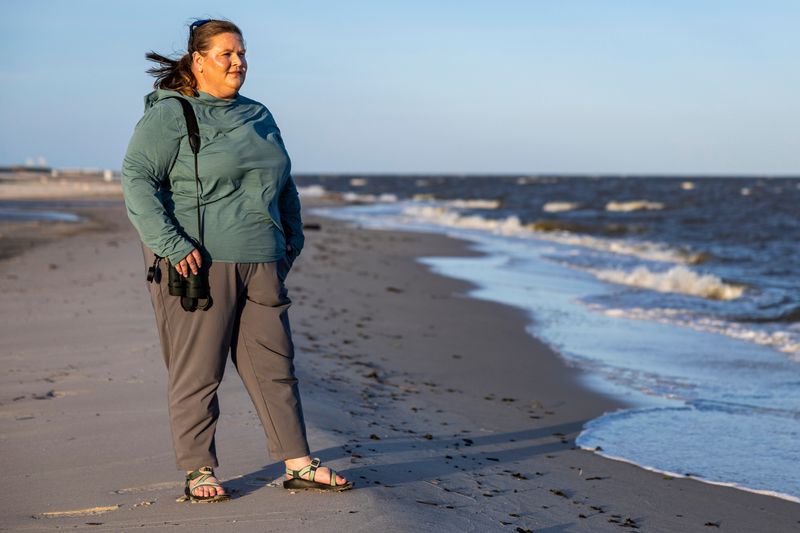
Florida “was home,” Brown said in tears, standing on a Mississippi beach while speaking to a reporter. “I wanted my life back, and I knew the lawsuit was my only option for doing that.
“When we filed, I truly had hope that the state would realize that this was a losing battle, that (they) violated someone’s federal rights, and you can’t do that.”
In a dramatic twist, her lawsuit quickly came to an end once a federal judge ordered the state penalized for doubling down on “false testimony.” Her ex-supervisor had exaggerated the number of complaints brought to the agency against Brown for her online post.
The state wildlife agency agreed to pay $485,000 to Brown, who was making about $40,000 a year.
Other state workers fired after Charlie Kirk social media posts
Brown’s case was the agency’s most public termination of the handful of employees who were fired over posts about Kirk. FWC posted on their X account Sept. 15 about Brown’s firing although they didn’t name her, and the statement said she “made light of the assassination of Charlie Kirk.”
Court records show that the agency confirmed with a reporter over email that the X post in fact referenced Brown, and records also revealed two others in the agency were also fired for their posts about Kirk.
Although Brown’s career in Florida was cut short and her legal challenge was over, the legal ramifications of public agencies firing workers for their online speech is ongoing. In fact, a series of settlements involving workers across the country hit at the same time: a former university administrator in Indiana got $225,000, a Tennessee theater professor obtained $500,000 and an Iowa public defender got $125,000.
The day Brown was fired, an FWC regional director, Jon Creamer, and an agency law enforcement officer, Major Robby Creech, delivered a termination letter to her home. In an iPhone video filmed by Brown of the encounter, Creamer declined to answer her questions as to why she was being terminated.
“I don’t pose a threat to anyone at the agency, this is wild,” Brown said in tears after handing over her work laptop and phone, as shown on the Sept. 15 video. “I apologize for my demeanor, but I will not apologize for using my right to free speech.”
FWC has declined more than 10 requests for comment over the course of the eight-month lawsuit, saying it does not comment on pending litigation, and its spokesperson did not respond to an inquiry for this story.
Online decision puts stop to Florida bird career
When interviewing with the USA TODAY Network – Florida in Biloxi, Mississippi, Brown said if the Wilson’s plover could talk, everybody would always hear their opinions. She said she related.
Before her lawsuit, Brown said she frequently posted online, and was very open about her political opinions on her private Instagram account that had 3,000 followers. Months before her firing, she made her Instagram account private because she saw a growing trend in Florida of the DeSantis administration blasting people with dissenting voices, she said.
She then deactivated her Instagram and Facebook accounts once she got three messages sent to her criticizing her story from days prior, including one death threat. She later found out that these messages were in response to Libs of TikTok amplifying her social media post with a screenshot of her LinkedIn page. She later deleted that page.
Libs of TikTok is a hard-right social media account followed by millions. After Kirk’s death, it blasted a bevy of public workers for critical posts about him. The owner of the account, which is on a number of platforms, did not return a request for comment.
Its X post blasting Brown came days after her post, and it had more than 3,000 reposts, nearly 10,000 likes and more than 700 comments.
Libs of TikTok goes after social media users
“Britt works for the Florida Fish & Wildlife Conservation Commission. She allegedly posted this disgusting message mocking Charlie’s ass*ssination,” the Libs of TikTok Sept. 14 post said. “Your tax dollars pay her salary. She should be fired ASAP.”
The next morning, on Sept. 15, Brown got a call from one of her supervisors, who told her that the governor and attorney general’s office got involved, and that she’d be losing her job. Spokespeople for DeSantis and Attorney General James Uthmeier did not respond to requests for comment.
Records show that Libs of TikTok sent an email to FWC on Saturday evening, questioning whether the agency supported her statements. In less than an hour after FWC officials handed Brown her termination notice at her home, the Libs of TikTok account also posted on X that she was fired saying they got this confirmation from an unnamed source.
Although she knew her First Amendment rights, Brown said she didn’t know the extent of the rights of public workers. Public employees traditionally have free speech rights when speaking on matters of public concern, so long as they don’t speak pursuant to their job duties, said Clay Calvert, a nonresident senior fellow at the American Enterprise Institute.
In this case, Brown agreed that Kirk’s death was horrific, but she also felt empathy for children who have lost their lives to gun violence. She said Kirk could have used his platform to condemn this violence and promote gun safety.
“Charlie Kirk and I didn’t agree on almost anything, but the irony of this whole situation is the one thing we would have agreed on is my right to speak about anything, even what happened to him,” Brown said.
A career in bird conservation, derailed
FWC is the regulatory body for people who work in bird conservation. She doesn’t know whether she has a future in Florida, and part of her settlement agreement is that she can’t reapply or seek reinstatement to FWC.
Brown longed for a return to her life in Florida with her friends and colleagues in Panama City, but she also beamed when talking about her passion for seabirds and shorebirds.
It’s a passion she’s felt since handling sea turtles in 2010, through her career in North Carolina and Georgia and through her journey at FWC, first in Fort Myers Beach and ending in Panama City.
As she stood on the beach of Biloxi, she clutched a pin of a Wilson’s plover, made by a friend.
It’s a memory of that life that she doesn’t get to have in Florida anymore, and to her, it’s a shame that she hasn’t seen this species in Mississippi.
Instead, she focuses on least terns, seabirds frequently found on Mississippi’s coast.
But she hopes that she’ll encounter a Wilson’s plover again. Someday.
This reporting content is supported by a partnership with Freedom Forum and Journalism Funding Partners. USA Today Network-Florida First Amendment reporter Stephany Matat is based in Tallahassee, Fla. She can be reached at SMatat@usatodayco.com. On X: @stephanymatat.
This article originally appeared on Pensacola News Journal: Panama City biologist awarded $485K after she was fired from $40K job
Reporting by Stephany Matat, Pensacola News Journal / Pensacola News Journal
USA TODAY Network via Reuters Connect
By Stephany Matat, Pensacola News Journal | USA TODAY Network