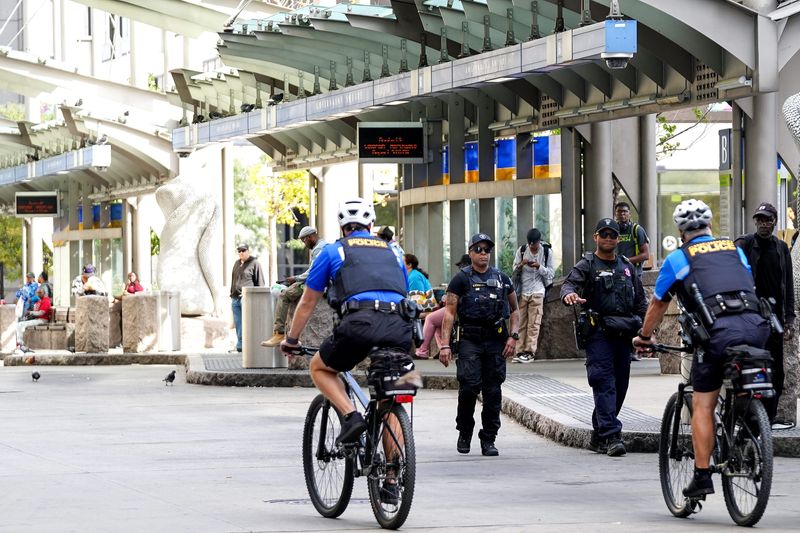
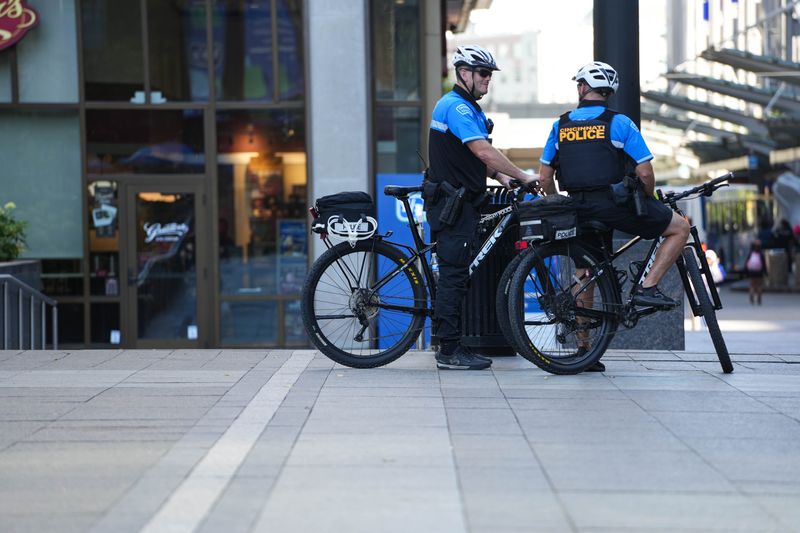
Cincinnati has significantly increased its police presence in Downtown and Over-the-Rhine, paid for largely by overtime spending that is expected to reach $24 million by the end of June, nearly double what was spent by taxpayers last fiscal year.

The surge follows a series of high-profile crimes last summer that intensified scrutiny of safety in the urban core. In response, the Cincinnati Police Department has increased patrols by car, bike and on foot.
With the department still understaffed and budget cuts on the horizon, the additional manpower is largely being accomplished by paying officers millions of dollars in overtime wages, according to numbers from the Cincinnati City Manager’s Office.
The police department is set to accrue a total of $24.4 million in overtime expenses paid by taxpayers by the end of June, nearly double last fiscal year’s $13.3 million in overtime. Cincinnati’s fiscal years for budgets end in June and begin in July. Total spending could grow or shrink in the next month.
The city has regularly budgeted below the actual cost of overtime in recent years, but not by this degree.
This year’s overtime spending is nearly $14 million over budget. Before last summer’s crime spike, $9.3 million was set aside in the budget for overtime costs. Cincinnati City Council then gave an additional $1.2 million bump last fall.
During a May 11 council meeting, budget director Andrew Dudas attributed the need directly to deploying more officers for visibility. Dudas also said officers have been needed for large events, like Cincinnati Bengals and FC Cincinnati games.
There are more off-duty details as well
In addition to police overtime spending for visibility, officers have taken on more off-duty details. Those details are generally paid for by the people hiring officers for assignments (such as bars at closing or major events) instead of taxpayers.
The city pays the officers directly through payroll and is then reimbursed for the details. For some events, the department foots the bill.
Police expect to accrue $11.3 million in off-duty details by the end of June, an uptick from last fiscal year’s $8 million.
Chief Hennie: Police visibility is priority
Interim Police Chief Adam Hennie has indicated the overtime will continue.
During a May 6 news conference to discuss summer safety plans, Hennie said walking patrols have doubled citywide. In April alone, there were more than four times as many walking patrols as in April 2025. He said the department has also expanded its bike patrol to 16 officers and doubled its vice unit officers.
“We are going above and beyond, getting away from our desks, getting outside of our cars and getting out in neighborhoods to reconnect with the community,” Hennie said. “This is not only a big priority for the citizens themselves, but for us to build those connections, build that trust and also in effect reduce crime.”
With Downtown still in the hotseat after a weekend shooting on Fountain Square May 8, the urban core is a focus for police.
Downtown Police Capt. David Schofield said during a community council meeting May 12 the department is planning on adding officers “around the clock” to patrol Fountain Square.
Hennie approved the additional overtime assignments after City Hall cleared the overtime funding, he said.
More than a dozen officers have also been reassigned in recent months from across the department to work Downtown, according to department reports. Last year, there were 50 officers assigned to the Central Business Section, which includes Downtown and Mount Adams. As of early May, there are now 68 officers.
$24M in overtime comes amid $29M budget deficit
As the city wrestles with a $29.5 million budget deficit, the administration is looking for money to fund these patrols wherever it can. Council approved applying for a federal $270,000 grant in April and supported moving $24 million from the general fund toward already paid-out police overtime this year.
Still, as of May 3, the department remains 100 officers short of its full complement of 1,059 officers, adding pressure to lean on overtime to maintain a strong presence.
“Until that complement comes back up, I expect there will still be significant police overtime needs,” Dudas said.
Although the city funded two 50-member police recruit classes and a lateral recruit class to hire officers from other departments, the current budget projects there to be fewer officers by June 2027 than there are now.
Council members praised the department’s overtime spending.
Councilman Mark Jeffreys said the city will continue to invest in recruit classes for new officers, which he hopes will eventually bring overtime spending back down.
“We need to find a sustainable solution in the long run,” Jeffreys said. “But we also need to do what we have to do in order to provide safety.”
Councilwoman Anna Albi said the city has seen success with filling overtime shifts and it is an important part of the summer safety plan.
Councilman Scotty Johnson said despite the need for more recruits, he believes Hennie is doing a great job making sure people see a police presence.
“People see the police out and about and see them active in the community,” Johnson said. “It’s a great help and it does provide a sense of safety for the amazing people of Cincinnati.”
This article originally appeared on Cincinnati Enquirer: Cincinnati has upped police patrols. The cost is $24M in overtime
Reporting by David Ferrara, Cincinnati Enquirer / Cincinnati Enquirer
USA TODAY Network via Reuters Connect