To be named a Top Workplace once is a feat, but to repeat the honor represents a significant accomplishment.

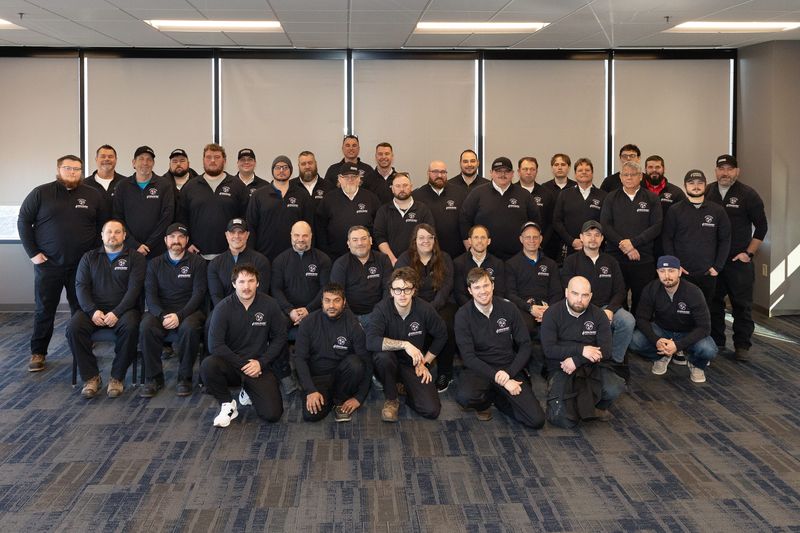
Just ask Michael Swepston, CEO of Atlas Butler Heating, Cooling and Plumbing, a 105-year-old Columbus-based company that employs 147 workers. Atlas Butler is a Midsize Organizations category winner for the second year in a row.
“I wish I had a secret answer,” Swepston says. “It’s even a little harder because so many of our guys take their vans home, get a call sent to them and they go to that customer’s house.”
Because 70 percent to 80 percent of Atlas Butler’s workforce does not make regular appearances in the office—some might come in as seldom as once a month—Swepston has to get creative about promoting company culture and communicating with employees. Atlas Butler brings everyone together at quarterly meetings and also holds a monthly breakfast with Swepston, the chief operating officer and 10 employees.
Sometimes, though, the best approach is simply reaching out informally as opportunities arise—especially with a workforce that has chosen this line of work because they don’t want a meeting-heavy job. “We tend to get a lot better feedback when you just meet someone in the hallway or you’re at an event and you’re just casually talking to them about it as opposed to a set meeting, [where] you need to come with eight bullet points,” Swepston says. “I can’t fix stuff if I don’t know it’s broken, so I encourage people on a very regular basis to let me know what their thoughts are.”
Employee-initiated suggestions have led to the company making birthdays paid days off, as well as the implementation of paid parental leave and increased bereavement days.
One reason leaders have been receptive to implementing such ideas is because so many worked their way up the ladder, Swepston says. “A lot of us came up working in warehouses,” he says. “The whole leadership team does their best they can to say, ‘All right, if I was in that role, what would I want?’ ”
Although 2025 saw increases in the costs of both materials and insurance, Swepston points to consistent company growth and the ability to regularly increase employee pay and benefits as pluses. It’s the sort of work environment that encourages employee retention. “We actually had a guy who just spent 50 years with us,” he says.
Longtime workers become the company’s best recruiting tool. “I would say a majority of our new hires come from recommendations from someone who already works here, saying, ‘Hey, you should probably work here, too,’ ” Swepston says.
Building on the Basics
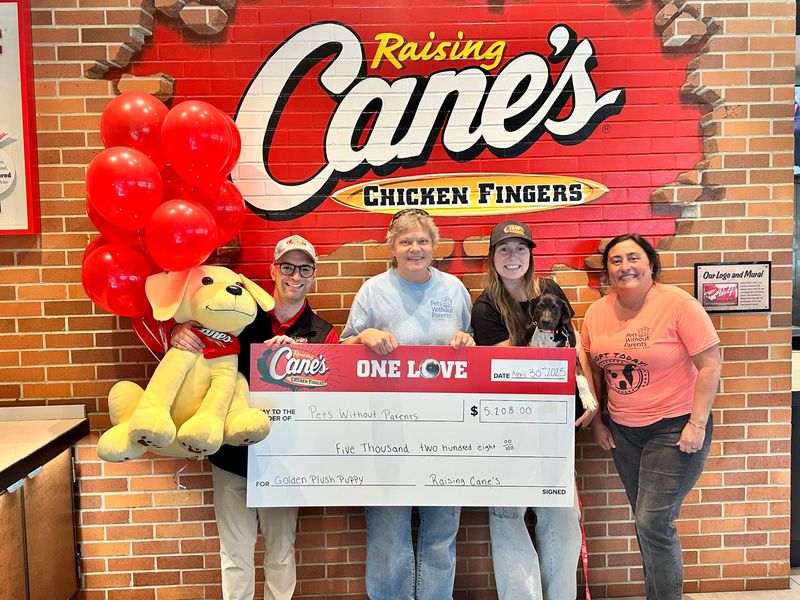
A similarly inclusive, democratic ethos governs Raising Cane’s Chicken Fingers, which employs more than 85,000 people across nearly 1,000 restaurants in the U.S. and some international destinations, including the Middle East. The 30-year-old company—a Top Workplaces winner in Columbus for the third straight year—is based in Baton Rouge, Louisiana, its founding city.
Key to its success is its designation of all crew members, managers and executives as “fry cooks and cashiers.” Even if their day-to-day responsibilities seldom include in-restaurant work, they still receive such training.
“Our founder is the original fry cook and cashier,” says Brian Stegall, division leader of restaurants, who is based in Cincinnati. “When he was starting the business, he did it by being inside the four walls of the restaurant, working with his crew, helping them to execute the shifts, helping them to serve the perfect box. That has been a foundational part of our culture.”
This mentality has resulted in an atmosphere in which every employee, no matter how senior, knows what it takes to run a restaurant. “There are a lot of organizations out there that train whatever level of leadership that gets them exposure to the restaurant,” Stegall says, but Raising Cane’s ensures that everyone from a restaurant operator to a financial analyst knows what it takes to fry chicken fingers and take orders. “When I go into the restaurants, the first thing that I am is a fry cook and cashier, and I am working side by side, hip to hip, with our crew members,” he says. “We are never separated from our one true purpose.”
Working alongside restaurant workers allows company leaders to recognize good work while demonstrating opportunity for advancement. “We also have a really strong internal development and internal growth pathway that our crew members can take,” Stegall says. “That gives them the ability to know that they can have a very clear path to a long-term career with Cane’s.”
An emphasis on managing work-life balance is engrained in the company’s values. Raising Cane’s shuts down on eight major holidays, Stegall says, including some not generally observed by other restaurants, like Memorial Day and Independence Day. “We recognize the hard work that our teams go through,” he says.
The Top Workplace ranking is significant to the company because it reflects the sentiments of its employees. “We take a lot of pride in being able to say that, ‘Hey, we’re one of the Top Workplaces,’ ” Stegall says. The achievement also aids in recruiting, he adds, which is especially important given its plans to expand to London, England, this year.
Watching out for Workers
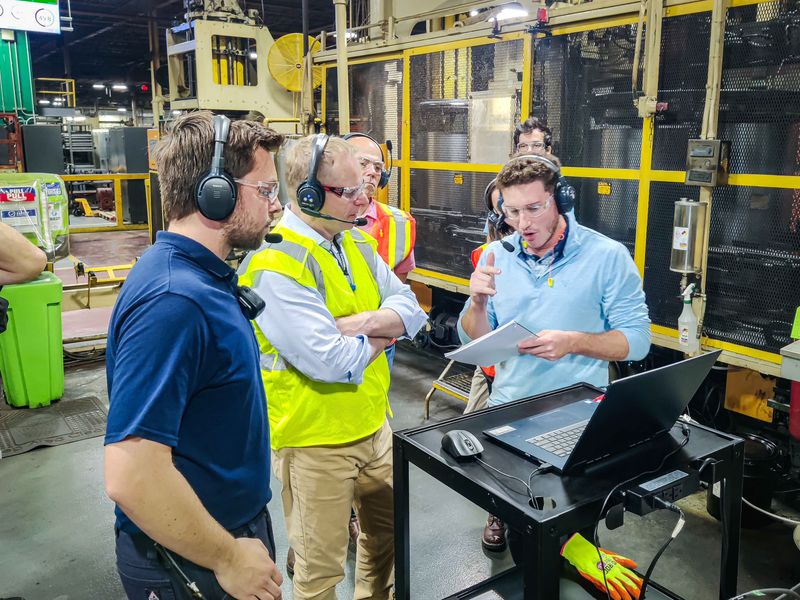
Greif, with 14,000 workers around the globe, emerged as a Top Workplaces winner for the seventh consecutive year. Called “one of Columbus’ best-kept secrets” by Bala Sathyanarayanan, Greif’s executive vice president and chief human resources officer, the company produces a variety of industrial packaging, including bottles, drums and bulk containers. More than 250 people work at its Delaware headquarters.
“We have almost 250 manufacturing facilities in these 40-plus countries,” says Sathyanarayanan, adding Greif is known for its expertise and its high-quality products. “When Pfizer came out with the vaccine during COVID, they looked for a partner who could safely transport their most valuable product at that point in time in the world then—the vaccine—to places like Africa, who were starved of those vaccines.”
With such a large workforce, Greif, like other companies of its size, is tasked with promoting its values across a broad geographic footprint. “We look at that challenge as an opportunity,” Sathyanarayanan says.
A particular emphasis, he says, is on assuring safe working environments across sites and continents. “Walk into a Greif facility in Columbus, Ohio, or in Chennai, India, or in China, or in Chile, you will experience the same level of sophisticated safety culture,” Sathyanarayanan says. “Every manufacturer says, ‘I keep my employees safe.’ … We go over and above. Beyond providing them with equipment, we actually train them on how to use it and also provide them with ways … to express their focus and passions, not just for safety but bringing their enthusiasm and involvement in the day-to-day job.”
Greif prefers the term work-life integration to work-life balance because, Sathyanarayanan says, “there is nothing called ‘work’ outside life. You are working when you are living.”
At the corporate office in Delaware, the company does not require in-person work but encourages employees to be on-site for the amenities it offers. “The company makes lunch available for any colleague who walks into the organization. There is free Starbucks, there is free soft drinks, there is a free gym, there is a free haircut, too,” he says, as well as a company pool. “We do not mandate people to show up; we enable people to show up.”
Business conditions were challenging last year due to tariffs, Sathyanarayanan says, and 2026 may offer more of the same. “But manufacturing companies are finding ways to work inside the constraints of what challenges tariffs can throw at us,” he says. Such a can-do corporate attitude may be one reason for Greif’s continued success as a Top Workplace, he adds. “We earn this award because this is what you are seeing from our colleagues.”
Working to Engage Employees
Though it has experienced significant growth this decade, Elford Inc. strives to maintain a personal connection with its workforce.
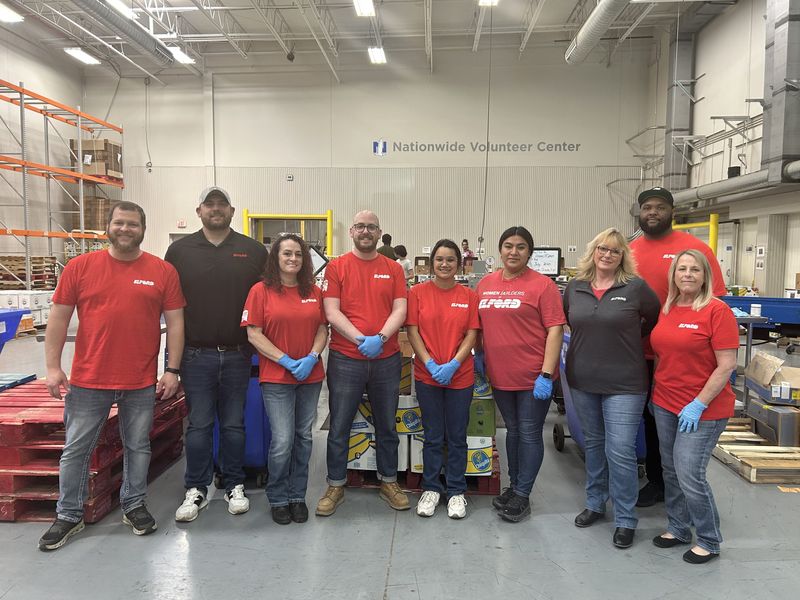
The Columbus-based construction company, founded in 1910, was named a Top Workplaces winner for the ninth straight year. Elford’s portfolio includes projects in the education, health care, multifamily housing, retail and industrial sectors. “We’ve been around for a while,” says Erick Piscopo, chief talent officer of the company, which also has an office in Charlotte, North Carolina.
Economic growth in its core markets has resulted in a major increase in Elford’s employee headcount, from about 270 workers in 2020 to almost 450 in early March—410 of whom are in the Columbus region. Despite the size, Piscopo says Elford endeavors to “make everything as personal as possible.”
“The bigger you get, the harder it is to maintain that culture,” he says. “We still have folks who occasionally say, ‘I wish we still had that small company feel.’ And you just can’t do that when you’re that big with that many people.”
Nonetheless, Elford works overtime to engage with its people, no matter what they do or where on the org chart they fall. “This isn’t the kind of place where the C-suite is like an ivory tower and nobody ever sees them,” Piscopo says. “One of the things that I’ve been told by folks that work for us is they love the fact that they’re just walking down the hall one day and they might bump into the chairman of our board, our CEO, our CFO [or] myself as the chief talent officer, and we know their names. … We put a lot of effort into getting to know our folks personally.”
In knitting together such a large workforce, Piscopo has found certain common denominators among employees. “They’re good builders,” he says. “They want to build something that has an impact on their community and where they live, and seeing something that they’re involved in go from design and construction to completion.”
An egoless workplace is encouraged, as is flexibility with schedules. The latter is particularly important in an environment where workweeks might amount to 50 or 60 hours. “We work more than we have free time. … But we also understand. ‘You know what? Take off—it’s 1:30 on a Thursday afternoon,’ and they’ve been overwhelmed,” Piscopo says. “We try to be flexible as best we can.”
Elford works in tandem with the Builders Exchange of Central Ohio to offer workforce development and leadership programs, going beyond those the company provides internally, to build its bench of future leaders. “Several of our vice presidents that lead different market sectors … started out here as maybe a project engineer or a project manager,” Piscopo says.
Several years ago, the company developed an employee resource group called the Women Builders of Elford, which has 45 to 50 participants. “This has become something that sets us apart as far as becoming an attractive place to work, especially for women,” Piscopo says.
In the “unprecedented” year that lies ahead, the company is on the ground floor of a number of major projects, including the new passenger terminal at John Glenn Columbus International Airport. That means more work for more workers. “People want to be here,” Piscopo says.
Peter Tonguette is a freelance writer.
This story is from the Top Workplaces 2026 section in the Spring 2026 issue of Columbus CEO. Subscribe now.
This article originally appeared on Columbus CEO: These Top Workplaces Repeat Winners Work to Maintain Their Success
Reporting by Peter Tonguette, Columbus CEO / Columbus CEO
USA TODAY Network via Reuters Connect