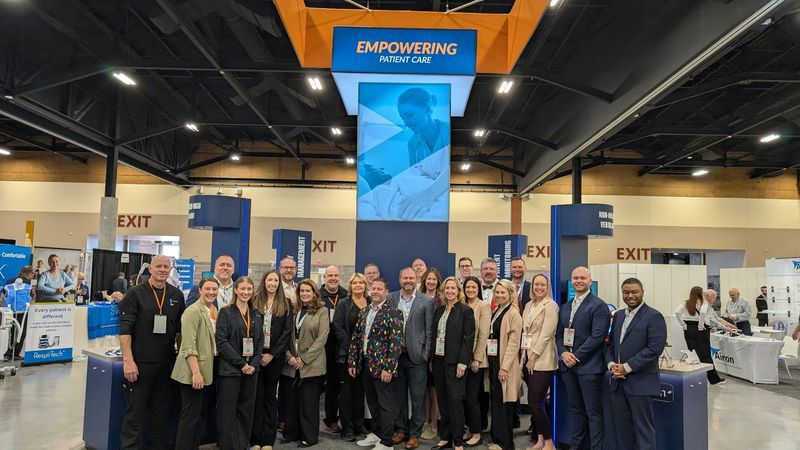
At health care products and services company Sarnova, leaders assure that teams work together harmoniously by starting where many organizations finish.

“We start with the desired outcome, and then with multiple departments in mind, reverse-engineer the steps that they need to take together to make sure that at the end of the process, not only is the result achieved, but they all felt like they checked the right boxes,” says Jim McGannon, senior vice president of human resources.
This emphasis on achieving specific goals through conscientious teamwork is knitted into the company culture. “We bring teams together on a regular basis just to talk through things, to see how the person on the other end of the transaction is receiving the efforts of one department versus another,” McGannon says.
Employee satisfaction with interdepartmental cooperation is one of the metrics Top Workplaces in Columbus felt more positive about than last year.
Surveyed employees were asked to rank a series of metrics on a seven-point scale, and the statements that saw the greatest increase in positivity were interdepartmental cooperation (a 2.6 percent increase over 2025), fair compensation (up 10.7 percent) and workplace efficiency (a 3.1 percent increase). Those areas are strong points for Sarnova, too.
Founded in Dublin in 2008, Sarnova employs 1,800 domestic workers and several hundred more overseas. The company goes to market in the form of four primary business units: Bound Tree Medical, Cardio Partners, Digitech and Tri-anim Health Services. Achieving efficiency in a multidimensional, still-growing organization is key.
“As we grew, things became more complex, and we knew that we really had to really put some muscle behind cross-functional collaboration and streamlining processes, and making sure that cross-functional teams had an easy time working together,” McGannon says. “One of our strategic imperatives is that we accelerate innovation, and the infusing of innovation into how we work has really made life a lot simpler for our teams to work together.”
The Importance of Employee Experience
McGannon says Sarnova keeps its compensation competitive and at or above market rates through external research. Some Top Workplaces find that while wages are important to employees, they needn’t be paid at the top of their field to feel fairly compensated.
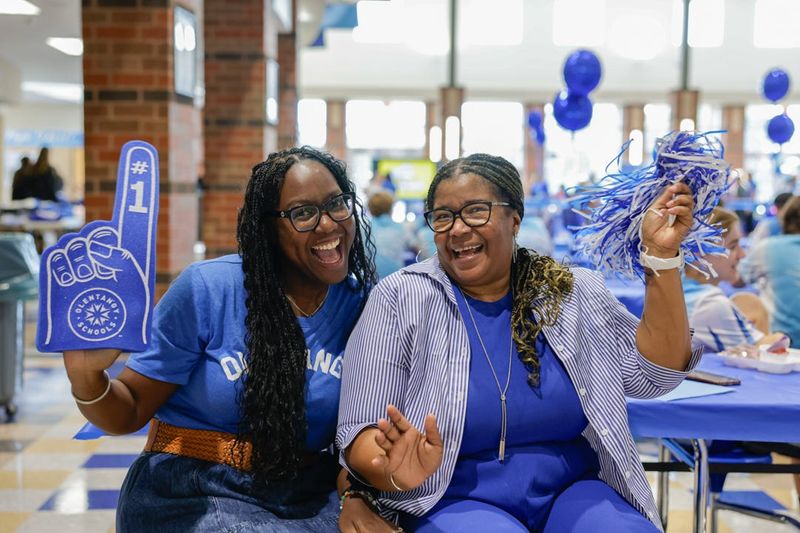
Olentangy Local School District has neither the highest nor lowest pay scale among Central Ohio districts, which is a conscious decision by its board of education, says Nancy Freese, chief human resources officer. Why, then, do teachers seek out the district years before a job opening emerges? “I do believe that, even though we’re not the highest paid like some of the elite districts … it’s attributed to the experience that [employees] have,” Freese says. “As long as they’re fairly compensated, they will take living and working in this environment over getting paid more for an environment that is less supportive and less desirable.”
While the district works with its unions to make cost-of-living adjustments each year, Freese says, it’s the atmosphere of inclusivity that makes Olentangy most appealing to its staff.
Indeed, feeling included was among the four metrics that employees of this year’s Top Workplaces in Columbus felt most positively about: 79.9% of respondents felt included at their organization.
That’s a big task in a school district adding 400 to 500 students and over 200 new employees annually. The district, one of the fastest-growing in Ohio, has more than 3,000 full-time workers.
“It’s easy for a district our size to lose sight of our mission and our values and our priorities,” Freese says. “So with that, the intentionality comes from constantly driving the work around our mission statement, which is to facilitate maximum learning for every student.”
Olentangy has implemented seemingly small things that have made a large impact, including giving teachers half-hour uninterrupted lunch breaks, as well as a period incorporated in the school day for collaboration. “From the teacher’s lens, I felt very valued with the fact that they were saying, ‘In order for us to continue with our academic success, teachers need time, and the time shouldn’t always need to happen outside of their school day,’ ” says Freese, who began her career as a teacher and was promoted to assistant principal and principal before moving into HR.
This year, the highest-ranked Top Workplaces metric showed 82.1 percent of respondents feel their organization operates according to strong values.
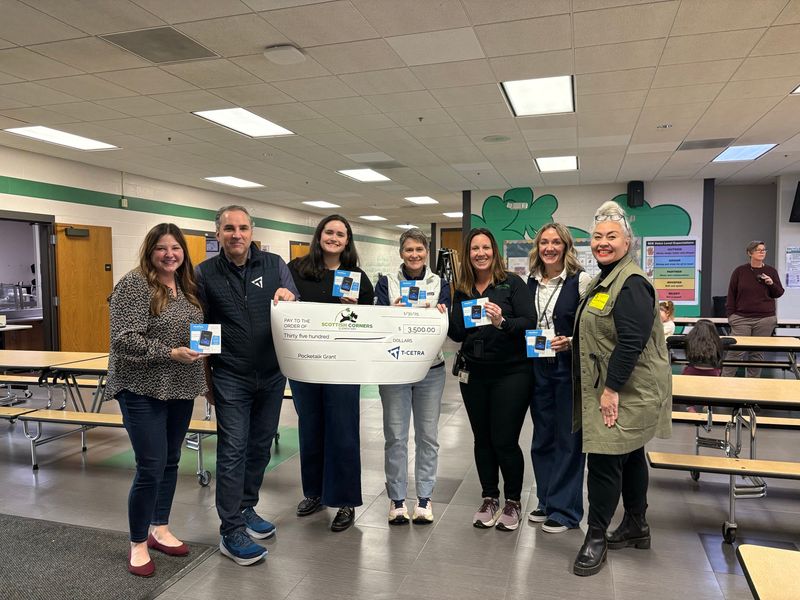
That certainly motivates the workforce at T-Cetra, a Hilliard-founded technology company now based in Dublin. The business’ 160 employees devote themselves to facilitating wireless carrier transactions tailored to the underbanked population, who hold bank accounts but may not have a credit card. “We’re trying to help them gain the access that the banked population has today,” says co-founder and Chief Information Officer Gus Hashem. “I like to serve that demographic. It’s very important for me to make sure that I have the product available for [the] environment that we support, … the minority areas, the immigrants that need help.”
T-Cetra prides itself on promoting a red-tape-free environment at work. “An engineer can come to me and have an idea, and we can work with them on whatever the idea is if it makes sense for the company,” Hashem says. “We don’t have the hierarchy that you usually find in the larger company. We’re dynamic.”
Supporting Company Staff
The remaining top-four metrics are closely intertwined: 81.7 percent of respondents feel their manager cares about their concerns, and 79.7 percent say their manager helps them learn and grow.
Hashem says T-Cetra tries to stay attuned to its employees’ needs as they seek to learn new skills and advance within the organization. “We go through an evaluation that makes them comfortable in their career path, to see what’s needed, what would make them go to the next step,” he says. “We do have our leadership program for developing leaders and managers. … We have resources that are available for development on the management side, and also on the employee level, we use the Ohio TechCred for training our employees with technologies.”
Westerville-headquartered event venue company BTTS Holdings also places a priority on supporting its workforce, which encompasses a staff of about 90 and a part-time roster around 350.
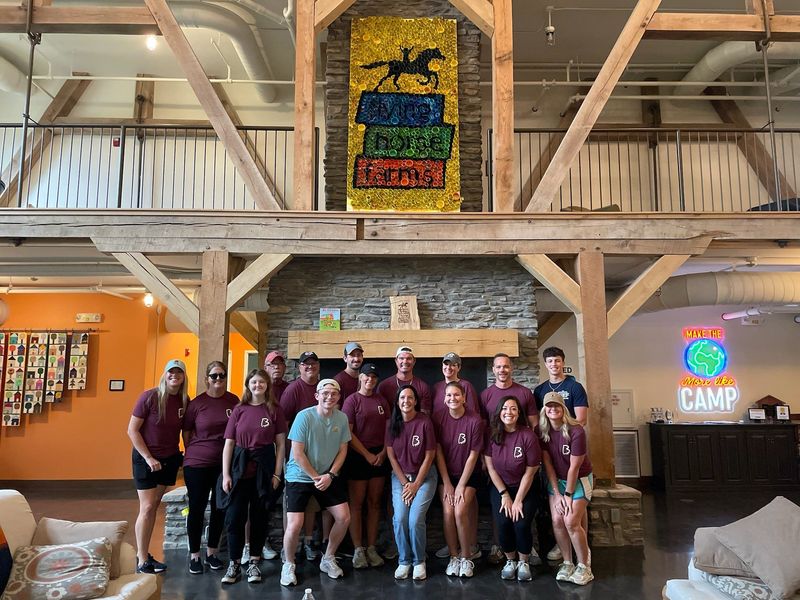
“We work very hard to make sure that our employees feel like they are part of something that is bigger than themselves,” says human resources director Jennifer Rasar, who points to a give-back program that offers workers one day a year to volunteer. “We also curate a give-back week where we all volunteer together [in] different organizations throughout Central Ohio,” she says.
Also notable is BTTS’ Hunt the Good initiative, begun two years ago as an easy way for employees to compliment one another. “You just scan this little QR code and you nominate your co-worker,” Rasar says. “They get a little postcard in the mail that says, ‘Hey, you’ve been caught doing good.’ ”
BTTS—which, in addition to owning and operating eight venues, also runs in-house catering and floral operations—has initiated programs to simplify interdepartmental communication. An initiative called Followed By All offers an overview of internal processes and procedures in a single, shareable document. “[We] can look right at this document and say, ‘OK, this is who I go to for this. This is who I go to for that,’ ” Rasar explains.
Additionally, while in the past staff were split up at different locations, they now work together on a 25,000-square-foot campus in Westerville. “It provides this great experience for our teams to be in one location, but also for our clients and our couples,” she says.
Employees who felt empowered at their organizations and by their managers were consistent themes in workplaces that did well in the positivity metrics.
“We set large company goals, and then cascade those down through different business units, and then through different functions within those business units, all the way down to the individual contributor level,” says Sarnova’s McGannon. “People feel like their work is meaningful and that it really does matter.”
And leaders at these organizations believe their employees matter, too. Freese points to the willingness of Olentangy Local School District supervisors to accommodate staff when personal needs present themselves.
“It could be that I need two hours to go to doughnuts for dad, [or] I need to take a day to be with my mom,” Freese says. “The human side of that always prevails. … Any time we can support a true need, the answer is going to be yes, and we’ll walk side by side with them, for sure.”
Peter Tonguette is a freelance writer.
This story is from the Top Workplaces 2026 section in the Spring 2026 issue of Columbus CEO. Subscribe now.
This article originally appeared on Columbus CEO: Culture is a Top Priority for These Top Workplaces 2026 Winners
Reporting by Peter Tonguette, Columbus CEO / Columbus CEO
USA TODAY Network via Reuters Connect