In another upheaval of immigration policy, President Donald Trump signed a proclamation Sept. 19 that tacked a $100,000 fee on the H-1B visa application — a program that thousands of Wisconsin universities, hospitals, technology and finance companies have used.
The H-1B visa program allows American companies to hire foreign workers for specialized positions. In Wisconsin, more than 3,000 employers have used the program to hire nearly 41,000 workers over the past 16 years, according to data from U.S. Citizenship and Immigration Services.

Per Trump’s order, these companies will now have to pay a one-time, $100,000 fee when they enter a worker into the lottery program for the visa. The fees were previously between $2,000 to $5,000 per application, NBC News reported.
In his order, Trump argued the H-1B program “has been deliberately exploited to replace, rather than supplement, American workers with lower-paid, lower-skilled labor.” Meanwhile, Wisconsin supporters of the program have argued the visa is essential to bring in specially trained workers, and employers are required to pay these workers a certain wage.
Here’s what to know about the latest developments with H-1B visas and which Wisconsin companies use the program most:
What is an H-1B visa?
The H-1B visa program allows companies to hire skilled foreign workers in situations where they cannot find an American worker for the position.
The program was signed into law in 1990 by President George H.W. Bush, who said its goal was to “encourage the immigration of exceptionally talented people, such as scientists, engineers and educators.”
Which Wisconsin companies were granted the most H-1B visas?
Like the rest of the country, workers granted the H-1B visas in Wisconsin are primarily in STEM fields.
So far in fiscal year 2025, 2,220 workers from 372 different employers in Wisconsin have been approved for the H-1B visa, according to USCIS.
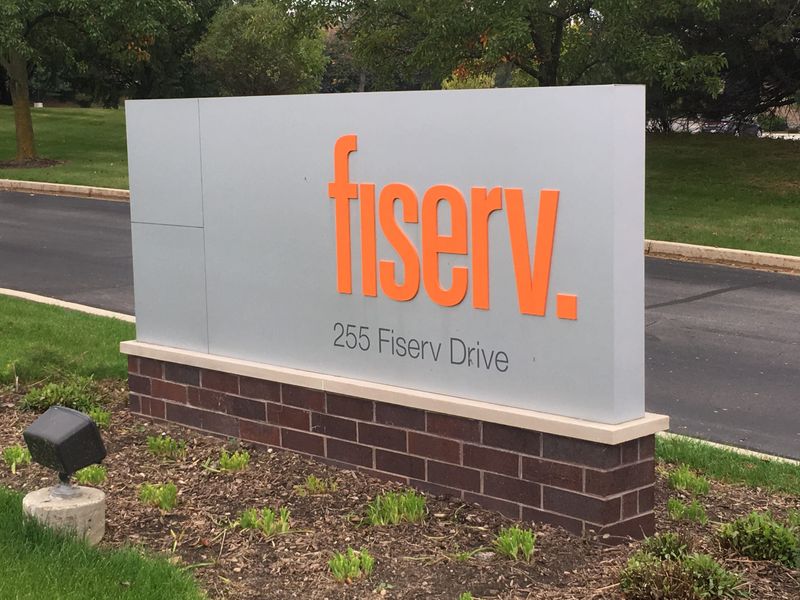
The top employer with approved H-1B visas was by far Fiserv Inc., the global financial technology company headquartered in Milwaukee. Fiserv has seen 336 workers approved for the visa so far this year.
The University of Wisconsin-Madison system was second with 235 workers. In total, the UW system employs about 500 foreign workers on H-1B visas, primarily as professors, researchers and scientists.
Experis, a technology staffing company, was third-highest with 94 beneficiaries approved. Besides the top 12 employers, the remainder of the 327 companies had fewer than 30 visas approved so far in 2025.
How many H-1B visas have been granted in Wisconsin since 2009?
Since 2009, the earliest year for which data is available, 40,974 workers have been approved for the H-1B visa in Wisconsin across nearly 3,300 different employers.
Across the past 16 years, the overall top H-1B employers are consistent with the top employers in 2025 so far. Fiserv, UW-Madison, Experis, Johnson Controls, Marshfield Clinic and the Medical College of Wisconsin all crack the overall top 10.
There were a few exceptions: Epic Systems was among the top five overall companies, with 1,268 workers approved for the H-1B visa since 2009, but the Verona-based company has only had 20 beneficiaries of the program so far in 2025.
How does applying for the H-1B visa work?
Most H-1B applicants are international students who have graduated from American universities. After graduating, these students can work for one year — or up to three if they earned a STEM degree — in the U.S.
During this time, their employer can enter them into the H-1B lottery once a year. If the applicant isn’t chosen within the one to three years, they must return to their home country, go back to school or find some other way to stay in the U.S.
How will the $100,000 H-1B visa fee work?
Trump’s Friday order landed among widespread confusion, especially among current H-1B visa holders unsure of how the new guidelines would affect their immigration status.
In a post on X, White House Press Secretary Karoline Leavitt later clarified that the $100,000 fee only applies to new visa applications, not to applications for renewals or to current visa holders.
Leavitt also said the $100,000 is a one-time fee, meaning employers do not have to pay the fee annually when they enter a worker into the lottery.
How many H-1B visas are awarded each year?
H-1B visas are highly competitive.
Each year, at least 300,000 people nationwide enter the lottery for 85,000 visas. The number of visas is capped at this number, except for higher education institutions, which are exempt from the 85,000-visa limit.
Within that cap, 65,000 visas are for workers with a bachelor’s degree or equivalent, and 20,000 are for those who have earned a master’s degree or higher from an American higher education institution.
How long are H-1B visas?
H-1B visas are valid for three years but can be extended to six. They do not come with permanent residency status.
Sophie Carson contributed to this report.
This article originally appeared on Milwaukee Journal Sentinel: Which Wisconsin companies rely the most on H-1B visas? What to know amid Trump’s new order
Reporting by Maia Pandey, Milwaukee Journal Sentinel / Milwaukee Journal Sentinel
USA TODAY Network via Reuters Connect