From his 240 Volvo front-end loader, Scot Meisenheimer could hardly see the ceiling lights.

Dust hung heavy and low in the warehouse, and a persistent itch crawled up his throat. His denim coveralls scratched at his skin, crusty from the prior days’ work.
At the environmental cleanup site where Meisenheimer worked, three large pipes pulled thousands of gallons of sediment contaminated with polychlorinated biphenyls, or PCBs, from the Lower Fox River every hour. The sludge arrived in the warehouse by the ton – dark and sopping wet.
Meisenheimer’s job was simple: Using the loader, he transferred the toxic sediment from the floor into trucks, so it could be disposed of off-site.
The project became the largest PCB cleanup effort in history. Across nearly 40 miles of river, workers removed close to 6.5 million cubic yards of sediment containing the chemicals, which have been linked to multiple types of cancer, liver damage and reproductive health issues.
Meisenheimer didn’t question his safety. Like everyone else, he wore denim coveralls and a hard hat. Gloves often were an afterthought. His foreman reassured them no masks were needed, Meiseinheimer recalled.
So on Nov. 22, 2013, when the foreman told Meisenheimer to fix a floor sweeper that had broken near a small pool of dirty water, he trusted it would be safe. Meisenheimer put down a piece of cardboard before lying on the floor. His cotton uniform soaked almost instantly. The repair took nearly an hour.
“If they tell you it’s safe and they’re the manager, you just know it’s safe,” Meisenheimer said.
His doctors, PCB experts and scientific literature say that assumption was wrong.
In 2015, doctors diagnosed Meisenheimer with Stage IIIC melanoma on his left calf, an aggressive cancer with a high risk of recurrence. Cancer returned in 2017 and again in 2023.
The Milwaukee Journal Sentinel spent more than two years following Meisenheimer’s struggle to navigate the workers’ compensation process and get Tetra Tech, the company that oversaw the cleanup, to cover his medical expenses.
The investigation found that Tetra Tech’s health and safety practices fell short of federal standards designed to shield workers from the toxic chemicals they were sent in to clean up, leaving dozens of employees like Meisenheimer facing an elevated risk of cancer.
Meisenheimer’s diagnoses have not been definitively linked to his time at Tetra Tech, which spanned five months from July to November 2013. Because people encounter countless chemicals and environmental factors over a lifetime, it is extraordinarily difficult to pin a cancer diagnosis to a specific incident – a key challenge in linking environmental exposure to health outcomes.
However, both of Meisenheimer’s doctors, as well as two independent PCB experts, said Meisenheimer’s specific forms of cancer are closely linked to PCBs.
“It’s one of the strongest cases I’ve seen with an individual,” said Dr. David Carpenter, a public health physician and professor of environmental health at the University at Albany.
Tetra Tech – a multibillion-dollar California-based engineering firm – settled a workers’ compensation case with Meisenheimer in 2018, taking no responsibility for his cancer but leaving open the possibility of paying for future cancer-related medical expenses.
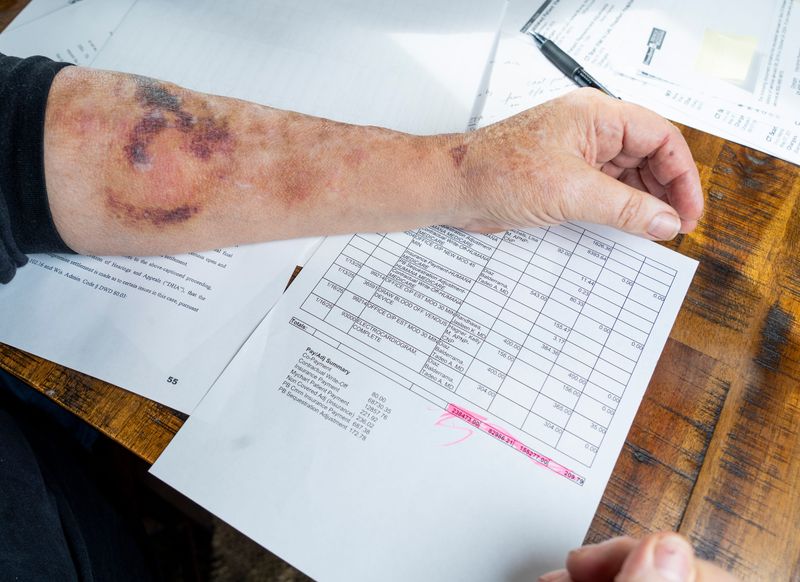
American International Group, Tetra Tech’s insurance company, has since refused to pay for Meisenheimer’s medical bills, which have totaled more than $1.2 million.
In a statement, Tetra Tech rebutted what it called Meisenheimer’s “outrageous allegations” and said his case had already been litigated.
“While it is unfortunate that Mr. Meisenheimer has faced health challenges, Mr. Meisenheimer’s ongoing concerns are with the state’s workers’ compensation system,” said Charlie MacPherson, Tetra Tech’s vice president of corporate communications.
Meisenheimer, now 66, is fighting for his life – and for answers.
“It’s all on my shoulders,” Meisenheimer said. “They don’t want to be held responsible for it.”
Virtually indestructible
PCBs were built to last.
The Swann Chemical Company in Alabama began producing PCBs, a class of more than 200 man‑made chemicals, in the late 1920s. Soon, Monsanto became the dominant American manufacturer, producing an estimated 1.4 billion pounds of PCBs between 1930 and 1975.
Because of their resistance to extreme heat and other chemicals, PCBs were especially useful as coolants, insulators and lubricants.
By the mid‑1950s, pulp and paper mills along the Lower Fox River corridor were using PCBs to manufacture and recycle carbonless copy paper. Those mills discharged PCB‑laden wastewater into the river, where the paper fibers settled into the sediment.
Scientists found the chemicals were building up in the fatty tissues of fish and wildlife, sickening animals and people who ate contaminated fish or were otherwise exposed.
After the EPA banned PCBs in 1979, communities around the U.S. began undertaking projects to clean the chemicals out of their waterways.
Along the Lower Fox River, that work was awarded to Tetra Tech. Its new 250,000-square-foot processing center stood tall over the riverbanks off State Street in downtown Green Bay.
Because they do not break down, PCBs can be removed from waterways only through an intricate dredging and storage process.
Under Tetra Tech’s oversight, boats pumped millions of tons of sediment – about 2,000 Olympic swimming pools’ worth – from the river into the processing center, where massive presses squeezed out the water. What remained were several towering mountains of dried dirt, ready to be tested then trucked away for permanent storage.
Meisenheimer, then 52, took the job for its high pay: $32 an hour.
In July 2013, he started making the nearly 70‑mile commute from his home in Fond du Lac to Green Bay.
Training gaps, toxic dust, daily exposure
Inside the Tetra Tech facility, dust nestled its way into every crevice.
Air filters often were broken and rarely changed, Meisenheimer said. PCB-contaminated sediment coated surfaces.
Joseph Eisch, another worker at the facility, said the air filters frequently looked like they were “plugged solid” with dust.
Despite working with other hazardous chemicals at previous jobs, both said Tetra Tech gave them little understanding about how to protect themselves from PCBs.
Meisenheimer and Eisch said workers would eat at benches in the same room where they processed sediment, leaving out open cans of soda and bottles of water.
“[Workers] cooked brats right outside the door,” Meisenheimer said. “Then you’d eat inside.”
Two sets of federal rules guided the cleanup operation: The EPA controlled how companies were supposed to handle and dispose of the contaminated sediment. OSHA controlled how workers stayed safe doing that work.
Federal regulations at the time called for Meisenheimer and his coworkers to wear eye protection, disposable coveralls and chemical‑resistant gloves whenever tasks could result in skin or eye contact with PCBs. OSHA required employers to provide respirators if PCB dust became airborne.
Under federal guidelines, Tetra Tech also was supposed to prohibit eating, drinking and smoking anywhere around PCBs, provide separate clean and dirty changing areas, and dispose of used coveralls and gloves as contaminated waste.
Technical guidance also recommended showers so workers could wash thoroughly before taking breaks and going home.
Meisenheimer and Eisch – along with another former employee and a union member who spoke to the Journal Sentinel – painted a very different picture.
Instead of disposable coveralls, workers were given denim ones, they said. Workers sometimes wore one pair of coveralls for days while the other pairs were being cleaned, Meisenheimer and Eisch said.
Meisenheimer said workers like him did not always wear gloves.
There also was no consistent decontamination routine, the former employees said. Some workers showered before leaving, Eisch said, while others simply changed out of their uniforms and went home.
Neither Meisenheimer nor Eisch recalled being given guidance on where it was safe to eat. Many employees did not wash their hands or faces before eating lunch, both said.
In a 2008 safety plan that Tetra Tech proposed to the EPA, the company chose the lowest level of personal protective equipment guidelines for the site because it believed PCB levels would be low, although it acknowledged that could change. The EPA signed off.
Under the plan, it was the responsibility of Tetra Tech’s environmental safety supervisor to monitor conditions at the facility, such as air quality, and raise safety standards if employees were at risk of exposure. For instance, if air filtration was poor, employees should be required to wear a tight‑fitting respirator with high‑efficiency filters.
However, no masks or respirators were distributed, even when it became dusty, Eisch and Meisenheimer said.
Tetra Tech’s safety plan also did not prohibit eating in work areas, contradicting EPA and OSHA guidelines.
At one point, Meisenheimer said he wondered why the Tetra Tech scientists who came to the facility to measure the PCB levels wore full-body hazmat suits and face coverings, while the employees who worked there every day did not.
But it was not an environment where questions were encouraged, he said. Supervisors often reassured them that everything was within government specs. Many of his coworkers didn’t want to make waves.
“Once you get canned from a job … nobody wants to hire you,” Meisenheimer said.
The first and second cancers
Two months after Meisenheimer fixed the floor sweeper in the dirty water in 2013, a bumpy, reddish rash appeared on the outside of his left calf. The acne-like eruption, known as chloracne, has specifically been observed in people exposed to PCBs and the contaminant in Agent Orange.
In 2015, doctors diagnosed Meisenheimer with advanced melanoma, a form of skin cancer, in the same spot, although they have said they cannot trace it to a specific exposure.
By then, Meisenheimer had turned down an opportunity to return to Green Bay to work for Tetra Tech and started a job at Saputo Cheese in Mayville. It would be his last.
That year, Meisenheimer underwent seven surgeries in five months.
He worked on and off at Saputo until fluid buildup in his legs left him largely unable to walk without assistance, forcing him onto short-term disability in 2017.
That same year, Meisenheimer was diagnosed with a rare and aggressive kind of non-Hodgkin lymphoma.
Doctors declared him permanently disabled later that year. His income plummeted to $24,000, coming entirely from Social Security Disability Insurance.
Research shows that PCBs are carcinogenic to humans, linked frequently to both melanoma and lymphoma. Scientists say there is no safe level of PCB exposure.
Two PCB experts consulted by the Journal Sentinel said the practices at Tetra Tech, as described by Meisenheimer and other workers, unquestionably increased their risk of developing cancer.
Keri Hornbuckle, a professor of civil and environmental engineering at the University of Iowa and director of the Iowa Superfund Research Program, said PCBs are hard to control once they become airborne, like in dust. Inhalation and ingestion are the most efficient ways they can enter the body, she said.
Whether PCB exposure leads to cancer in any one person is highly variable, as some people are more vulnerable than others.
However, she said, “All scientists that I’ve ever worked with … conclude that PCBs can cause cancer.”
Carpenter, the University at Albany professor, said even a few months in a high-PCB environment can be enough time to accumulate meaningful exposure. PCBs bind to fat cells, so they can remain in the body for a decade or more, he said.
Carpenter said it is reasonable to conclude that exposure to PCBs caused Meisenheimer’s cancers.
Man v. Megacorporation
In 2017, Meisenheimer filed a workers’ compensation case against Tetra Tech.
He provided a letter from one of his doctors suggesting that his cancer diagnosis was a consequence of exposure to PCBs. But even with his doctor’s assessment, Meisenheimer struggled to find legal representation.
Workers’ compensation cases usually offer little payoff for attorneys. Cancer-related cases are also challenging to prove. Unlike other common workplace injuries, cancer symptoms often appear months or years after working for a company.
“That’s the whole thing about cancer,” said Dr. Filip Troicki, one of Meisenheimer’s doctors and an oncologist at SSM Health. “It doesn’t develop overnight.”
After months of searching, Meisenheimer secured a lawyer who negotiated what is known as a “limited compromise” deal with Tetra Tech in 2018.
Under the deal, the company agreed to pay Meisenheimer a $50,000 lump sum and to cover any “reasonable and necessary” future cancer-related medical expenses stemming from the incident in November 2013, when Meisenheimer lay in the dirty puddle to fix the floor sweeper.
In exchange, Tetra Tech took no legal responsibility for either of Meisenheimer’s cancer diagnoses at the time. The settlement also closed the door on Meisenheimer’s ability to get other benefits, such as permanent partial disability payments.
Meisenheimer accepted the deal, afraid he would get nothing if he took the case to court.
‘The system is what failed’
Soon after he signed the paperwork, Meisenheimer began to regret it.
Despite reaching out at least a dozen times, he said Tetra Tech’s insurance company, AIG, did not respond to his inquiries about paying for his treatments.
Instead, Medicare and Meisenheimer’s insurance company, Humana, have taken on the bulk of his medical bills – more than $1 million worth of treatment.
What the insurance company cannot cover – more than $50,000 – Meisenheimer has paid.
AIG declined to discuss Meisenheimer’s case with the Journal Sentinel, citing patient privacy concerns, even though Meisenheimer gave the company permission to discuss his case with reporters.
In 2019, Meisenheimer attempted to reopen his settlement. Unable to find an attorney, he represented himself.
Meisenheimer alleged treatment-induced brain fog and poor legal representation prevented him from making an informed decision in 2018 about the settlement.
Court records show the process was exasperating for both Meisenheimer and the judge. Without the help of a lawyer, Meisenheimer struggled to argue his case and provide proper documentation.
He provided written testimony from Joe Wszalek, a neuroscientist and cognitive impairment specialist, who observed that Meisenheimer repeatedly failed to complete court-assigned tasks as evidence of impaired thinking. Wszalek concluded that Meisenheimer’s brain fog could be tied to an immunotherapy drug he received during his first bout of cancer.
Meisenheimer also provided a letter from one of his doctors noting cognitive side effects from the drug.
In a 13-point checklist responding to his claims, Tetra Tech disputed that Meisenheimer’s workplace injury occurred as he claimed. Tetra Tech also denied that Meisenheimer was permanently disabled.
Tetra Tech’s attorney characterized Wszalek’s testimony as “collateral noise” designed to “overcomplicate the litigated issue” in filings. The attorney argued that Meisenheimer had authorized the 2018 settlement and showed no impairment.
After an April 2022 hearing, a judge dismissed the case, citing a lack of sufficient evidence.
In a recent interview, Wszalek pointed out that these limitations, such as memory issues and brain fog, put employees trying to argue their workers’ compensation cases at a disadvantage.
“I really do think that the system is what failed Scot, rather than any individual action,” Wszalek said.
‘Who is in charge?’
At the time Meisenheimer was trying to reopen his case, Tetra Tech was facing dozens of similar complaints – but he didn’t know it.
In 2019, OSHA received more than 30 reports from employees about safety issues at the Green Bay processing facility, according to inspection records obtained by the Journal Sentinel through an open records request.
As a result, a decade after Tetra Tech opened the cleanup facility, OSHA conducted its first inspection of the site.
Inspectors found that employees were wearing and storing their contaminated personal protective equipment, such as hard hats and safety glasses, in areas that were supposed to remain clean, according to OSHA reports. Employees also were taking off their uniforms without gloves, inspectors found.
Tetra Tech’s safety training also did not give workers explicit instructions for washing exposed skin, such as their face or neck, the inspection reports said. And Tetra Tech had not developed a system to monitor and ensure that workers were following decontamination procedures.
Inspectors concluded in 2020 that Tetra Tech did not create a work environment “free from recognized hazards that were causing or likely to cause death or serious physical harm to employees.” They noted there was no safe level of PCB skin contact.
When the report was issued, there was less than one year left in the 17-year cleanup.
OSHA offered Tetra Tech several recommendations to improve safety. But because measured PCB levels at the facility were within agency standards, OSHA did not issue any fines or citations.
Hornbuckle said environmental cleanup workers deserve clearer guidance on how employers are supposed to protect them. She said people are often confused which federal or state agency is responsible for worker safety.
On four occasions, Journal Sentinel reporters asked EPA and OSHA which agency set standards for worker safety, including personal protective equipment, on the PCB project.
Each time, both agencies directed reporters to the other agency. The EPA also pointed reporters to the Wisconsin Department of Natural Resources, the state agency in charge of the cleanup. The DNR directed reporters to Tetra Tech.
“I mean, who is in charge?” Hornbuckle said.
A second chance at justice
In October 2023, Meisenheimer was diagnosed with lymphoma for a second time.
He underwent radiation and months of chemotherapy and was declared cancer-free in January 2024.
But the hardest battle, Meisenheimer said, wasn’t the illness itself – it was the life it forced him into.
Most of the flesh on his calf was surgically removed during his first bout of cancer. He now struggles to get in and out of his truck and can manage only about 15 minutes of activity at a time, making even trips to the grocery store a challenge.
His income goes almost entirely to food, medical care and his disabled son.
When Fond du Lac attorney Anthony O’Malley heard about Meisenheimer’s situation last year, he decided to help mostly out of sympathy.
O’Malley cannot represent Meisenheimer because he is retiring this year. However, the attorney helped Meisenheimer file a “bad faith” insurance claim, which argues that Tetra Tech’s insurance company, AIG, is denying him workers’ compensation benefits without a reasonable basis to do so.
O’Malley believes that Tetra Tech is caught in a trap: If the company argues that it isn’t responsible for Meisenheimer’s recurring cancer, that could strengthen his ability to file a new claim that argues his latest cancer is a separate injury.
Still, these cases are difficult to win without the ability to link a specific cancer to a specific exposure.
Without a computer or printer at home, Meisenheimer drives an hour to a Pack & Ship in Hartford to print and mail his medical and legal documents.
Then, he waits to see who will respond.
The work that remains
The Lower Fox River is healing.
A 2025 progress report shows that while the cleanup is working, it could be decades before fish in the river are safe to eat.
More than a dozen PCB cleanups are underway across the Great Lakes, including in Milwaukee.
In February, under the Trump administration, the EPA moved to reduce worker protections and restrict public access to environmental hazard information.
Since 2020, multiple cities and states have sued Monsanto over PCBs. Monsanto – now owned by the German pharmaceutical company Bayer – has settled several cases, including a $650 million class action lawsuit involving around 2,500 local governments.
A lawsuit filed by the city of Milwaukee against Monsanto is ongoing.
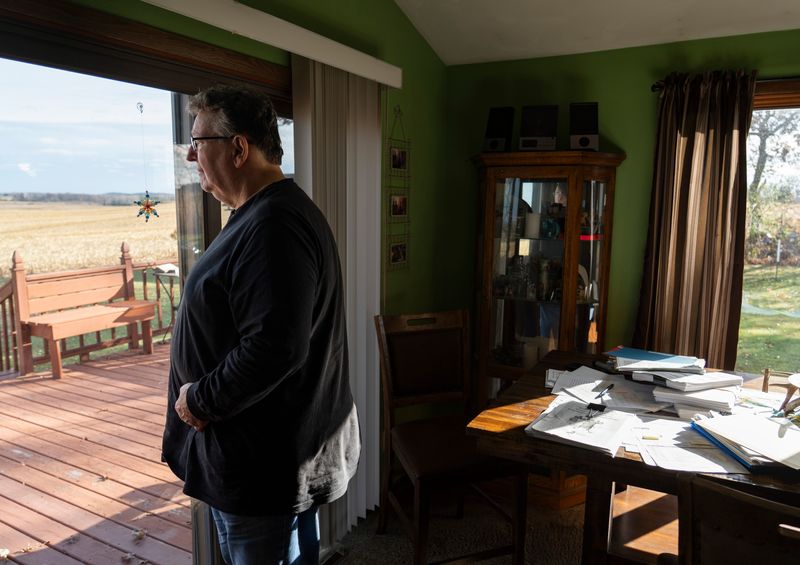
At Meisenheimer’s home in Fond du Lac, his dining room table is buried under paperwork. Boxes of records tower in a bedroom as he plans to sue once more.
While working in his garage in January, Meisenheimer spotted a red bump on his left arm, just below the elbow. What looked like an ingrown hair soon swelled into a pimple, just like the one he noticed on his leg a decade earlier.
Days later, he learned he had cancer for the fourth time.
Caitlin Looby covers the Great Lakes, and can be reached at clooby@gannett.com. Tamia Fowlkes is a Public Investigator reporter, and can be reached at tfowlkes@gannett.com.
To support this work, visit jsonline.com/support. Checks can be addressed to Local Media Foundation (memo: “JS Community Journalism”) and mailed to P.O. Box 85015, Chicago, IL 60689.
This fundraising effort is made possible through our partnership with Local Media Foundation, a verified 501(c)3 nonprofit organization (tax ID #36-4427750) and EnMotive Company, LLC, a subsidiary of USA TODAY Co., Inc., the parent company of this publication.
This article originally appeared on Milwaukee Journal Sentinel: He helped rid the Fox River of toxic chemicals. Then cancer came for him.
Reporting by Caitlin Looby and Tamia Fowlkes, Milwaukee Journal Sentinel / Milwaukee Journal Sentinel
USA TODAY Network via Reuters Connect