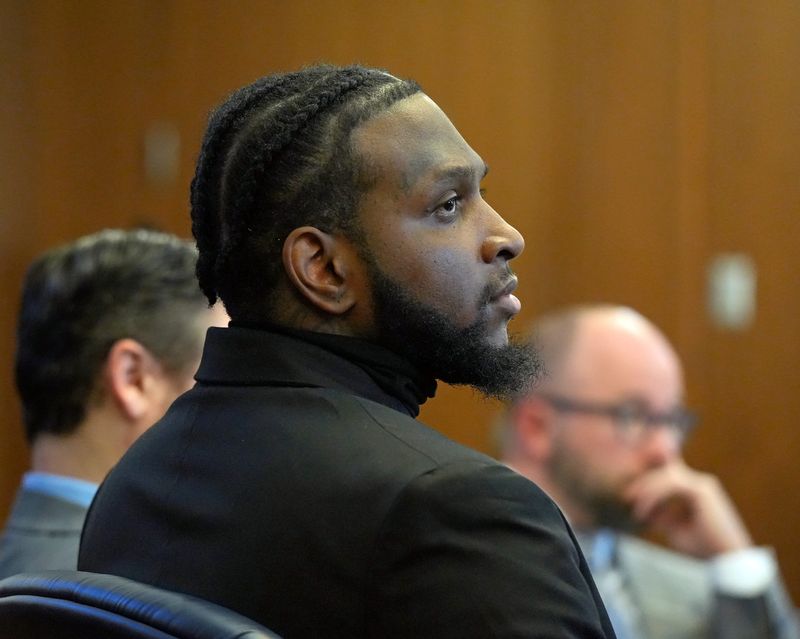
In a split opinion, Ninth District Court of Appeals judges shot down a Summit County Prosecutor’s Office appeal that halted the ongoing murder trial of 23-year-old Ahmere Williams for over a year.
Prosecutors asked for leave to appeal, arguing that Summit County Common Pleas Court Judge Alison Breaux improperly determined Joe’Veon Penson-Willis, a key witness, had shown good cause to invoke his Fifth Amendment right against self-incrimination.

Two appellate judges rejected this argument. In a dissent, a third judge wrote in favor of the prosecutor’s office.
“When the Summit Co. Prosecutor’s Office abruptly paused the jury trial a year ago, we strongly believed that there were no grounds for an appeal,” defense attorney Jeff Laybourne said. “We are pleased that the Court of Appeals agreed and dismissed their appeal.”
Laybourne said he believes the prosecutor’s office wants a “do-over” trial. He argued Williams’ murder case should be dismissed with prejudice, meaning he would not be tried again in the matter.
The prosecutor’s office declined to comment but noted that they do not intend to appeal the ruling.
The jury in this case was formed in mid-May 2025 and has remained empaneled ever since. That means they cannot discuss the trial, independently investigate or read any articles, including this one, about the case.
The trial court is now expected to schedule a hearing to decide whether the trial should go on.
Murder trial derailed by self-incrimination concerns
Williams is accused of shooting and killing 24-year-old Tyson Arnold, who was found on April 12, 2023, floating face down in the canal behind the Channelwood Village apartments. He is charged with murder, felonious assault and associated three-year firearm specifications. Defense attorneys Laybourne, Noah Munyer and Marie DiCola represent Williams.
The trial began in mid-May. Evidence placed Williams at the scene, but within days, the proceedings stalled when two key witnesses invoked their Fifth Amendment rights against self-incrimination.
Prosecutors hoped to call Penson-Willis to the stand. He initially told Akron police that he saw Williams fire a gun at the vehicle where Arnolds was sitting, prosecutors said. He also identified Williams in a photo array, but in the courtroom, Penson-Willis said he would not answer any questions about the shooting.
Breaux asked him multiple times why he wanted to invoke his Fifth Amendment right.
“I don’t want to be in court and have enough going on with myself. I fear for my family and my safety,” Penson-Willis told Breaux, adding that he didn’t want to self-incriminate.
Johntee Warren also invoked his right against self-incrimination. Warren and Penson-Willis rejected an immunity deal from prosecutors that would have covered any offense described in their testimonies about the fatal incident, except murder.
Breaux determined they had sufficient grounds to invoke their constitutional rights.
Prosecutors filed for leave to appeal, arguing that Breaux improperly excluded testimony, did not fully question the witnesses before reaching a decision and should have compelled Penson-Willis to testify.
How did the Ninth District Court of Appeals rule?
Appellate judge Jennifer Hensal wrote the deciding five-page opinion, denying the prosecutors’ motion for leave to appeal. Judge Flagg Lanzinger concurred.
Hensal wrote that this case did not involve a “mistaken evidentiary ruling.” Because prosecutors offered incomplete immunity, there were insufficient grounds to appeal the trial court’s decision not to compel Penson-Willis to testify.
Prosecutors also did not establish that the alleged errors occurred, Hensal wrote.
Judge Donna Carr dissented, writing in a 10-page opinion that she would have granted the prosecution’s leave to appeal and reversed the trial court’s decision.
Penson-Willis, Carr wrote, offered inconsistent, “blanket assertions” to “generalized questions” when asked why he wanted to invoke his Fifth Amendment right.
“The trial court never attempted a question-by-question inquiry,” Carr wrote. “It only asked (Penson-Willis) if he intended to testify about anything he saw or heard on the day of the shooting.”
Carr said the only reasons offered why he could face criminal penalties were from Williams’ attentiveness, which she said the judge should not have relied on.
Bryce Buyakie is an Akron-based reporter who covers the courts and public safety for the Beacon Journal. He can be reached by email at bbuyakie@gannett.com or on X @bryce_buyakie.
This article originally appeared on Akron Beacon Journal: Court throws out appeal in long-paused Ahmere Williams murder trial
Reporting by Bryce Buyakie, Akron Beacon Journal / Akron Beacon Journal
USA TODAY Network via Reuters Connect