After southeast Wisconsin’s historic August storm, state leaders asked affected communities to be diligent in recording the damage it wrought. Each story would help make the best case to the Federal Emergency Management Agency that the region needed federal assistance to recover.
But the Trump administration on Oct. 23 denied Gov. Tony Evers’ request for funds for local governments across six counties to rebuild, which means they could be on the hook for the bills.

Evers has said he will appeal the decision, which a spokesperson for his office said could come as early as next week.
The denial follows a trend from the administration, which has indicated it wants to limit the amount of federal aid available after natural disasters and direct more responsibility to states and local governments.
Here’s what to know about the denial and what comes next.
What could the FEMA aid that was denied have been used for?
FEMA offers two major types of assistance after a natural disaster: individual assistance, which can go toward the loss of a home or other individual losses, and public assistance, which covers community needs like repairs to public infrastructure, schools and roads.
Some Milwaukee-area residents have received individual assistance following the storm. The request that was denied was for public assistance in Milwaukee, Waukesha, Washington, Ozaukee, Door and Grant counties.
Wisconsin recorded more than $26.5 million in costs that would qualify for public assistance funding from FEMA, according to the governor’s office.
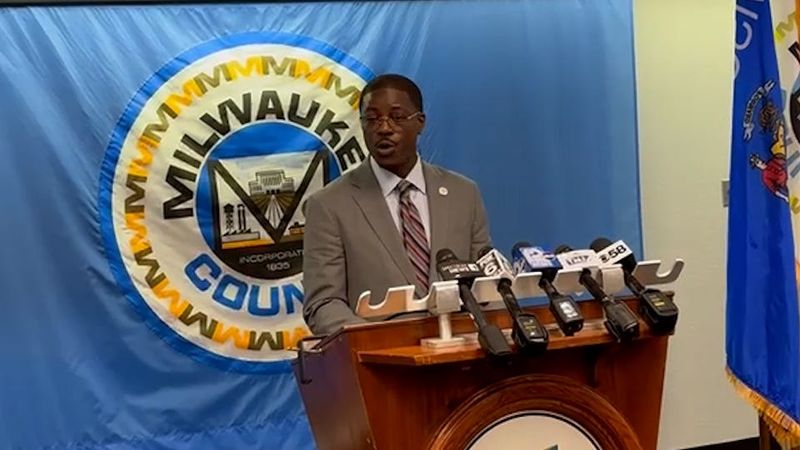
In Milwaukee County, those include damage to Hart Park in Wauwatosa and the McGovern Park Senior Center in Milwaukee, which is dealing with mold contamination, Milwaukee County Executive David Crowley said in an Oct. 24 news conference.
Wastewater infrastructure in Waukesha County was “heavily impacted” by the flood, including lift station failures and a broken sewer main, according to an Aug. 27 letter from Evers to FEMA. Washington County recorded nearly $2 million in public infrastructure damage, including significant damage to a bridge in the Town of Farmington that resulted in transportation delays. In Ozaukee County, damage was reported to municipal stormwater control structures in Port Washington.
Separate from the storm that pummeled southeastern Wisconsin, Grant County in southwest Wisconsin experienced flash flooding in mid-August that left roughly $600,000 in damage to roads, bridges and other transportation infrastructure.
That might sound like a drop in the bucket for larger cities, but for rural townships whose budgets are already tight, it means difficult choices ahead, said Grant County Emergency Management Director Steve Braun.
Why did the Trump administration deny Wisconsin’s request for public assistance?
A letter from FEMA provides little detail about why the state’s request was denied.
The impact of the flood on individuals and households was significant in the areas where people received individual assistance from FEMA, the letter says. President Donald Trump in September approved nearly $30 million in individual assistance to Wisconsinites for the August floods.
But “based on the results of the joint federal, state and local government Preliminary Damage Assessments, it has been determined that the Public Assistance program … is not warranted.”
Each state and county has a threshold at which it qualifies for FEMA public assistance. Wisconsin’s is $11.4 million, according to Wisconsin Emergency Management — less than half of what it documented after the August floods.
Grant County also exceeded its threshold, Braun pointed out, which is about $250,000.
“It seems not in keeping with past FEMA policy,” he said. “There don’t really appear to be any set rules anymore.”
In response to questions about the reasoning behind the denial, White House Deputy Press Secretary Abigail Jackson provided an emailed statement that Trump provides “a more thorough review of disaster declaration requests” than previous administrations.
“The President responds to each request for Federal assistance under the Stafford Act with great care and consideration, ensuring American tax dollars are used appropriately and efficiently by the states to supplement, not substitute, their obligation to respond to and recover from disasters,” Jackson said in an email. “The Trump administration remains committed to empowering and working with State and local governments to invest in their own resilience before disaster strikes, making response less urgent and recovery less prolonged.”
The Stafford Act was signed into law in 1974 and dictates how the U.S. government must respond to community needs for assistance recovering from disasters.
If the feds are out, who could be on the hook to pay?
Should Evers’ appeal be denied, the costs for repairs could fall back on taxpayers.
An Oct. 24 news release from the City of Wauwatosa said that if federal assistance does not become available, discussions about how to fund remaining flood recovery needs could include “adjustments to local property taxes in a future year.”
Crowley said the denial of federal aid will place financial burden on residents “who have already had to sacrifice so much” as a result of the flood.
“It is unfortunate that local taxpayers (and) local municipalities will now have to pay the price for decisions that are happening in Washington, D.C.,” Crowley said.
Communities in Grant County may not be able to seek enough money from their residents because of the size of their tax base, Braun said.
That means some things might go unfixed.
What are Wisconsin politicians and local officials saying about the denial?
Leaders at the local, state and national level expressed disappointment over the denial.
“In a time when local government budgets are extremely tight, Milwaukee could certainly have deployed disaster funding in a way that mitigated the burden our taxpayers will have to shoulder,” Milwaukee Mayor Cavalier Johnson said. “We had hoped the federal government would choose to extend this additional assistance.”
Waukesha County Executive Paul Farrow said he appreciates the individual assistance provided to county residents. The county sustained just over $2 million in infrastructure damage and supports Evers’ decision to appeal the denial, Farrow said.
Democratic U.S. Sen. Tammy Baldwin said denying federal assistance leaves communities to fend for themselves, and that “no community can pick up up these pieces alone.”
State Rep. Robyn Vining, D-Wauwatosa, said municipalities are “starved and struggling after years of insufficient funding.”
“So I’m certainly deeply concerned about how they will now absorb these costs,” Vining said.
Have other states been denied disaster aid?
The federal government can use its discretion to turn down requests for federal disaster aid, and has in the past.
But Trump has been explicit that he wants states and local governments to “play a more active and significant role” in disaster recovery.
A day before the Wisconsin denial, the administration denied an appealed request for at least $33.7 million in disaster aid for flood damage in western Maryland, as well as requests in Vermont and Illinois. It granted disaster aid to Alaska, Missouri, Nebraska and North Dakota. Trump noted on Truth Social that he “won BIG” in Alaska and made similar remarks about Missouri and North Dakota.
After initially denying a request for federal aid for a destructive round of spring tornadoes in Arkansas, Trump reversed course following an appeal and conversation with Arkansas Gov. Sarah Huckabee Sanders.
FEMA also denied a request from North Carolina earlier this year for an extension on asking for federal reimbursement for Hurricane Helene damage.
Kelli Arseneau of the Milwaukee Journal Sentinel contributed to this report.
This article originally appeared on Milwaukee Journal Sentinel: With FEMA aid denied, what’s next for communities still recovering from August floods?
Reporting by Madeline Heim and Mary Spicuzza, Milwaukee Journal Sentinel / Milwaukee Journal Sentinel
USA TODAY Network via Reuters Connect