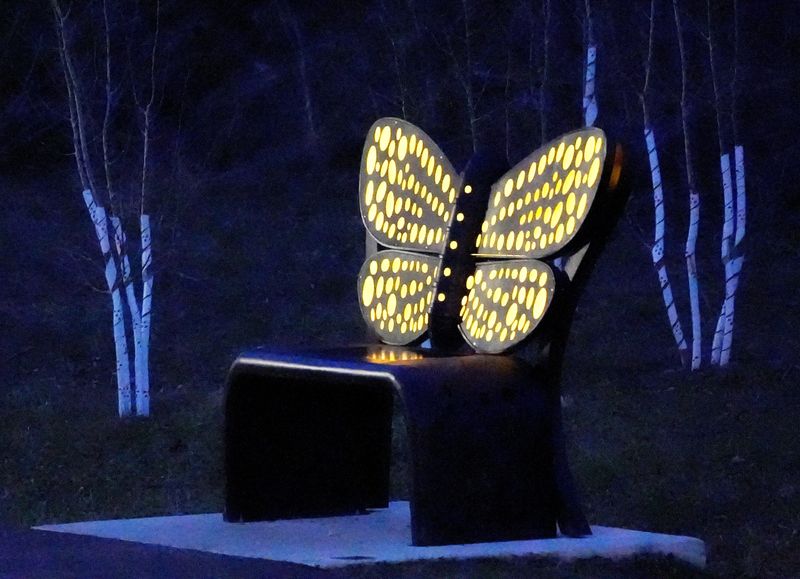
At dusk in Wauwatosa’s Firefly Grove Park, when lamps light up both the sidewalks and the larger-than-life Thomas Dambo troll statue the park is most known for, the wings of a firefly-shaped black bench nearby glow, too.
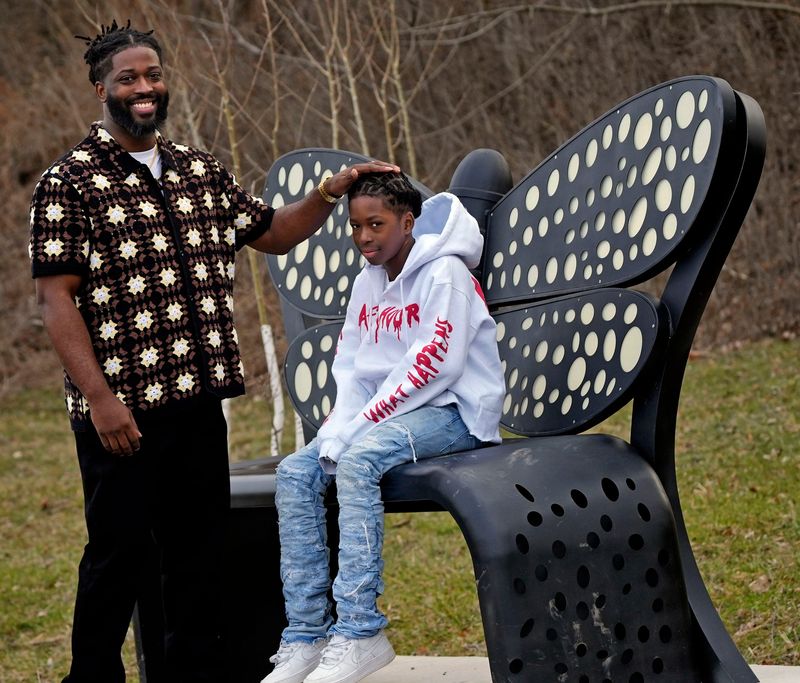
The solar-powered bench dons the name “Forever Wauwatosa” by its artist Gerald Williamson Jr., known artistically as Moolah Bred.

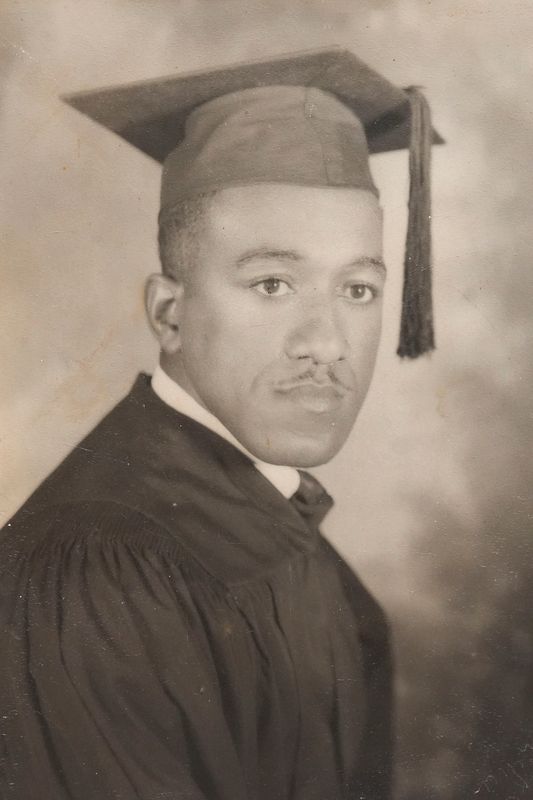
Moolah Bred constructed the bench to honor his great, great uncle Zeddie Quitman Hyler and the ranch home he built over 70 years ago just blocks from the park. Hyler became Wauwatosa’s first Black homeowner.
But building a home in Wauwatosa as a Black man in the 1950s wasn’t an easy feat. Hyler faced racism from Wauwatosa city leaders, neighbors and vandals. He even needed a white friend to purchase the lot in the first place.
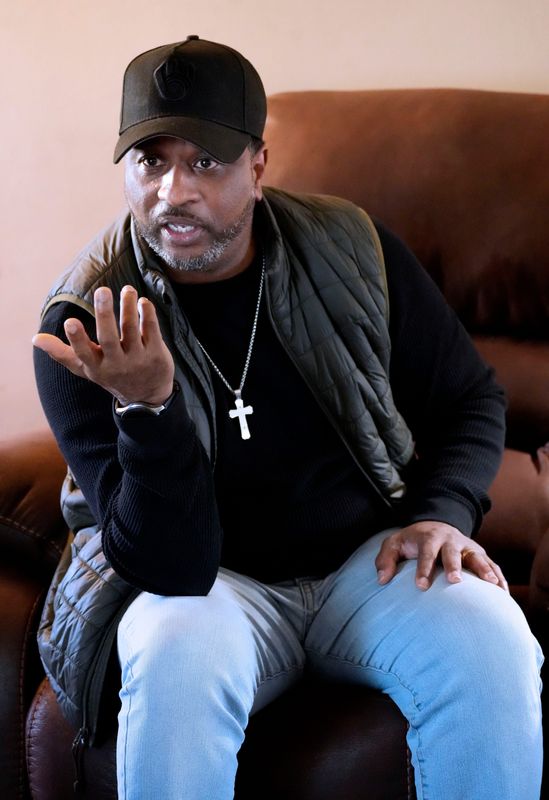
Today, Hyler’s home remains on North 113th Street and his homeownership goals have extended beyond his 2004 death and into his future generations. He left the home to his grandnephew Gerald Williamson Sr., Moolah Bred’s father, who still lives there today with his wife. In recent years, Williamson worked to get the home recognized with a historical designation.
Hyler’s legacy also now lives on blocks away in Wauwatosa’s newest public park. Those who sit on the glowing “Forever Wauwatosa” firefly bench can enjoy the park, learn Hyler’s story or remember their own loved ones who have passed.
A Mississippi sharecropper’s son joins the Great Migration and finds home in Milwaukee
Lora Hyler thinks of her uncle Zeddie as a pioneer alongside trailblazers like Rosa Parks, Harry Belafonte, Shirley Chisholm and Malcolm X. His decision to move to Milwaukee influenced much of his family to follow, including her parents.
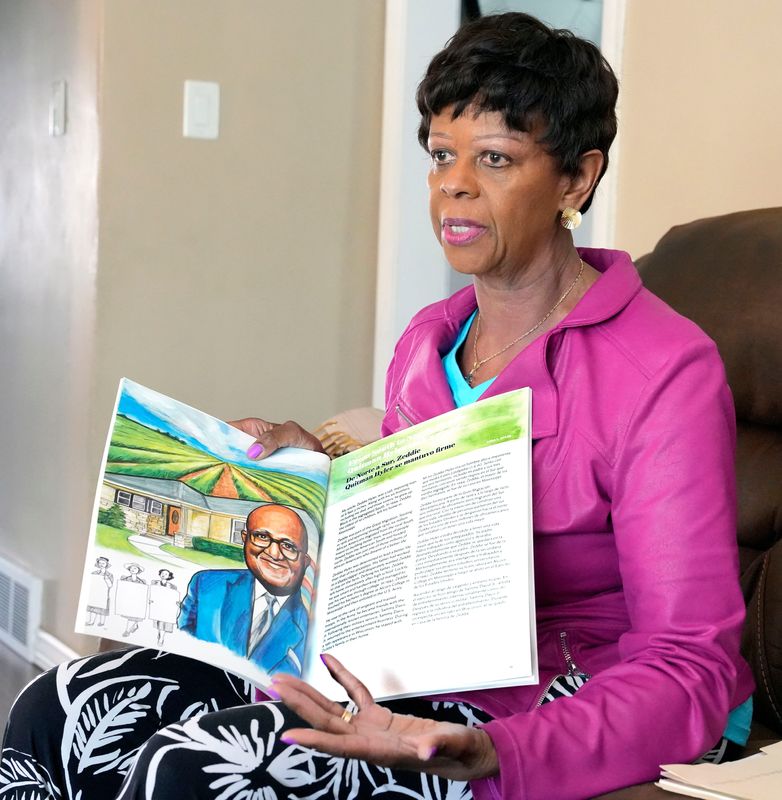
Lora Hyler now works as children’s book author, but an award-winning essay she wrote in 2021 tells the tale of her uncle’s life and the incredible challenges he faced – and overcame – as the first Black man to build and own a home in Wauwatosa.
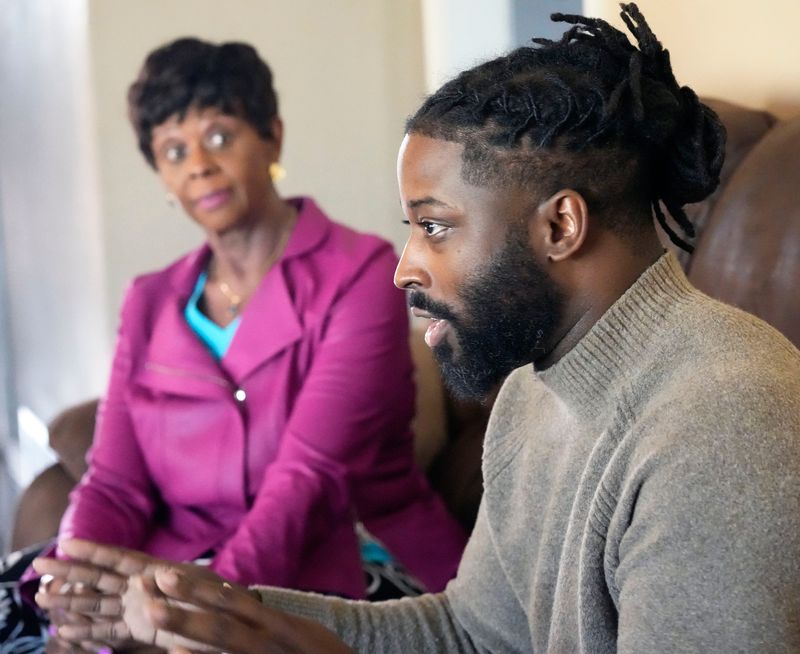
On a sunny day in late February 2026, Lora, Gerald Williamson Sr., and Moolah Bred sat in the living room of the Wauwatosa home and told a Milwaukee Journal Sentinel reporter and photojournalist stories of their loved one Zeddie.
Hyler grew up the oldest of ten children in New Albany, Mississippi, in the era of oppressive Jim Crow laws. His parents wanted him to support the family by laboring in the fields where his dad was a sharecropper, but Hyler had other plans. He went to college on his own dime and became a sergeant in the Army.
In 1944 Hyler joined the Great Migration, a mass movement of over six million African Americans who left the south to escape racial violence and oppression for economic opportunities in Northern, Midwestern, and Western states. Hyler was the first of his family to leave Mississippi for the north, seeking a job that he could put his mind to in Milwaukee, according to Lora Hyler.
Once in Milwaukee, Hyler worked hard as a postal clerk and acquired property within the Bronzeville area, joining the city’s thriving, entrepreneurial Black community spearheaded by the Great Migration. He got involved in community organizations like the Boys and Girls Club. Over time, many of his siblings followed him to the north, and he’d often connect them with jobs and housing, according to Lora Hyler.
But Hyler had his eyes on a dream – a home of his own he’d build on a plot of land in Wauwatosa’s 2300 block of North 113th Street.
Like in other suburbs of Milwaukee County at the time, racial covenants banned Black residents from owning or occupying homes throughout Wauwatosa. For example, the first racial restriction in Wauwatosa was placed on the Washington Highlands Subdivision in 1919, the Journal Sentinel previously reported.
The covenant read: “At no time shall the land included in Washington Highlands or any part thereof, or any building thereon be purchased, owned, leased or occupied by any person other than of white race. This prohibition is not intended to include domestic servants while employed by the owner or occupied by and [sic] land included in the tract.”
Those restrictions wouldn’t deter Hyler from building his own home in Wauwatosa for himself, his wife, and his only son.
Zeddie Hyler encountered racism, roadblocks on his quest to build his home in Wauwatosa
Figuring he’d have trouble trying to buy land as a Black man in 1955, Hyler asked a white friend to buy the property and sell it to him.
At first, Wauwatosa leaders rejected his application for a building permit due to neighbors’ objections. They said no again, citing claims that land may be used for a possible freeway.
Eventually, the city approved Hyler’s building plan. He started to build his home, which he coined The Ponderosa.
But vandals repeatedly damaged the building that was in progress. Hyler also received threatening phone calls. At one point, all the harassment led him, a few family members, and a minister to guard the home with rifles.
Some white Wauwatosa residents took notice – and issue – with the hate. Thirty-nine white women of Wauwatosa signed their names and addresses in a May 30, 1955, Milwaukee Journal article to protest the vandalism.
The racist incidents didn’t scare Hyler, he told the Milwaukee Journal in a 1987 article.
“My thoughts were that I had a right to live there, and I planned to live and die in this house,” he said.
Finally, the Ponderosa stood. Hyler had built his dream, and enjoyed it for decades.
Zeddie Hyler’s home remains in the family
Zeddie Quitman Hyler was more of a father than a great uncle to Gerald Williamson.
The pair first really bonded on a road trip to Mississippi when Williamson was a teenager. Williamson’s father wasn’t in the picture, and Hyler brought Williamson under his wing. He showed him how to fix up a house and taught him odd jobs.
After Williamson opened a repair shop, he said Hyler would stop in unannounced for “random inspections.” These visits were Hyler’s excuse to watch Williamson in action as a businessman, to crack jokes at each other, and to connect with his young boys.
“He was pretty much just taking me in and trying to raise me up like he would have did for his own son,” Williamson said. Hyler’s son Butch passed away as a young man.
Still, it was a surprise when Williamson learned after Hyler’s 2004 death that Hyler left the home to him. Williamson’s family moved in, but the aging house didn’t come without costly and needed repairs, which they’ve seen to.
“They put a lot into that house to keep that legacy in the family,” Williamson’s son Moolah Bred said.
It’s not lost on Williamson that Hyler overcame incredible obstacles to build the house he and his wife still reside in today.
Besides the vandalism and threats, opposing neighbors had the prejudiced fear that a Black man moving in would make property values plummet. But, according to Williamson, property values only went up when Hyler moved in, and they’ve continued to rise during his own time as a homeowner.
Williamson’s family has been among the few Black residents on the block, but over time he’s seen more Black families move to the area.
Wauwatosa as a whole has been steadily becoming more diverse since 2010. The population of Black residents moving from 5% that year to 7% in 2023, according to a 2025 Wauwatosa housing assessment study.
Today, the Ponderosa ranch home looks about the same from the outside as it did in Hyler’s possession, although the Williamsons have poured money and work into maintaining and improving the historic space.
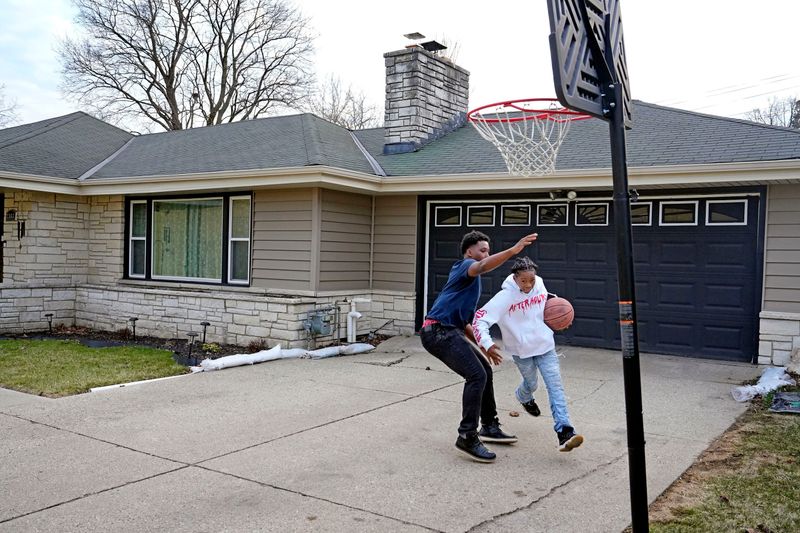
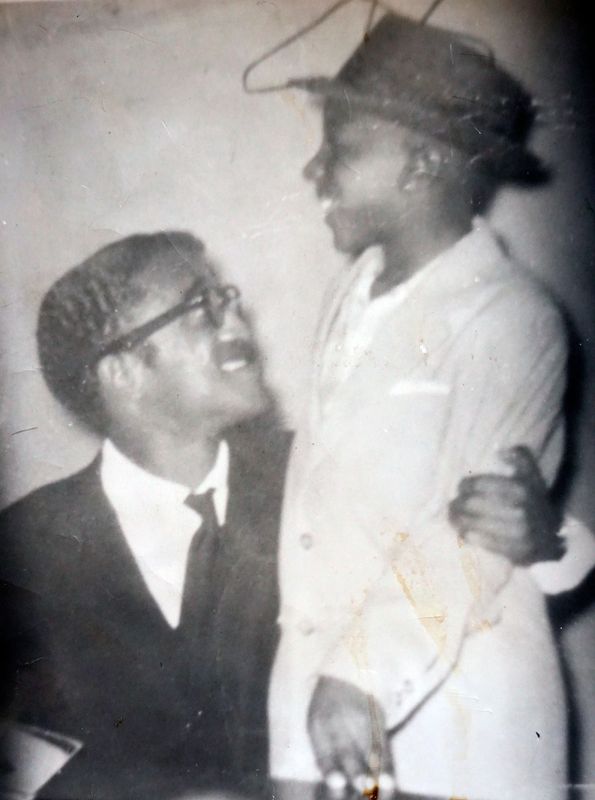
Inside, there’s the living room where Hyler hosted friends like entertainer Sammy Davis Jr. – his private in the Army who paid visits to the Ponderosa on his tours to Milwaukee. Now, it’s a spot for the Williamson family to gather, and the grandkids can spill out to the driveway to play basketball, like they did on a Saturday in March.
One visible change in recent years is a massive concrete wall which lines the opposite side of the street, dividing the neighborhood from Interstate 41. Williamson doesn’t necessarily mind it. But he joked it might look better with a mural of Zeddie on it.
Art is a throughline through Moolah Bred’s relationship with Zeddie Hyler
Art has woven its way through Moolah Bred’s childhood memories with Hyler and his teen years living at the home following Hyler’s death. Hyler took notice when Moolah Bred spent time doodling with pencil and paper in his dad’s shop.
“He wanted me to draw something for him, but we never got a chance to do that,” Moolah Bred told the Journal Sentinel.
Now a full-time, professional artist, he’d always known he’d honor Zeddie Quitman Hyler through his work. He just didn’t know how or when.
Then his brother-in-law told him about a competitive call for artists to create benches for a new Wauwatosa park just blocks from the home that would open in the spring of 2025.
“This opportunity presented itself,” he said. “It’s just divine.”
Moolah Bred built the bench with his team at MOOLAH BRED STUDIOS and BE READY EVERY DAY, or BRED, the creative collective he co-leads with two other artists. He chose the firefly shape because of the park name and the city’s affinity for fireflies – “Wauwatosa” means firefly in the Potawatomi language.
He played around with design ideas for solar-powered sculptures before, but the Firefly Grove Park bench is the first of its kind. Moolah Breed is currently designing more benches. His original concept is now patent pending.
A year since the bench’s creation, Moolah Bred hears from family and friends that visit the bench. Some sit and think of their own loved ones they’ve lost. He’s spotted strangers taking photos of their kids on the bench.
That varied experience is part of what Moolah Bred loves about art, and why he does it.
“I can have a piece of art, and I can have 10 people, and they can tell me 10 different reasons why they like it, or why they’re attracted to it, or why they come to visit it,” he said. “It’s all within the eye of the beholder.”
Those who visit the bench and sit in it might notice their feet will dangle. The bench is intentionally oversized, since Moolah Bred spent formative years with Hyler as a child.
“When I sit in it, I feel like a kid,” he said.
Bridget Fogarty covers Brookfield, Wauwatosa and Elm Grove for the Milwaukee Journal Sentinel. She can be contacted at bfogarty@usatodayco.com.
This article originally appeared on Milwaukee Journal Sentinel: Wauwatosa’s first Black homeowner shines at Firefly Grove Park bench
Reporting by Bridget Fogarty, Milwaukee Journal Sentinel / Milwaukee Journal Sentinel
USA TODAY Network via Reuters Connect
By Bridget Fogarty, Milwaukee Journal Sentinel | USA TODAY Network