The University of Wisconsin-Milwaukee plans to merge eight cultural and resource centers into a single hub, sparking backlash among students who say the university is walking back its commitment to diversity.

“It’s a smack in the face,” said UWM senior mechanical engineering major Kalen Walker. “You’re getting rid of history. You’re getting rid of culture. And for what? The new center will be a glorified student union. There’s no way to successfully mix eight personalities into one room.”
UWM will merge the Black Student Cultural Center, the First-Generation+ Resource Center, the LGBTQ+ Resource Center, the Military and Veterans Resource Center, the Off-Campus Resource Center, the Roberto Hernández Center, the Southeast Asian American Student Center and the Women’s Resource Center into one center. The new model begins in fall 2026.
The goal, UWM explained on a webpage addressing the new student center, is for students to better access campus resources through a single, coordinated hub. This may, in turn, improve student outcomes, such as retention and graduation rates.
In interviews with more than a dozen students, some saw the consolidation as caving to political pressure from President Donald Trump. The Trump administration has threatened to withhold federal funding from higher education institutions that support diversity efforts.
UWM said the the evolving federal landscape on diversity, equity and inclusion was considered in the planning process but did not drive the decision to merge the centers.
Students were skeptical of this explanation.
“I feel like I’m being sold baloney,” said sophomore Andy Guzman.
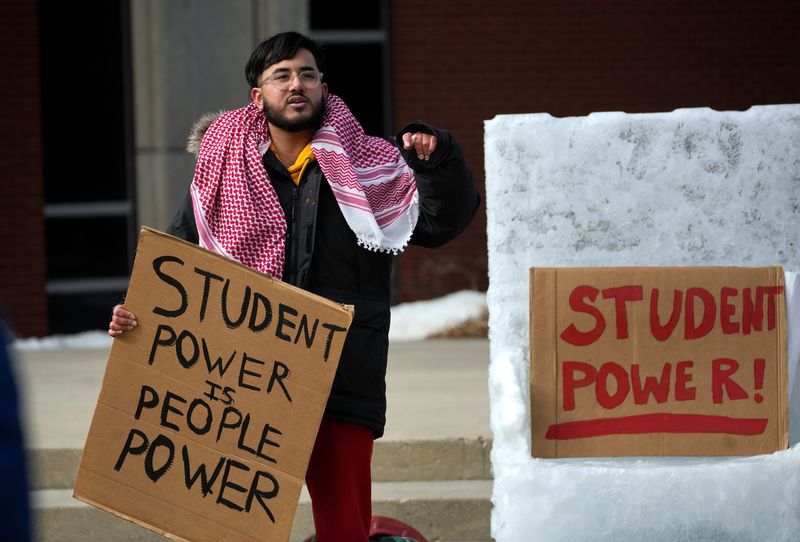
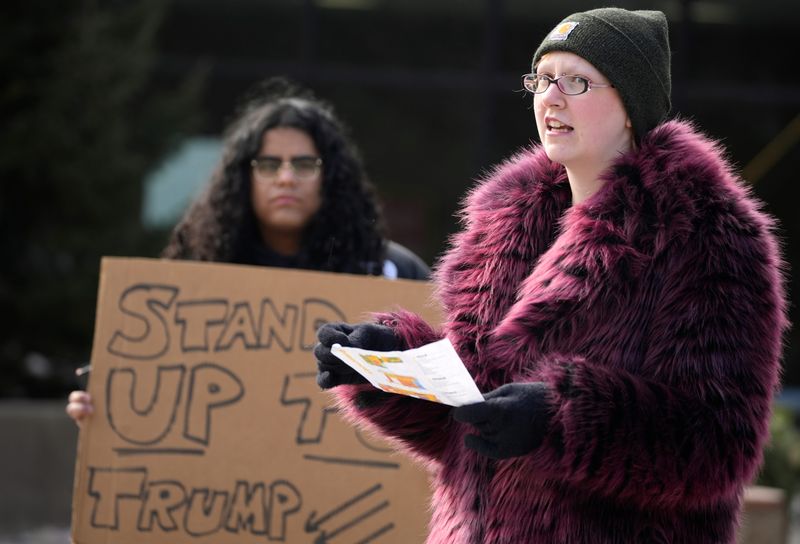
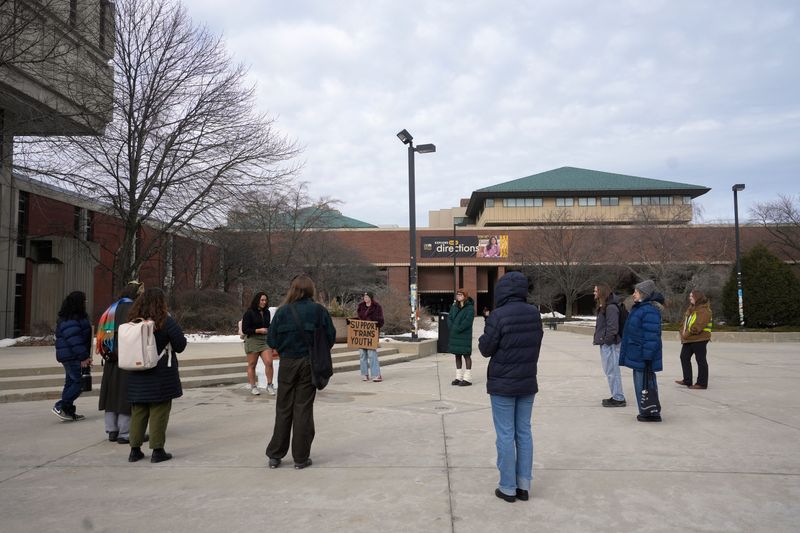
Students protest UWM’s plan to consolidate student centers
Several student groups protested UWM’s plan on Feb. 12.
For many students, the current model works well. They can find resources they didn’t even know existed. They can feel a sense of belonging that makes them feel invested in their college experience. It can be the difference between a student dropping out or earning a degree.
Freshman McKenzy Beamon said the Black Student Cultural Center “feels like home.”
Adriyanna Armstrong, a junior majoring in psychology, said she wouldn’t feel comfortable visiting the new center because certain identities – such as those who visit the Military and Veterans Resource Center – may clash with others, like the LGBTQ+ Resource Center and the Black Student Cultural Center.
All support and resources in the current centers will continue in the new one, UWM said. No full-time employees will lose their jobs as part of the consolidation, though staff will see their job responsibilities change. The space will welcome everyone but still honor and support specific identities through traditions, events and programs.
Clair Paul, a graduate student studying social work, said merging the centers feels to her like UWM is trying to assimilate everyone instead of celebrating differences.
“The one-stop shop, in theory, sounds great,” Paul said. “But in reality, it’s a form of erasure.”
Campus activism led to creation of cultural centers
Some of the centers emerged at UWM after years of protest and activism, according to “Telling our Stories,” a book on the university’s history of diversity.
The Roberto Hernández Center, for example, supports the university’s growing Hispanic population. Its precursor, the Spanish Speaking Outreach Institute, faced budget cuts, changes in reporting structures and accusations of UWM leaders misappropriating its funding.
The Roberto Hernández Center’s current director, Alberto Maldonado, frequented the Roberto Hernández Center in the 1990s when he was a student on academic probation. He saw the importance of having a dedicated space for Latino students.
“Whether we like it or not, most of our higher education institutions are predominantly white institutions,” he said in a 2022 Journal Sentinel interview before the DEI backlash really began. “Centers like Roberto Hernández are extremely important to help those students navigate what for many of them is very intimidating.”
Does having a single student center better support students?
Despite more colleges nationally consolidating or closing student centers in response to federal pressure, there’s little research on whether reorganizations help or harm student success.
Shannon Brady, a Wake Forest University assistant professor of psychology who has written about college students and belonging, said the placement of identity centers can play a role in their effectiveness. Research suggests if the centers are in well-trafficked areas, not hidden away in a corner, it signals to students that a university values those identities.
The new center will be along one side of the ground floor of the Student Union – a spot some students said was not as prominent as the centers’ current locations.
Brady said she could envision a world in which consolidation was a “shortcut” to eventually stop providing certain services to students. She said some students may be uncomfortable at the new center, leading to less usage. But it may also be able to better support multifaceted identities.
It’s incumbent on institutions to measure whether the new model works, Brady said. Is foot traffic going up or down? Is retention improving or on the decline?
“From my perspective, the devil is in the implementation details,” she said.
Kelly Meyerhofer has covered higher education in Wisconsin since 2018. Contact her at kmeyerhofer@gannett.com or 414-223-5168. Follow her on X (Twitter) at @KellyMeyerhofer.
This article originally appeared on Milwaukee Journal Sentinel: UWM plans to merge student centers, angering students
Reporting by Kelly Meyerhofer, Milwaukee Journal Sentinel / Milwaukee Journal Sentinel
USA TODAY Network via Reuters Connect