Before documents detailing its use of Ridglan Farms beagles in a 2023 study could become public, the University of Wisconsin-Madison’s School of Veterinary Medicine released a statement June 5 alongside a letter to clients of UW Veterinary Care, an animal hospital run by the university.
The letter from Jon Levine, the veterinary school’s dean, warned that the records contain information “some people may find distressing.”

The university released the documents in response to a public records request seeking information about its purchases of dogs from Ridglan Farms, the controversial beagle breeding facility located in Blue Mounds. It did not disclose who submitted the request, and the records have not been made public as of June 5.
UW-Madison said it purchased beagles from Ridglan Farms for a 2023 study developing a new anesthesia technique for spaying procedures and other lower-body surgeries in dogs.
“Veterinarians across the country are now safely using this anesthesia method to keep dogs comfortable and healthy when undergoing many surgical procedures necessary for their care,” the statement said.
The university said the research required six of those dogs to be euthanized in order to confirm the anesthesia had reached expected locations in the body. Others were adopted out.
The university said the research was conducted humanely and followed required federal and ethical approvals.
Levine said in his letter to UW Veterinary Care clients that he has directed that donor funds supporting faculty health care studies no longer be used for research on purpose-bred animals, unless a donor explicitly approves.
Only a fraction of those funds had ever been used that way, he added.
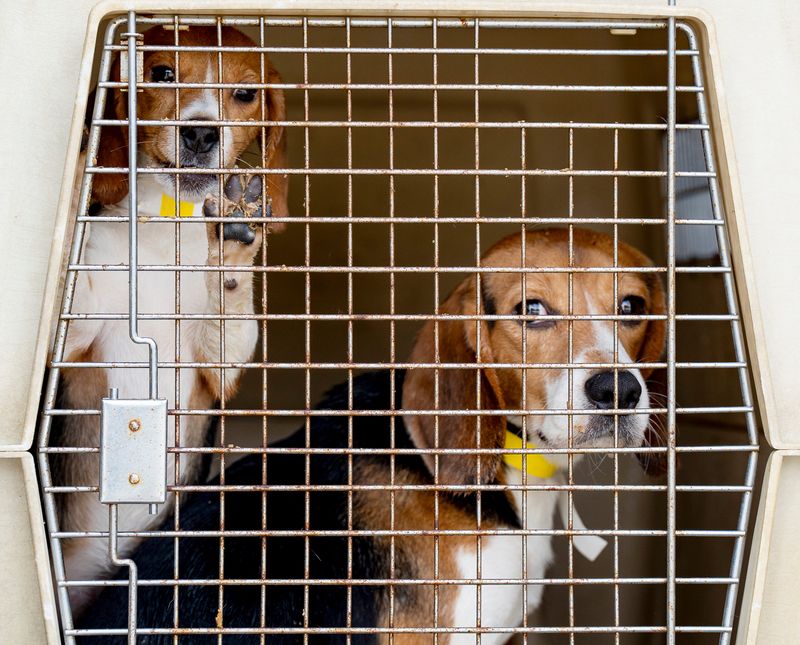
Ridglan Farms is one of the two largest beagle suppliers for medical research and drug testing in the country.
The facility agreed to surrender its state breeding license by July 1 under a non-prosecution agreement last year, following years of state inspections and a criminal investigation that found that staff were performing eye-gland removal surgeries on the beagles without anesthesia.
After two breaks-ins led by animal rights activists this spring, Ridglan Farms agreed to sell the majority of its dogs to animal rescue organizations. The company has denied mistreating the dogs in its care.
UW-Madison among dozens of institutions that bought Ridglan beagles
State veterinary inspection records previously obtained by animal rights groups Rise for Animals and The Marty Project document three shipments of Ridglan beagles to UW-Madison’s School of Veterinary Medicine – six dogs on Jan. 18, 2022, four dogs on Feb. 25, 2022, and three dogs on July 26, 2023.
Each document was signed by Richard Van Domelen, Ridglan’s facility manager, whose veterinary license was suspended in September 2025 after the Wisconsin Veterinary Board found he had authorized eye surgeries on dogs without anesthesia.
Records compiled by Rise for Animals and The Marty Project show Ridglan sold dogs to dozens of other institutions across the country, including universities, pharmaceutical companies and contract research organizations.
UW-Madison declined to comment beyond its statements in the news release. Spokesperson Chris Barncard previously told the Journal Sentinel that all active dog research at the university now involves pet dogs volunteered by their owners.
The university said no dogs from Ridglan are currently on campus.
Quinn Clark is a Public Investigator reporter for the Milwaukee Journal Sentinel. She can be emailed at QClark@gannett.com.
Milwaukee Journal Sentinel reporter Kelly Meyerhofer contributed to this story.
This article originally appeared on Milwaukee Journal Sentinel: UW-Madison defends use of Ridglan beagles in research, restricts future funding
Reporting by Quinn Clark, Milwaukee Journal Sentinel / Milwaukee Journal Sentinel
USA TODAY Network via Reuters Connect
By Quinn Clark, Milwaukee Journal Sentinel | USA TODAY Network