Local farmers and businesses in Wisconsin are bracing for impact as funding for the state’s federal food assistance program is set to run out by November.
If federal officials do not secure a stopgap to keep FoodShare afloat, nearly 700,000 Wisconsinites rely who rely on Supplemental Nutrition Assistance Program benefits will be affected, Gov. Tony Evers told the U.S. Department of Agriculture secretary on Oct. 22.

The state provides about $113.6 million per month in FoodShare benefits, all of which is funded by the federal government, according to data from the state Department of Health Services. Unless federal officials come up with a stopgap measure or solve the government shutdown, the money will run out Nov. 1, affecting recipients and local farmers alike.
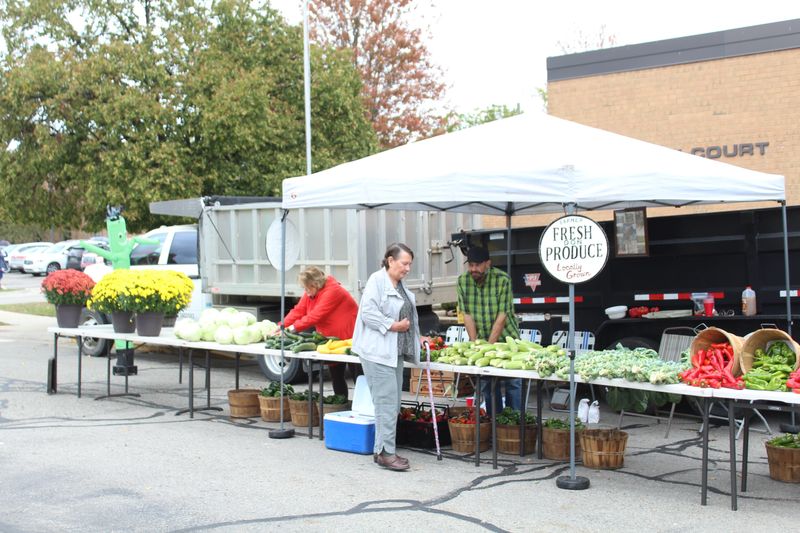
SNAP can be used at most grocery stores, big-box stores and many convenience stores, dollar stores, farmers’ markers and pharmacies that sell food, and are often a significant source of revenue for many farmers markets, according to the Food Research and Action Center.
In many rural communities, farmers markets serve as a primary source of affordable and fresh produce. Kris Koch, manager of the Janesville Farmers Market, told the Milwaukee Journal Sentinel that SNAP cuts and loss of funding will make it harder for families to access healthy foods, particularly in rural areas where options are already limited.
Both downtown Janesville and the city’s south side are considered food deserts due to a lack of accessible grocery stores with affordable, fresh produce options. Koch said that many SNAP recipients rely on the farmers’ market for fresh options.
“They just don’t have access to a lot of healthy stuff,” Koch said. “They could go to a convenience store that takes EBT and buy certain things, but it’s unlikely it’ll be as fresh as anything grown locally.”
Wisconsin Farmers Union Executive Director Danielle Endvick told the Journal Sentinel that a lot of farmers take pride in accepting SNAP EBT so that more people in their community can have access to regionally grown foods. Approximately 0.02%, or roughly $120 million, of Wisconsin’s FoodShare dollars are spent at farmers markets, according to the University of Wisconsin-Madison Division of Extension.
Endvick said in rural communities where people have to drive upwards to an hour away to get foods that are a little fresher, these farmers who accept SNAP can make a difference.
“One of our concerns at Wisconsin Farmers Union is that these cuts might disproportionaly affect rural areas. We know that rural communities often have higher SNAP participation rates and there are fewer alternative economic engines in some rural places,” Endvick said. “It’s ironic. We’re in farm country, but due to the nature of farming today, that doesn’t mean fresh local fruits and vegetables are in our grocery stores.”
Inversely, a lot of local businesses and family farms rely on SNAP as a critical revenue source. Incremental revenue streams like SNAP EBT can serve as an important economic multiplier, meaning that each SNAP dollar spent returns that dollar and more to the local economy.
“Cuts to SNAP really do translate directly into reduced food purchases at local farmers markets and, in turn, means fewer dollars flowing back to our farmers and into local food supply chains,” Endvick said.
In Wisconsin, every SNAP dollar spent at local stores and farmers markets generates an estimated $1.50 in the broader economic activity, according to DHS. Additionally, by accepting SNAP EBT, businesses are able to tap into a new customer base they previously didn’t have access to.
The Janesville Farmers Market has close to 100 vendors and serves roughly 5,000 patrons each Saturday from May through October. Koch said that in recent years, fewer SNAP dollars have been spent at the market following program reductions and that many producers in the Janesville area rely on EBT programs to maintain already slim profit margins.
“Our produce famers probably have some of the slimmest profit margins,” Koch said. “If America wants to still be known as a bread basket, producer, focused economy, we need to support our smaller farmers.”
Anna Kleiber can be reached at akleiber@gannett.com.
This article originally appeared on Milwaukee Journal Sentinel: SNAP funding in Wisconsin is running out. Farmers and businesses brace for impact
Reporting by Anna Kleiber, Milwaukee Journal Sentinel / Milwaukee Journal Sentinel
USA TODAY Network via Reuters Connect