OSHKOSH – The budget deficit gap has widened even further.
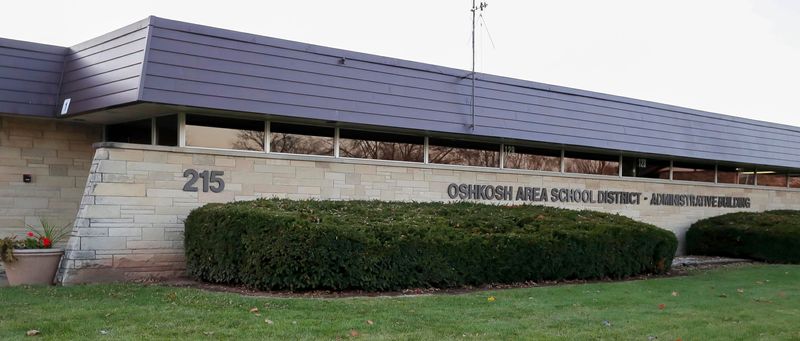
Oshkosh Area School District is facing more cost reduction options, including potentially raising health care premiums for staff, after two consultants revealed the 2026-27 forecasted deficit was still short another $1.4 million.

Addressing the OASD Board of Education May 27, Superintendent Bryan Davis said the state Legislature’s special education reimbursement came in at 40% instead of the projected 45%, resulting in an additional $1.4 million to the previous $3.1 million shortfall.
How did the projected budget deficit increase?
The news comes just one month after the district’s forecasted budget deficit essentially doubled from fall’s projections of $5.5 million to $10.9 million as a result of OASD failing to take into account increases in health insurance claims and declining revenue.
OASD’s board was forced to cut around 65.8 staff positions to find $7.8 million in savings last month, leaving the current gap around $4.5 million.
“We’re confident we have an accurate view,” said Davis, with the retiring Executive Director of Business Services Drew Niehans noticeably absent from the last two budget addresses.
Niehans’ successor Cindy Rettler was present at the meeting although her official start date is listed as July 1 on the district’s administration page.
What are the budget reduction options?
Brought in as third-party consultants, school finance authority Todd Gray and school business specialist Todd Hajewski presented the board with a combination of four, one-time options that didn’t involve further staff cuts.
Those savings include $900,000 in special education transfer, taking $2 million from the district’s Fund 73 and $2 million from Fund 10 and Fund 27 for other post-employment benefits and using Fund 46 for summer projects.
The most notable recommendation came in the form of increasing OASD employees’ percentage share of health care premiums between 8% to 12%, which could save the district as much as $2 million.
According to the presentation, the current health care plan costs employees $50 a month for a single plan and $100 for the family plan.
With the proposed percentage increases, staff’s monthly payments would be as follow:
Those recommended health care increases would result in possible district savings from $978,000 to $2.001 million at the high end.
“There’s a lot of fixes,” Gray claimed. “I think there are a lot of districts that would love to have some of the things you have in place that you can use for one year to get through this.”
How did the consultants justify options to increase health care premiums?
Describing the district’s employee benefits as “generous,” Gray and Hajewski drew up charts showing that OASD paid more in employer contribution for health insurance premiums than any of the other surrounding school districts.
Both consultants added that OASD’s “staffing is heavy compared to peers” while saying the district was on the lower end of student-to-teacher ratios.
Board member Jacob Wolf pushed back on comparing OASD to other districts while most of the board viewed the option of raising health care premiums as a reluctant last resort.
“The health insurance is the last thing we want to do, so let’s exhaust all our possibilities before we go to that route,” said board member Timothy Hess.
What are the next steps?
The board wasn’t required to vote, with Davis suggesting to finalize any possible reduction options when the board approves its annual budget toward the end of October.
According to Davis, OASD will have a clearer picture as the district can review final state aid allocations, student enrollment and staffing.
OASD is expected to work on refining its forecast models between June and September before presenting projections for the 2027-28 and 2028-29 budgets.
Why is the district facing these deficits?
OASD is just one of many districts in the state facing declining enrollment, leading to 62 districts seeking operating referenda last year and a record 148 in 2024.
Davis detailed a 6.03% increase in the district’s estimated expenses all while OASD reported 185 fewer students than the previous school year.
State funding is directly proportional to student enrollment numbers.
Voters approved a $7.95 million OASD operating referendum in 2020 and Davis previously held that finance projections will eventually lead the district to put another one on the ballot in November 2028.
Contact Justin Marville at jmarville@usatodayco.com and follow him on X (formerly Twitter) at @justinmarville.
This article originally appeared on Oshkosh Northwestern: Oshkosh schools consider health premium hikes as deficit worsens
Reporting by Justin Marville, Oshkosh Northwestern / Oshkosh Northwestern
USA TODAY Network via Reuters Connect