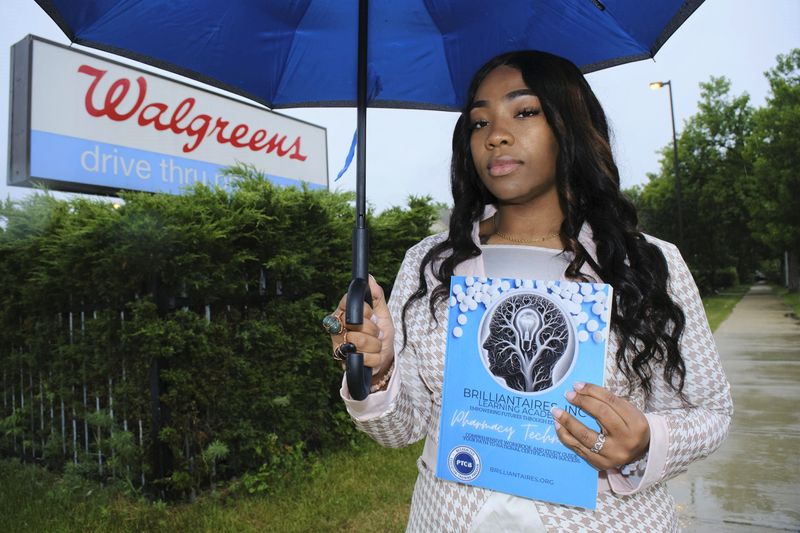
Milwaukee native Roberta Steward, 33, was a pharmacy technician at Aurora Health Care for 11 years.

During that time, she watched the decline in pharmacy access across the city, largely due to store closures and high employee turnover.
As pharmacy closures continue to pull life-saving medications and resources from Milwaukee neighborhoods, Steward is aiming to improve access to pharmacy services by training and certifying new technicians through her workforce development nonprofit, Brilliantaires Inc.
A play on the words “brilliant” and “millionaires,” Steward said Brilliantaires Inc encourages students to know that they are intelligent and can “get that money,” Steward said.
Since launching the nonprofit learning academy, the program has trained 117 students who are now certified pharmacy technicians.
Steward is also planning to open a community pharmacy, with a $250,000 fundraising goal for the brick-and-mortar location.
“Just seeing the growing pharmacy desert, I feel like we need to have more access to community pharmacies,” Steward said.
New education program aims to address pharmacy deserts
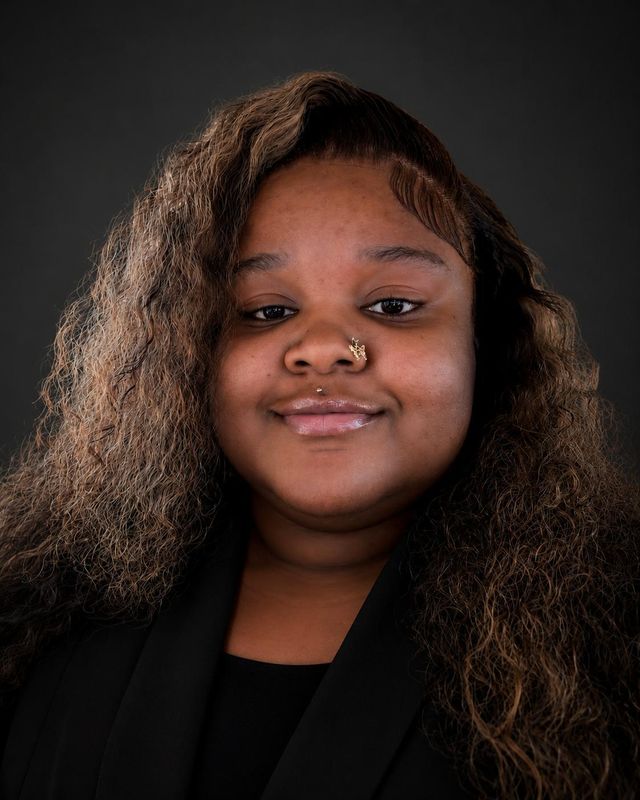
Sauche Dixon, 25, believes she may have found her career because of the Brilliantaires Pharmacy Technician Training program.
Dixon previously worked as a caregiver when she heard about a new training program offering pharmacy technician certifications.
After signing up for the program, Dixon said she did not feel rushed through the coursework and could learn at her own pace while still feeling supported.
Her favorite part of the training was the weekly check-ins, where students and educators would meet to talk and provide feedback on the classes.
Steward, Dixon said, created a course that made her feel as though she was not just in a class where information was being thrown at her, but in a system that supported her throughout the process.
“We had a couple laughs, some food; it just felt good to feel like I was learning in the moment,” said Dixon, who landed a job as a pharmacy technician at Ascension Hospital almost immediately after graduating from the course.
“I finished Jan. 10, got an interview Jan. 12, and started March 9,” Dixon said.
As the lead instructor, Steward draws on her firsthand knowledge as a pharmacy technician to create a program that will be most useful to students.
Each class is hybrid – mostly virtual, with some in-person sessions – and is limited to about 50 people, who will walk away with a national certification after two to four months.
In the beginning, the certification program was free for students, according to Steward, who self-funded the program and spent over $15,000 in the process.
Now, the program costs students $300.
Steward is hoping to land federal Workforce Innovation and Opportunity Act funds, which would once again make the course free, but she has not yet been approved.
“I just felt like since it’s through my nonprofit, it should be free,” she said.
Currently, Brilliantaires Inc has a waitlist of about 240 people for the general technician certification program, according to Steward.
Pharmacy closures and workforce strain deepen the gap in access
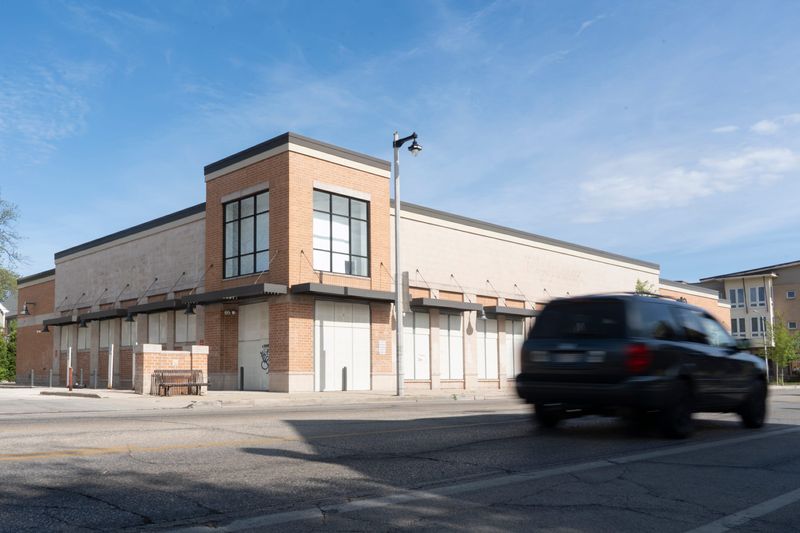
A rash of pharmacy closures has rocked Milwaukee neighborhoods, causing other businesses and nonprofits to pick up the slack.
The most recent closure, a Midtown Walgreens, is part of the chain’s plan to close 1,200 underperforming stores across the country over a three-year period.
According to the corporate pharmacy giant, the closures are a result of declining profits, low drug reimbursement rates and safety challenges.
As pharmacies shutter across the city, pharmacy technicians and customers have noticed another challenge: high employee turnover due to understaffing, according to Steward.
Pharmacy Technician Certification Board’s State of the Pharmacy Technician Workforce 2025 report stated one of the reasons worker turnover occurs is because of a need for higher wages.
The report details that obtaining a national certification, the same certification that Brilliantaires’ students work for, is one of the best ways to increase pay.
A national pharmacy technician certification, which is not required by Wisconsin state law, permits the technicians to administer vaccines under a pharmacist’s supervision. It also results in higher pay.
Certifying teenagers as pharmacy technicians
In another effort to increase the number of pharmacy technicians in the city, Steward is partnering with Hand in Hand Solutionz Academy on a violence-prevention initiative, through which 18-year-olds can become certified as pharmacy technicians or as Community-Based Residential Facility workers out of high school.
About 90 students have already signed up to participate, according to Steward.
Founder of Hand in Hand Solutionz Academy, Jasmine Walker, 41, said that by the end of the course, every student will have a firm grasp of the basics of being a pharmacy technician or a caretaker, depending on the coursework they select.
“Pharmacy is not usually a career [that] is spoken on,” Steward said. “It’s always nursing and other things.”
One of the reasons Steward has seen violence occur among teens and young adults is that they may not have a career path or options to make money.
According to Steward, this is a way to change that.
Potential for community focused pharmacy
Brilliantaires Inc. aims to raise $250,000 for a training pharmacy that will provide medications to communities affected by recent pharmacy closures.
“People don’t always have access to cars, so having the pharmacy local is important to accessibility,” Steward said.
Steward said the pharmacy is still in the early stages of planning, and she is scouting locations for it and plans to speak with elected officials about the initiative.
Currently, she is working with the Near West Side Partners on bringing the plan to reality.
Eventually, Steward would like to open a second location that supplies medicines to assisted living facilities, group homes and other organizations that need medications shipped.
Everett Eaton covers Harambee for the Journal Sentinel’s Neighborhood Dispatch. Contact: eeaton@usatodayco.com.
Neighborhood Dispatch reporting is supported by Bader Philanthropies, Zilber Foundation, Journal Foundation, Northwestern Mutual Foundation, Greater Milwaukee Foundation, and reader contributions to the Journal Sentinel Community-Funded Journalism Project. Journal Sentinel editors maintain full editorial control over all content. To support this work, visit jsonline.com/support. Checks can be addressed to Local Media Foundation (memo: “JS Community Journalism”) and mailed to P.O. Box 85015, Chicago, IL 60689
The JS Community-Funded Journalism Project is administered by Local Media Foundation, tax ID #36-4427750, a Section 501(c)(3) charitable trust affiliated with Local Media Association, and EnMotive, a subsidiary of USA TODAY Co.
This article originally appeared on Milwaukee Journal Sentinel: Local nonprofit looks to address Milwaukee pharmacy deserts
Reporting by Everett Eaton, Milwaukee Journal Sentinel / Milwaukee Journal Sentinel
USA TODAY Network via Reuters Connect

By Everett Eaton, Milwaukee Journal Sentinel | USA TODAY Network