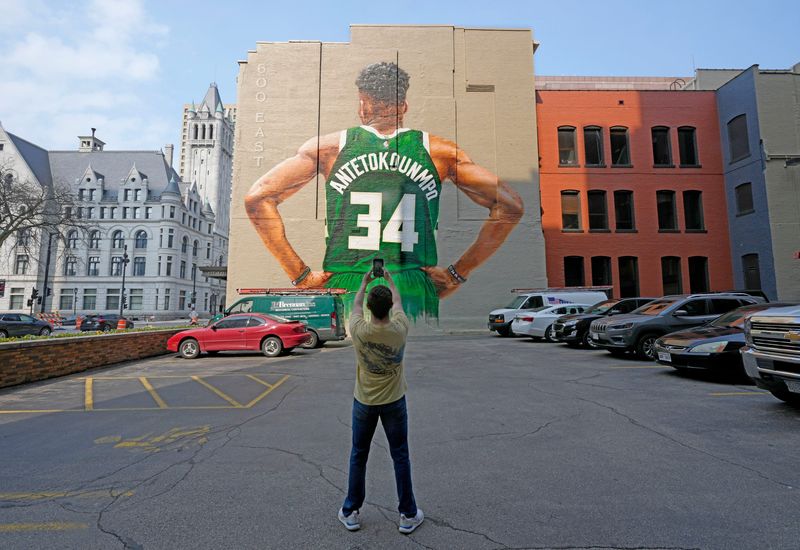
The Milwaukee Bucks are moving into the next era of the franchise in agreeing to trade Giannis Antetokounmpo to the Miami Heat. The deal will not be finalized until the new league year begins on July 6. The 31-year-old is not only one of best current players in the NBA, but is one of the best in the history of the game.
He is a global superstar, but one of the reasons he reached that level is his unique and heartwarming arrival in Milwaukee as an 18-year-old in 2013. The City of Milwaukee and state of Wisconsin literally watched him grow up, learn English, learn and experience the American way of life – all while becoming the best player in the world.

That background presents a unique situation for the Bucks, who now look to move on and look ahead. Player transactions are the name of the game, but very few players are like Giannis. And there are very few transactions like this. Some might argue it’s a different separation than even Brett Favre and Aaron Rodgers from the Green Bay Packers, or Paul Molitor with the Brewers.
It requires a different level of thought and communication from the organization itself to its fan base, by way of the media. The Journal Sentinel spoke to several public relations experts and local media personalities about how the team should have handled the messaging around Antetokounmpo’s exit and how they can reconnect with the fan base:
Was it the right move for Bucks ownership to begin messaging in March that they could trade Giannis?
Sideman: “Yeah. Because I don’t think it’s been a secret this whole time. By now, fans just kind of expected it, especially after the rumor mill churn last summer. Fans can be upset, but I don’t think they were surprised and I think that ownership was just being frank about it.”
Pizzino: “I think they had to come out and say something eventually and I think what they said was good. They’re just acknowledging the situation, which you have to do.”
Sims: “It’s not a really great way of sharing that information and building on that communication [to the fans], largely because the big mistake sports organizations make during a major transition like this is they focus on the transaction itself and not the emotional impact. You have fans who have been invested in his particular player or this particular franchise and then something like this gets dropped, and it’s gut wrenching. It is a big mistake they make in only looking at the transaction itself, the transition itself and not looking at the real emotional impact it’s going to have on the fans. Fans get the business decisions, but at the same time they want the transparency and the respect.”
What is the best way for the organization to present the messaging of trading Giannis Antetokounmpo?
Sideman: “I hate templates and I hate corporate speak, but it’s going to be one of those things where ‘we made what we thought was a fair [deal] and we understand Giannis wants to grow in a different way and we respected that. Thank you for all you’ve done to build the modern day Bucks and the city. We wanted Giannis to remain a Buck for life but sometimes it’s just time to move on.’ You’re talking about pretty big stuff. Something simple. You don’t have to go into detail about everything, what was put on the table. That will eventually come out.”
Pizzino: “First acknowledge what Giannis has meant to the franchise. The first championship in 50 years. That’s fantastic. They need to acknowledge he was a large part of that. And, they need to of course never burn bridges. So unlike the Dallas situation where there were some inappropriate things said about Luka, just don’t burn bridges. Just take the high road. Because by them continuing to speak positively about Giannis, other players who come to the franchise will realize this is a good franchise, they’re good people.
“[What] they really need to work on is they need to really empathize with the fans. They need to really make sure they understand the pulse of the fans. What are they really feeling? That will help them to more genuinely empathize with them.
“This reminds me of Robin Yount with the Brewers. He started very young [18 years old]. That does a lot for fan relations. The fans are a vital stakeholder for the Bucks. They need to do what they can to prioritize them and take care of them.”
Sims: “It’s important the organization really does acknowledge the contributions of the player, specifically Giannis’ role in here before even discussing what the future looks like.”
Heller: “There’s a love affair of what Giannis has brought to the community and obviously winning a championship for the first time in 50 years. That love and support of Giannis is significant. The fan base has loved him almost unconditionally.
“The Bucks need to be celebratory about what he’s brought and then cut that tie. I think they acknowledge and celebrate him on the deal going out, and then leave it alone.”
Fifer: “Jimmy Haslam and Jon Horst have a decision to make. Either A, keep quiet and hide essentially and wait for everything to blow over. Or B, just be honest and lay all the cards on the table for all that’s been going on behind the scenes this entire time. But if you do that, you potentially burn the bridge to any superstar wanting to play in Milwaukee if you out Giannis for what was going on behind the scenes and don’t protect him.
“I think in the best interest of Giannis wanting to stay in the family, build a statue and all of that, you still have to protect Giannis even if Giannis isn’t willing to kind of help you make you look good in this whole situation.”
Who should speak from the Bucks organization and answer questions on trading Giannis?
Pizzino: “Because of the magnitude of this story, the statement needs to come from the top. Definitely.”
Heller: “Wes [Edens] has been around for Giannis’ tenure. I would love to hear from Wes when it’s all said and done. And Jon Horst. I think Jimmy [Haslam] should sort of leave it alone. Not long-term. Short-term. When it happens. Wes Edens and Jon Horst need to have that press [conference] and answer direct questions. Some they’re not going to answer of course, but to answer as many of the direct questions as they can.
“A press release that celebrates what Giannis brought to the community and embraces that forever history can’t be how they manage this. They’re gonna have to take the shots that media and fans, because we’re just a conduit to the fan base, want answered.”
Fifer: “Wesley Edens is the one you trot around. I don’t know Jimmy Haslam at all but that’s not the person anybody wants to hear from right now. People want to hear from Wesley Edens. You’ve been here the entire time. Let’s hear from you. Let’s hear what that’s all about. After you do that initial presser you try to make Jon Horst as available as possible after the draft. They want to hear from the guy, the owner of the team who just traded the greatest player in franchise history. You traded Giannis, man.
“It has to be a press conference. It cannot be a video of ‘thank you Giannis,’ press release and nobody talks. That can’t be it. It’s very critical that Edens talks to everybody.”
Would it be a misstep for the Bucks to put any of this on Giannis?
Sideman: “I do. Yeah, you don’t blame your star. No matter how many games he played last season, he’s still been the face of your franchise for 13 years. He’s not only been the face of the franchise, he’s been the face of the city. I would leave [the extension talk] totally alone. The Bucks want to take the high road no matter.”
Sims: “You keep the response completely neutral. You don’t play into any negativity. Anything that’s going to draw discourse not in a positive way, you typically would avoid it. Especially when its comments that might diminish the value of what he brought to the table. That’s the absolute worst thing you want to do especially when you have a player like him that is so beloved. That’s not what you want to do because then you very well could be alienating your own fan base. Now they’re side-eying you and not really as engaged. You don’t want to lose your fan base. You don’t want to play into any type of tension that may cause problems down the line.”
Heller: “In terms of taking some of the hits PR wise, fan wise, the organization is going to have to wear it. They have to wear that fans are going to be angry that our superstar is not going to spend his whole career here.”
Since the reopening of NBA locker rooms after the global coronavirus pandemic, local television stations have not been allowed in except on a couple of very rare occasions. Some local radio reporters attend games, but they have also not been allowed in the locker room.
Moving forward without Giannis, is this a time to re-engage the local over-the-air outlets to better connect with their fan base?
Sideman: “No question. I’ve thought that all along and that was something I disagreed with as they continued to close the doors on some media. I said our local people are really kind of incensed. They’re shooting for national media and our locals feel like they’re left out. It’s not just media – it’s fans.”
Pizzino: “Why they would not prioritize the local media as a key stakeholder is beyond me. That makes no sense. As a public relations professional you identify all your key stakeholders. No. 1 is going to be their employees, or in their case, the team and the franchise staff. That’s No. 1. From there you’ve got to prioritize the fans, the media. The local media, I would prioritize them over the national media. That is strange. I don’t understand that strategy.
“How in the world do you have great community relations without having great local press relations? You gotta have both. They go hand-in-hand. Good community relations will then take care of fan relations.”
Sims: “You have to have your local media involved, your local, your regional, your national involved with the team at this level and at this stature. You have to have them involved. They’re lacking transparency. When the media hasn’t been in the room since the pandemic, that was six years ago. That’s actually terrible. That is horrible. But the media absolutely has to be in the space and in the room because the media is telling the story from that neutral, third eye lens and communicating this down to the public. There’s a level of credibility associated with it, but there’s also a level of trust associated with it.”
Heller: “I was with iHeart [radio], 97.3 The Game up through September of 2025. In recent years we gave up trying to get any personnel. [Mike Budenholzer] would come on our shows on occasion back in the day, early. In the last four or five years prior to my departure from iHeart, I don’t know if we ever had a player. And I don’t know if we ever had a coach on the show. Most of the local media, other than the rights holder, would tell you we didn’t get anymore. None of that happened. Some of that could be similar to the Packers, but the Packers haven’t faced the losing seasons. And they live in a different zip code when it comes to their accomplishment and how media works there.
“From a media standpoint, from my perspective, we kind of got shoved back. The local didn’t matter as much as the national and we didn’t get access. Which is all fine when you’re winning because we’re still gonna cover it. But when you’re losing, it’s hard to not have allies in those who cover you and feel like we’ve been treated fairly by you, so we want to treat you honestly but fairly. I don’t know how that part will play going forward.
“They’ve burned some, or at least done some damage, to bridges media-wise. I think.”
Fifer: “Most aren’t going to care about them in southeastern Wisconsin or around the state. We do a statewide network and I hear all the time from people around the state when they have Giannis, they don’t want to hear about the Bucks, talk about the Packers and the Brewers. Now that Giannis is gone, now they may not be very good, you’re going to lose a good portion of the state already. Yeah, you’re going to have your core Bucks fans that will go no matter what ‘cause that’s what we do, we’re Bucks fans. But all those casual fans that were on the ride for the last decade, they’re gonna be right back off watching something else at night and not watching the Bucks.
“Getting on TV and on the radio, sure, that’s all fine and great and good but that’s not going to get people to come to your games.”
Off that, Bucks players and coaches have largely been unavailable for interviews for local broadcast (over-the-air television and radio) for the better part of the last decade. Players do make community appearances in conjunction with the organization’s foundation, but their presence at events like Summerfest, State Fair or other festivals has largely disappeared in that time.
Is making players more accessible something the team needs to examine going forward?
Sideman: “You’re going to have to re-embrace the fan base because tickets are more expensive. Taking a family to a game is not just something you do on a whim. And you’re basically having to reintroduce them to a different roster. They should’ve been doing this all along. You never rest on our laurels. You always embrace the fans. It should be fans first. So don’t prioritize one outlet over another. You want to keep that fan base strong and you do that by reminding them that you love them.”
Heller: “I grew up in Appleton and I’ve spent most of my professional career in Madison for 35 or more years. I always felt like the Bucks are Milwaukee’s team. The Brewers, I think the state embraces more. And the state and the region embraces the Packers. When the [Bucks] are really good, the entire state kind of adopts and wraps their arms around them. But when they’re not winning, I think the rest of the state is ambivalent and they just don’t care. They’re not angry. But they lose the care factor.
“And I think that’s what all franchises have to fight and I think the Bucks are going to have to fight this going forward. If Giannis is no longer a Milwaukee Buck, they’re going to have to fight to have those of us who don’t live in Milwaukee care about the organization. Especially if they’re middling or not a playoff team. Because the rest of us, there are other things.”
Fifer: “They have to be seen more. There has to be touch of, man, I was at wherever last night [and met a player]. The Milk House they had at State Fair was a huge thing. When we used to do our show, we had Giannis on as soon as he was drafted. We had Jabari [Parker] on. All those guys on. More than that was, everybody got to see these guys walking around, hey that’s the new Bucks draft pick. Them being out in the community is such a gigantic deal at this point. And not just in Milwaukee, but also getting out to the suburbs. They don’t really do a lot in the suburbs at all.
“If you stay disconnected from the community, and you’re not winning, it’s not going to matter.”
This story was updated to include new information.
This article originally appeared on Milwaukee Journal Sentinel: How should the Bucks message trading Giannis Antetokounmpo to the fans?
Reporting by Jim Owczarski, Milwaukee Journal Sentinel / Milwaukee Journal Sentinel
USA TODAY Network via Reuters Connect
By Jim Owczarski, Milwaukee Journal Sentinel | USA TODAY Network