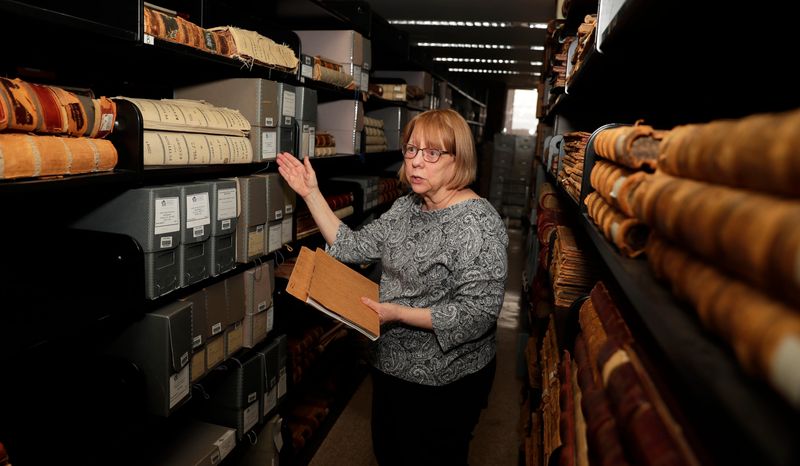
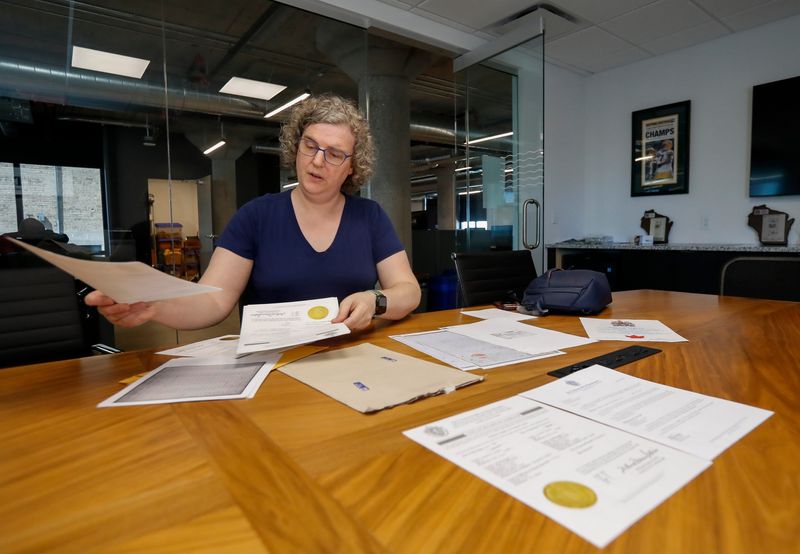
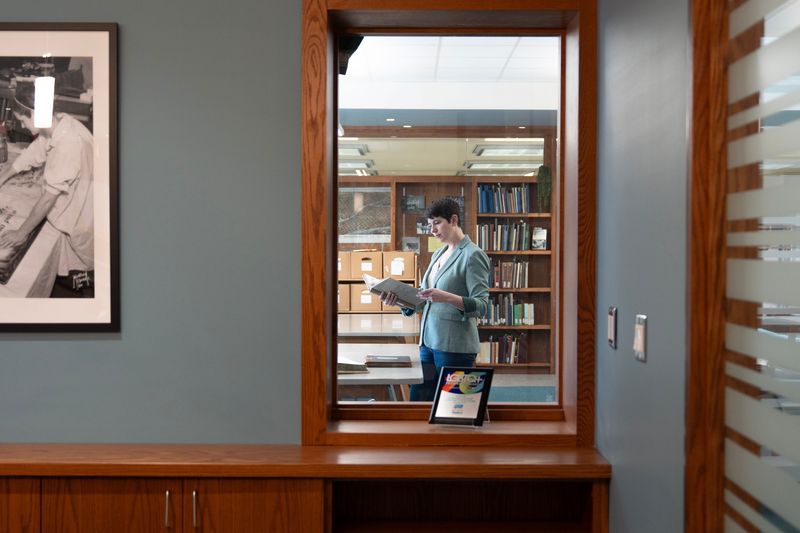
One Friday in April, archivists at the University of Wisconsin-Green Bay set aside all other work to tackle a growing backlog.
Fifty-two nearly identical research requests had piled up. All asked about French-Canadians who once lived in northeastern Wisconsin. All requested copies of vital records: proof of birth, marriage, naturalization.

Head archivist Deb Anderson first noticed these inquiries in early February. She said four or five have come in daily since, inundating her staff who blocked off that Friday just to answer these questions coming from around the country – California to Colorado to Madison.
“In all of my years of being here, I have never seen anything like this,” Anderson said.
Like Americans elsewhere, Wisconsin residents are increasingly trying to prove their Canadian ancestry to get dual citizenship after Canada relaxed its citizenship requirements in December.
Most point to America’s political climate as a motivator, seeing Canada as a potential escape route. Many also want to connect with family history.
Canada’s decision to ease its citizenship rules is not tied to the country’s political relations with the U.S. The change is the result of a 2023 Canadian court ruling that declared it unconstitutional to bar parents from passing on their citizenship status to generations born outside the country.
The effect: Someone who can prove they are a direct descendant of a Canadian ancestor has always been Canadian in the eyes of the government.
To prove Canadian heritage, people must track down old family records
It doesn’t matter how many generations ago that ancestor lived in Canada. The goal is to show an unbroken chain between the person and their primary Canadian ancestor.
Birth and death certificates help, plus marriage records proving a woman’s name changed, or naturalization records showing a Canadian immigrated and became an American citizen. Documents could be at a city or town clerk’s office, the state health department, or research centers maintained by The Church of Jesus Christ of Latter-day Saints.
Many people can trace their Canadian lineage to Wisconsin, which was once part of a vast territory where French fur traders and missionaries roamed, and in the 19th century was a destination for French-Canadians looking for jobs and farmland.
No other archive in the University of Wisconsin system has seen as many inquiries as Anderson’s since the citizenship law went into effect.
The bulk of Canada-centric requests lead Anderson to records from just four northeast Wisconsin counties: Brown, Marinette, Oconto and Outagamie, a pattern Anderson said was unsurprising given the history of French-Canadian settlement in the state.
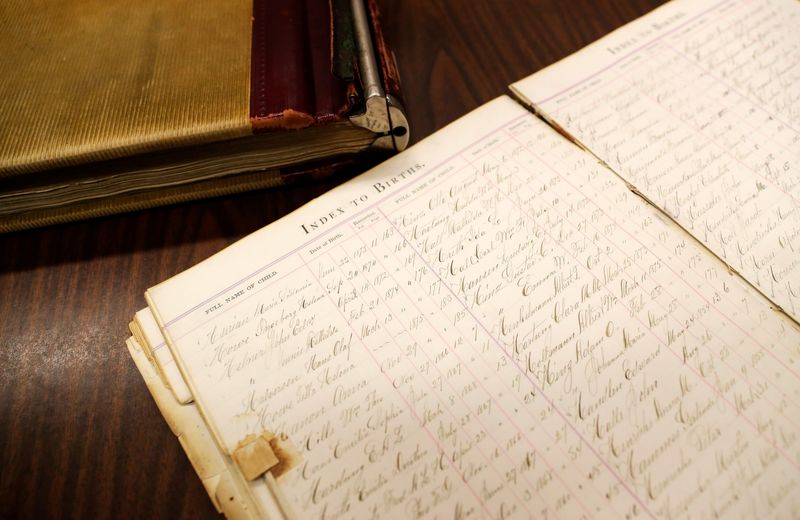
Each request could take weeks. Go back far enough, and record-keeping is less than uniform. Records held are on microfilm or paper, and aren’t digitized. The microfilm can be low-quality. The handwriting can be hard to read. Names may have multiple spellings.
It might take archivists a couple hours of detailed searching to find a single person. Requests might ask for documentation of multiple ancestors. Sometimes the record is held elsewhere in the state.
Canadian genealogy requests are up statewide. The Milwaukee County Historical Society has counted four requests for Canadians’ records since January, up from just one in the three years prior. The archive at UW-Milwaukee has seen 25 genealogy requests this year.
“If Germany or Poland ever liberalized citizenship like this, we would need a third archivist just working on naturalization,” said Michael Barera, archivist at the Milwaukee County Historical Society, referencing some of the city’s biggest ethnic groups. “The workload for that would be tremendous.”
In tense political climate, some seek Canadian citizenship ‘just in case’
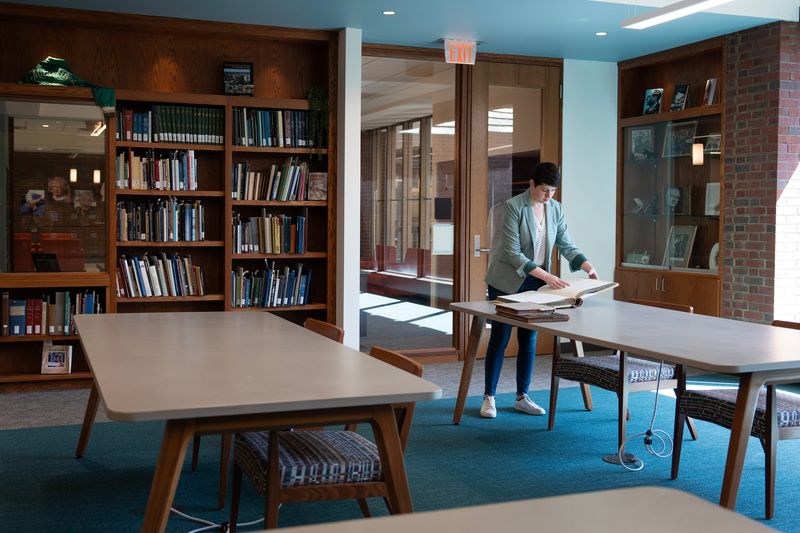
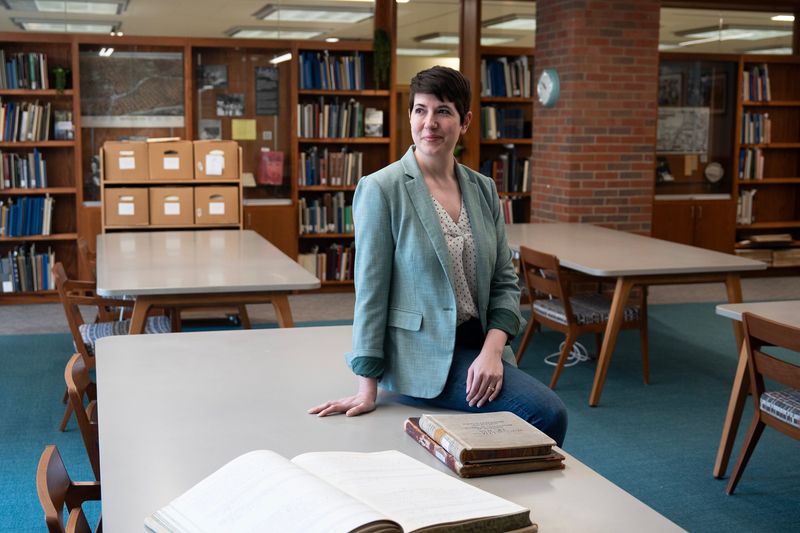
Abigail Nye tries to keep an eye on news about citizenship laws around the world, because it has an impact on her job as an archivist at the University of Wisconsin-Milwaukee.
When Nye heard about the Canadian court decision, she realized it likely affected her personally. She grew up in a small town in New York along the Canadian border, just south of Ottawa.
“There’s got to be somebody,” she thought to herself. “I just don’t know how far back.”
Doing the same kind of research she’s helped many others do, she found a Canadian great-great-great grandfather, Christopher Bradley, the son of an Irish immigrant. Bradley, who moved to the U.S. in the 1860s, was a farmer. That tradition continued through the generations – Nye’s grandparents were farmers, too.
Nye has several friends who are tracing their own family history as well, trying to prove their Canadian citizenship. There’s one common theme why: it could provide “an escape route out of the U.S.,” she said.
“It’s a really dangerous time in our country, and people have really good reasons for wanting an opportunity to leave the country,” she said.
Whether she herself would leave depends on the conditions in the U.S., she said.
“A lot of this is ‘just in case,’” she said.
In six weeks, Anna Grunseth of Green Bay gathered enough documents to connect her to an ancestor named Napoleon Langlois. She got the idea after seeing an immigration lawyer on TikTok explain Canada’s changed citizenship law.
Getting citizenship became a mother-daughter affair, her mother telling stories and showing pictures as Grunseth uncovered more of her family tree through New York, Massachusetts and Quebec.
“I told myself going into this, ‘Even if nothing comes of it other than I learned all this genealogy stuff and connected with my mom about our family, that was worth it,’” Grunseth said.
Grunseth, who is transgender, requested urgent processing in February. The Canadian government allows expedited service “to help avoid situations of potential harm or hardship” from factors including race, religion, or in Grunseth’s case, gender identity.
Her mother, Annette Grunseth, chose not to apply jointly for citizenship with her daughter to avoid slowing the application process. But she started her own independent application recently.
If her daughter felt she had to leave the country, “I would go too,” she said.
Anna Grunseth wasn’t immediately looking to move to Canada. She had her aging parents-in-law and mother to consider, “but my concerns here were certainly a factor and certainly part of the anxiety I felt of this sense of urgency,” she said.
There was one thing on her mind: She had recently applied to renew her U.S. passport. She was anxious the gender on her passport wouldn’t match her lived identity.
Her U.S. passport arrived in early April. It listed her sex at birth.
She applied for her Canadian passport that same day, using the citizenship certificate she got in March.
Appleton woman considers what moving to Canada would take
Patty Hirthe works remotely from her Appleton home, so if she moved to Canada, she wouldn’t even have to find a new job. She and her husband have talked about moving to there in retirement, or maybe sooner.
Her friends and relatives are “terrified” by the Trump administration’s immigration crackdown, and she can’t believe how divided the U.S. has become.
Her college-age children have urged her to get Canadian citizenship, so they can obtain it, too.
At the same time, Hirthe struggles with it. Her family can’t quite “up and move,” she said. Her children and her aging parents are in the Midwest, and she doesn’t want to leave either of them at this point.
“I don’t think this is an overreaction at all,” she said, referring to getting Canadian citizenship in response to current U.S. politics. “But it also is not something you can just do spur of the moment either. This is our home; I was born and raised in Wisconsin.”
Hirthe is proud of her Canadian heritage, which she can trace back to Zacharie Cloutier, one of the founders of Quebec and an influential settler in the 1600s. Thousands of people count Cloutier as an ancestor, from Justin Bieber to Shania Twain. For her 50th birthday this summer, Hirthe and her family are visiting Cloutier’s historic home.
She’s gathering documents necessary to link her to her most recent Canadian relatives, Andre and Marie Gratton, farmers who immigrated to Chilton. Hirthe’s mother was adopted, so some of her records may be hard to track down.
For 25 years, Hirthe and her husband have been historical re-enactors, portraying the French Marines – troops in Quebec from early colonial days. She only learned recently she’d been dressing as her own ancestors.
“It’s a part of who I am,” she said. “It’s a part of who I’m descended from.”
Americans forge closer ties to Canadian ancestry
Tony Gulig has known for decades about his family’s Canadian heritage. He even moved to Saskatchewan to earn a Ph.D. in Canadian history.
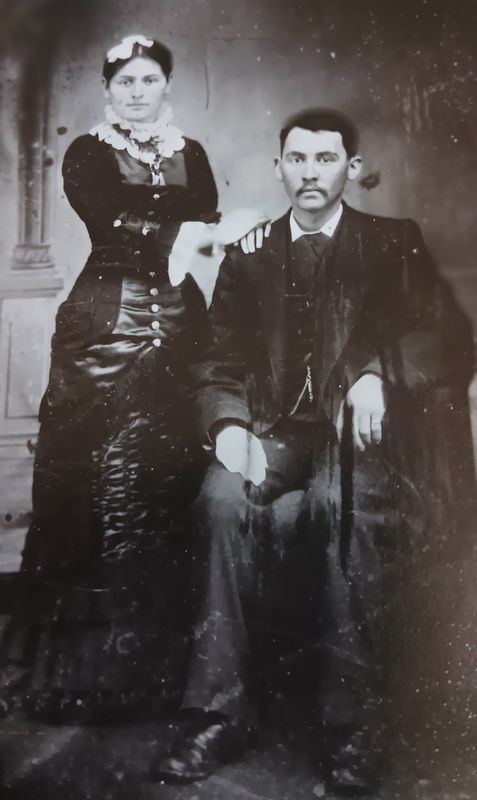
His great-grandfather, Louis Phillippe Wilfrid Brazeau, grew up in Quebec and immigrated in the 1880s to Oconto. Gulig believes their most likely route, over water, was probably one other francophone Wisconsin settlers also took: west along the St. Lawrence River, through lakes Ontario and Erie, entering the U.S. at Detroit, then through Lake Huron and Lake Michigan to their destination.
Gulig, a UW-Whitewater history professor, has enjoyed gathering the necessary paperwork to prove the link to his ancestors. One wrinkle: Some of the birth records he received from the Catholic Church were in Latin, so his brother had to find a priest who could translate them.
He’s not seeking dual citizenship to flee the U.S., but he understands why others are.
“It’s primarily about identity and respecting and honoring that identity,” he said. “We all have a story, we all have a place.”
As an American with historical expertise on Canada, Gulig cautioned that “it’s a wonderful place, but it’s a very different place,” and Americans who know little about the country and move there hastily may be surprised by how different it is.
Gulig has gone down rabbit holes, curious to learn “more and more and more” about his family. He has even traced his French ancestors’ arrival in Canada to the 1670s. And he has forged stronger connections with his extended family as they work together on the research.
“People learning about their past is only good,” he said.
Jesse Lin is a reporter covering the community of Green Bay and its surroundings, as well as politics in northeastern Wisconsin. He also writes a weekly column answering reader questions about Green Bay. Contact and send him questions at 920-834-4250 or jlin@usatodayco.com.
Sophie Carson is a general assignment reporter who reports on religion and faith, immigrants and refugees and more. Contact her at scarson@usatodayco.com or 920-323-5758.
This article originally appeared on Milwaukee Journal Sentinel: Archivists see surge in Wisconsin residents seeking Canadian citizenship
Reporting by Jesse Lin and Sophie Carson, Milwaukee Journal Sentinel / Milwaukee Journal Sentinel
USA TODAY Network via Reuters Connect