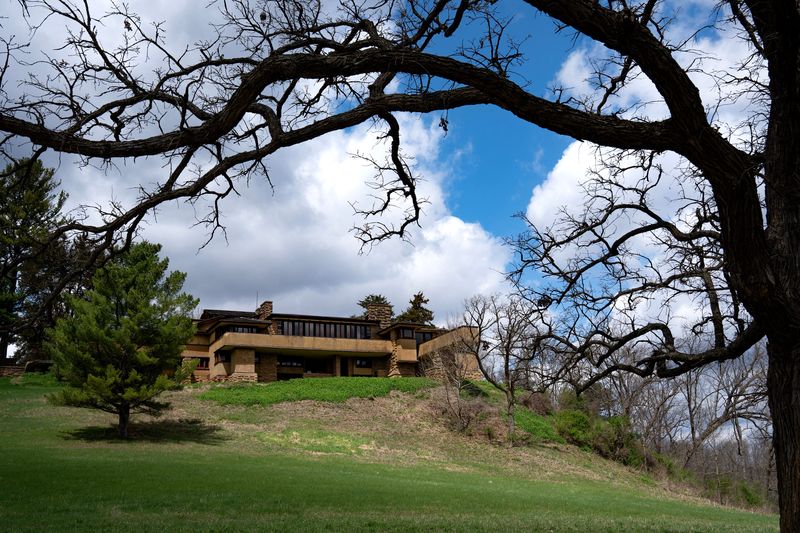
Nestled among rolling green hills in southcentral Wisconsin is a sprawling, earth-toned building, the likes of which echo in homes across the United States today.
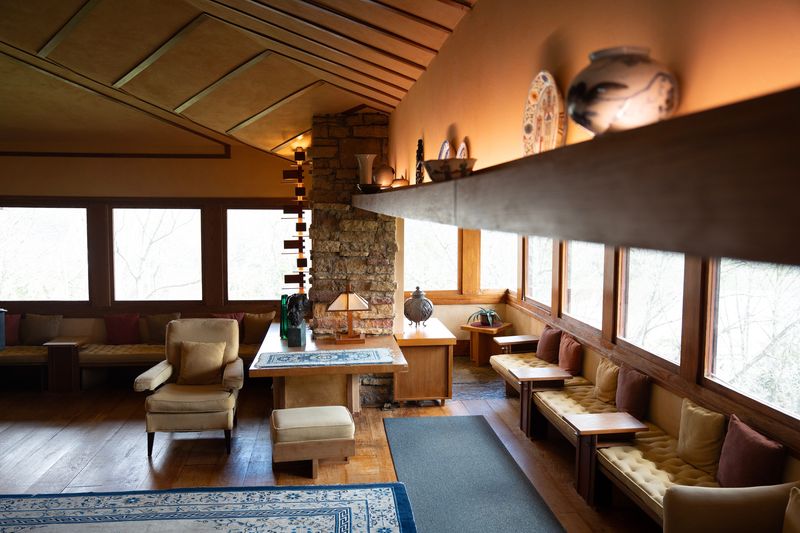
Taliesin was Wisconsin-born architect Frank Lloyd Wright’s home in the latter half of his life, built and rebuilt and then rebuilt again across decades. Wright named it Taliesin, “shining brow” in Welsh, because it perches just below the crest of his favorite rolling green hill in the valley where he spent his teenage summers.

“Wright never considered Taliesin to be a completed building,” Taliesin Preservation’s Tour Manager Erin Crowley said while leading visitors through the space in April. “He treated this home as a living lab.”
On the cusp of the nation’s 250th anniversary, the Journal Sentinel set out to assemble a list of the most notable historic sites in Wisconsin. In visiting, photographing and writing about these sites, we found that history in Wisconsin is very much alive and evolving – much like Wright’s “living lab.”
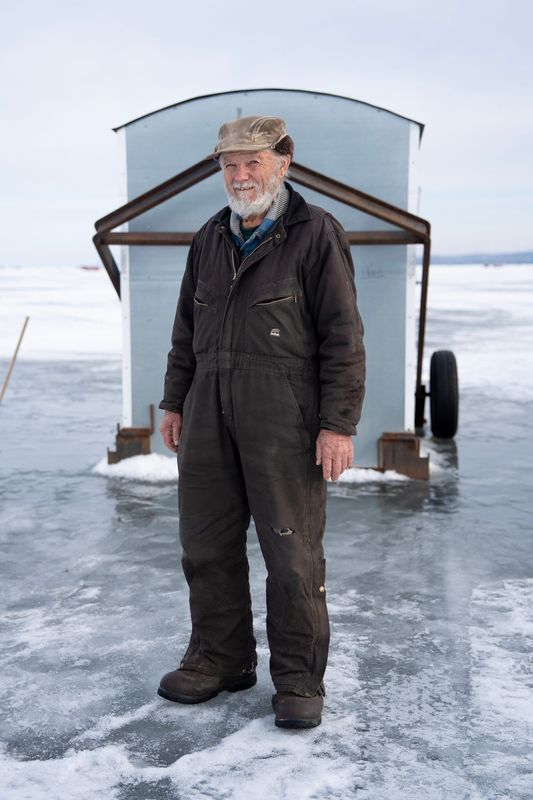
From the generations of ice fishers on Lake Winnebago to the races still held annually at the Milwaukee Mile to the work of preserving the last remaining Indigenous burial mounds in Wisconsin, the state not just remembers its traditions but keeps them alive. More than 175 years since it gained statehood and thousands of years since Indigenous people made the land home, Wisconsin’s history endures.
Pre-order our Most Treasured Views coffee table book
Here are the historic sites in Wisconsin that we think are most worth a visit:
Taliesin Preservation
Spring Green, Wisconsin
Despite its enduring legacy, Taliesin’s origins are rife with controversy. Wright originally built the home 1911 for him and his lover, Martha “Mamah” Borthwick Cheney, who was the wife of a client. He left his wife and six children in Illinois to live with Cheney in Spring Green.
Wright rebuilt Taliesin several times amid tragedy and misfortune: First in 1914, when a servant set fire to the house and murdered Cheney, her two children and four other people, and second in 1925, when an electrical fire destroyed the house’s living quarters.
Still, Wright expanded the space to its third iteration, which included living spaces, an architecture studio, sprawling gardens and orchards, and even horse stalls – in short, a place to live, work and farm. At its height, 90 people lived on the property.
Today, just a handful of people live on the property, including caretakers of the space and one of Wright’s last living apprentices, Minerva Montooth. Still, walk through Taliesin, and you’ll see what echoes in American homes to this day: open-concept living spaces, low-slanted roofs, wall-to-wall windows and indoor planters, all blurring the lines between the indoors and outdoors.
Tribal burial mounds
Various locations in southern Wisconsin
Speckled across the southern half of the state are ancient Indigenous mounds, a mark of the people who have lived in the area for more than 12,000 years, long before it was called Wisconsin.
Before European colonization, about 20,000 mounds existed across Wisconsin, constructed by Indigenous people for ceremonial purposes. Today, about 4,000 mounds remain, according to the Wisconsin Department of Natural Resources.
About 20,000 mounds, effigy and conical, were built in Wisconsin, but only about 4,000 remain today because of Western development over the last 200 years.
Though the mounds were most often burial sites, they also marked sites of ceremony or lodging for high-ranking tribal officials. The earliest mounds, about 2,500 years old, were conical-shaped, but Indigenous people also later built effigy mounds in the shapes of people, animals or spirits between 700 and 1100 A.D. Wisconsin has more effigy mounds than anywhere else globally.
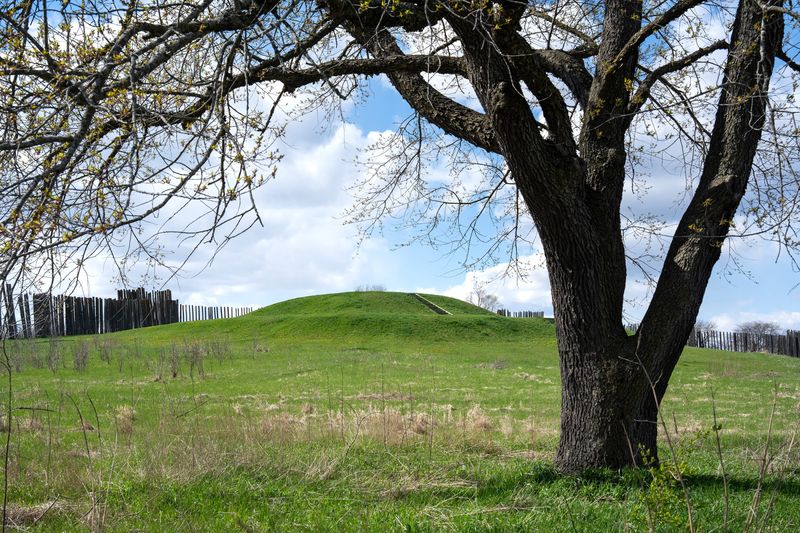
You can visit a re-creation of the ceremonial mounds at Aztalan State Park in Jefferson, Wisconsin, where a Middle-Mississippian village lived and thrived between 1000 and 1300 A.D. Visitors today can walk along the reconstructed stockade and ascend the flat-topped mounds where village officials once lived.
Milwaukee Mile
West Allis, Wisconsin
Every summer, the Wisconsin State Fair Park comes alive with the roar of rubber on pavement as the world’s oldest operating speedway revs back up for the season.
Though it initially opened as a horse-racing track, the state of Wisconsin purchased the Milwaukee Mile when it was creating a permanent site for the Wisconsin State Fair. The speedway hosted its first dirt-track automobile race in 1903: a five-lap race averaging 36 mph.
By 1954, the State Fair Park paved the original track with asphalt and added a new dirt track and a new half-mile track. However, in 1967, the park decided to add a pit road along the speedway, which put an end to dirt-track and short-track racing in the facility.
Still, the asphalt-paved oval track remained and continued to host at least one auto race annually, save for during U.S. involvement in World War II. Over its century-plus history, the Milwaukee Mile has hosted the American Automobile Association, U.S. Auto Club, NASCAR, CART, Champ Car World Series and the IndyCar Series, among others. In 2024, after a nine-year absence, IndyCar made its highly anticipated return to Milwaukee.
The Great River Road
From Kieler, Wisconsin to Prescott, Wisconsin
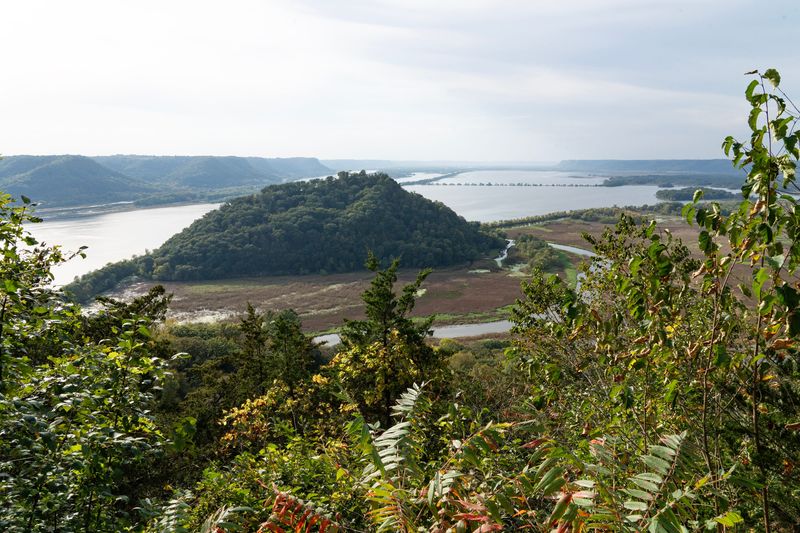
There is perhaps no better way to see the best of Wisconsin than traveling the 250 miles along the Mississippi River on the western edge of the state.
Established in 1938, The Great River Road traces the Mississippi river for 3,000 miles across 10 states. In Wisconsin, the road begins in the southwest corner of the state in Kieler and ends in Prescott, where the St. Croix River converges with the Mississippi.
Along the way visitors can stop at roadside eateries, museums, bed & breakfasts and more than 33 historic river towns and villages – along with, of course, enjoying the soaring views of the drive, from the forested bluffs to the alternatingly tranquil and roaring Mississippi River.
Wayside Cabin
Pepin, Wisconsin
Though nearly a century old, there remains something enthralling about the depiction of simple family life in Laura Ingalls Wilder’s “Little House on the Prairie” series, perhaps even more as it ages. The nine books, loosely based on Wilder’s life, follow its main character Laura from childhood to motherhood, day in and day out in the rhythm of housework, harvesting, traveling and growing up in the Midwest.
“Little House in the Big Woods,” the first book in the series, is the only one set in Wisconsin. The book takes inspiration from Wilder’s own childhood in the Chippewa River valley near Pepin, Wisconsin, where she was born in 1867. Today, the town pays homage to the author with Laura Ingalls Wilder Museum, 306 Third St., and the nearby Wayside Cabin at the original site of Wilder’s birth.
The cabin is a replica of the home described in “Little House in the Big Woods,” which follows Laura in early childhood. Though later books in the series tackle heavier themes – such as illness, poverty and interactions with Indigenous people that have since been criticized for their stereotypical depictions – “Little House in the Big Woods” focuses almost entirely on insular family life.
Ice fishing on Lake Winnebago
Lake Winnebago, Wisconsin
Wisconsin winters can be bitterly cold, quiet and isolated – but for those part of the state’s rich legacy of ice fishing, that’s part of what makes the winter fishing in Wisconsin so special.
For 16 precious days every February – or less if the harvest caps are met – the Lake Winnebago System welcomes anglers from across the globe for a chance to spearfish the world’s largest freshwater sturgeon population.
This year, the season kicked off Feb. 14 with harvest caps of 350 juvenile females, 732 adult females or 1,226 males. The Winnebago System has 24,528 adult male and 14,654 adult female sturgeon, according to five-year population estimates from the Department of Natural Resources.
Little White Schoolhouse
Ripon, Wisconsin
Even before it was a highly watched “purple state,” Wisconsin politics shaped the nation, perhaps most notably by the formation of the Republican Party in Wisconsin in 1854.
Several years before the Civil War, the party’s 100 voters met in a one-room, public schoolhouse in Ripon, a city west of the Fox Valley. The Republican Party was officially formed when 54 of those voters decided to unite under a new banner to oppose the expansion of slavery.
The schoolhouse where they met, dubbed the Little White Schoolhouse, was restored in 1908 in one of the state’s first known acts of historic preservation. It was since been picked up and moved seven times, but resides today on West Fond du Lac Street in Ripon and is open to the public as a museum.
Wisconsin Dells
Wisconsin Dells, Wisconsin
Though the Wisconsin Dells may call to mind modern waterparks, the area has a storied natural and cultural history stretching back millions of years.
Carved into 500 million year-old Cambrian sandstone are the Dells of the Wisconsin River, a five-mile gorge comprised of cliffs, tributary canyons and rock formations. The tallest cliffs soar over a hundred feet above the water and provide enclaves for some of the rarest plants in Wisconsin to grow.
Indigenous people have called the area home for more than 2,000 years, including the Ho-Chunk, Sac, and Menominee peoples. The mark of their ancestors remains in the petroglyphs and pictographs carved into the rock formations and in the remaining burial mounds throughout the area.
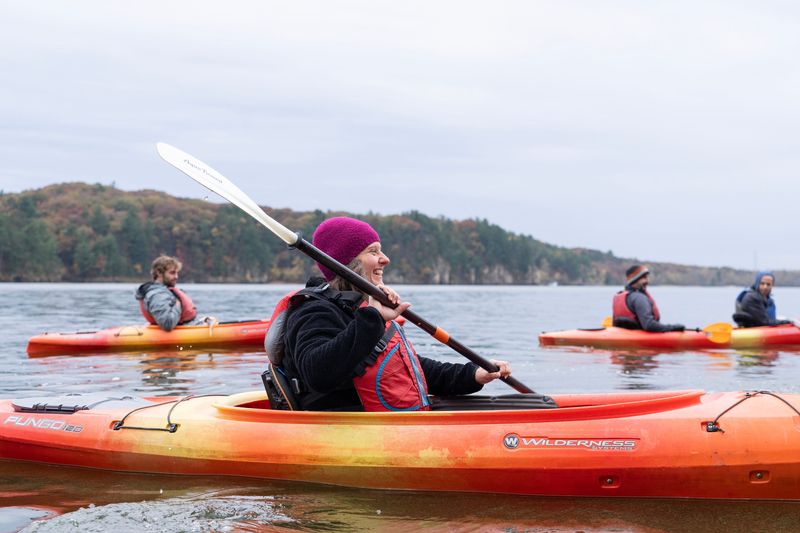
Today, the Dells offers some of the most scenic hiking, kayaking and boating in the state – along with, of course, its many indoor waterparks. The first indoor waterpark in the U.S. was established in the Dells in 1989, earning it the title of “the waterpark capital of the world.”
Milwaukee’s breweries
Milwaukee, Wisconsin
Any historical tour of Wisconsin would be remiss without a visit to the ‘Brew City.’
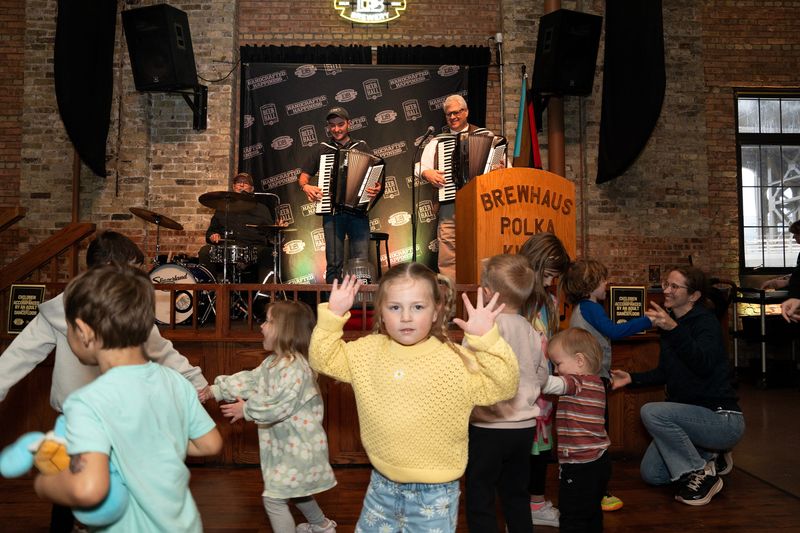
Wisconsin traces its brewing history back to the 1830s, and more than 200 breweries have set up shop in the state since. Milwaukee, in particular, has been home to a range of legacy brewing companies, including Pabst, Miller Lite, Schlitz and Blatz.
There’s no wrong way to do beer in Milwaukee. You can stop into one of the many brewery tours, including Lakefront Brewery tour on the east side. You can tour the Pabst Mansion in the heart of downtown Milwaukee if you’re more into the history than the beer.
Or, you can simply take a seat at one of the countless bars across the city and sip on a local brew.
This article originally appeared on Milwaukee Journal Sentinel: 9 Wisconsin landmarks to experience and explore
Reporting by Maia Pandey, Milwaukee Journal Sentinel / Milwaukee Journal Sentinel
USA TODAY Network via Reuters Connect