On Aug. 23, 2012, on a patrol in eastern Afghanistan, I stepped into a field seeded with hidden bombs. The blast took both my legs below the knee. I spent two and a half months at Walter Reed and went through 20 surgeries learning to live again. The Army career I had trained four years for was over before it started. What the bomb did not take was my belief in my country — or my home state.I was raised in Menomonie, the son and grandson of soldiers. After I was wounded, I went to work in the United States Senate — for Ron Johnson. I respected him. Which is why what I have to say now is hard.There is a bill called the Major Richard Star Act, named for an Army officer who died of combat-related cancer. It would end a quiet penalty in federal pay law: more than 50,000 combat-wounded veterans who were medically retired before serving 20 years have their Defense Department retirement pay cut, dollar for dollar, by their VA disability check. In plain terms, the worse you were wounded in combat, the less of your earned retirement you keep.
Seventy-nine senators have cosponsored it — more than the 60 needed to break any filibuster. The House has more than 320. Every major veterans group backs it: the VFW, the American Legion, the Disabled American Veterans, the Military Officers Association and the Wounded Warrior Project. This spring, even Secretary of War Pete Hegseth told the Senate the Pentagon supports it. Not one veterans organization in America is on the other side.

The real cost of war doesn’t end on the battlefield
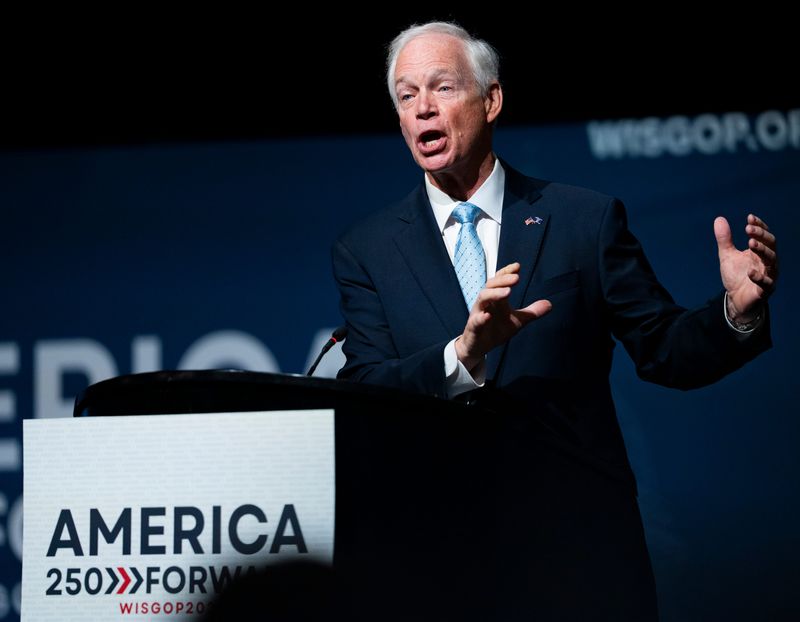
So why are those 50,000 veterans still waiting? Under Senate rules, a single objection stops everything — and the Star Act has been blocked that way twice in the past year: first by the Senate Armed Services chairman last fall, and in March, by our own Wisconsin senator, Ron Johnson. Johnson cited the cost — about $10 billion over a decade, roughly $1 billion a year. When a colleague offered a compromise, one simple roll-call vote, he blocked that, too.I know the man. When I worked for him, he once told me, in earnest, that he did not think a 100-percent disability rating made sense — because if someone were truly 100 percent disabled, he would be dead. I am 100-percent rated. I am not dead. I am paying attention. So is every wounded veteran in Wisconsin.
The cost argument does not hold. The Congressional Budget Office puts the bill near $9.75 billion over ten years. The federal Military Retirement Fund — the trust that already pays military retired pay — holds more than $1.7 trillion. The VFW has proposed funding the Star Act from it. A senator who says he cannot find $1 billion a year for combat-wounded retirees is looking past a $1.7 trillion balance sheet built for exactly this.And the real cost of war was never the bullets. It is the long bill we keep refusing to pay — the careers PTSD quietly ends, the homes lost when the paychecks stop, the marriages that do not survive the homecoming. I have lost more men I served with to suicide than I lost in combat. Every one of them was, on paper, a survivor. A warrior we lose that way is a casualty of war just the same.
Congress has the power to support veterans
More than a hundred days into a new war with Iran, more than 360 Americans have already been wounded. We are, right now, creating the next generation of veterans this bill is meant to protect — while telling the last one we cannot afford them.
This week, the fight comes to a head. Sen. Richard Blumenthal is bringing the Star Act to the Senate floor for a unanimous-consent vote — a request that passes unless a single senator objects. In March, that senator was Ron Johnson. This week, he can stand aside — or block it again.
And the Senate may not even be the last word: a bipartisan House discharge petition has reached 203 signatures, just 15 short of the 218 needed to force a vote. Fifteen names stand between 50,000 wounded veterans and that vote. Wisconsin’s House members can help close the gap this week — and our senator can stop standing in the way.
I am not asking Sen. Johnson for a favor. I am asking him to stop a penalty Congress created and has the power to end. And I am asking the people of Wisconsin — his constituents and mine — to call his office and ask the same question I am asking: when the whole country agrees, what exactly are we still waiting for?
We paid for the bullets up front. It is time to pay for the people who carried them.Jason Church is a retired U.S. Army Captain. He lost both legs to an IED in Afghanistan in 2012, holds a law degree from the University of Wisconsin–Madison, and lives in Wisconsin.
This article originally appeared on Milwaukee Journal Sentinel: Ron Johnson has the power to help veterans. Why won’t he? | Opinion
Reporting by Jason Church, Special to Milwaukee Journal Sentinel / Milwaukee Journal Sentinel
USA TODAY Network via Reuters Connect

By Jason Church, Special to Milwaukee Journal Sentinel | USA TODAY Network