

As of June 17, 2026, 12 confirmed cases of New World screwworm (NWS) have been recorded by the United States Department of Agriculture, with 11 cases occurring out of Texas.
As this outbreak has now placed 13 Texas counties under quarantine and NWS continues to make national headlines, many consumers are wondering what this may mean for grocery store prices.

Oklahoma State University’s Extension Livestock Marketing Specialist, Derrell S. Peel, provided his expert opinion on the current situation and its projected effects on the cattle market.
What is New World Screwworm?
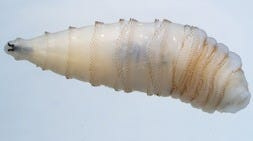
The New World screwworm is a parasitic fly native to the northern hemisphere that invades warm-blooded animals to lay its eggs. While many flies follow this same model, the screwworm fly is rather unique compared to other flies due to the maggot that hatches and feeds on the living flesh of its host.
“It will invade any warm-blooded animal that it finds an opening into, like a wound or even a body opening,” said Peel. “It can get in there, and these maggots then will set up housekeeping and start eating the animal while it’s alive.”
While the effects of a screwworm infestation in an animal can be rather unsightly, it is not fatal if treated in a timely manner.
“If you treat them, the animals typically recover fine as long as you catch it early, before they do much damage to the animal,” said Peel. “But it’s a huge labor issue, cost issue, and time-consuming. You’ve got to check these animals very, very frequently. So there’s a lot of cost involved for the producers.”
So how will this affect the U.S cattle markets?
While producers are expected to carry a higher cost in producing and moving cattle, Peel does not predict that this will affect the meat prices consumers see in grocery stores.
“This thing is not going to affect cattle prices, and it’s not going to affect beef production, because not that many animals are involved,” said Peel. “It’s not going to kill very many animals. It may kill a few if we don’t find them in time. But in terms of the broader market, it’s not going to be a market impact.”
Many consumers remember the widespread effects from last year’s avian influenza or bird flu outbreak that caused egg prices to skyrocket, reaching nearly a $6 average in February of 2025.
This was the result of the eradication of millions of birds throughout the U.S., which led to issues in the supply and demand chain, elevating prices.
While NWS has many consumers bracing for similar effects, however that is simply not the case.
“The screwworm is a fly, so it’s a pest, which is an important distinction in terms of its impacts on cattle,” said Peel. ” It’s not like an infectious disease or something. It’s simply a pest.”
What this means is that the spread of NWS looks a lot different than the spread of an infectious disease like avian influenza, which rapidly transfers from bird to bird among a flock and has no viral treatment.
“It affects animals on a one-on-one basis and doesn’t spread beyond what the pest itself spreads,” said Peel. “One animal can have it, and an animal right next to it may never be impacted.”
Peel also noted that the screwworm fly population is typically less dense than the average house fly most producers are used to encountering.
And again, a screwworm infestation is treatable.
“The only mortality here is if you just fail to catch an animal in time, they will die a horrible death in about two weeks if left on their own,” said Peel. “But it’s not at all comparable to avian influenza because we’re not talking about a disease that spreads across an entire population of animals.”
As Peel predicts future markets to remain unaffected by NWS, he did note the prior impacts the market felt following July of 2025, when Secretary Rollins announced the closure of U.S. Southern border ports to livestock trade.
“The only impacts that we’ve had that are related to screwworm we’ve already seen, and that’s the fact that the Mexican border has been closed for the last 18 or 20 months,” said Peel. “That did have some impact because it reduced our tight supplies of feeder cattle even more, but we’ve already dealt with that.”
What about food safety?
In terms of a food safety standpoint, Peel says NWS presents no threat to the safe consumption of meat and is not a food safety issue.
“This particular fly or these maggots from the flies actually only impact living animals; they wouldn’t even stay on a dead animal, and they certainly don’t get into the meat,” Peel added.
Even animals with a prior screwworm infection, once treated and healed, are safe to send to slaughter and enter the U.S. food supply.
But how did we get here?
Despite what its name may imply, the New World Screwworm is not a new pest that cattle ranchers have been battling. In fact, the parasitic fly was discovered over 70 years ago and eradicated from the United States before it was reintroduced this year.
“These flies are also unique in that they only mate once in their life, and so they discovered a long time ago that if you release sterile male flies in the area where you have them, the females will breed with them,” said Peel. “They only breed one time, and sterile males won’t produce any eggs, and so they eventually breed themselves out of existence if you can saturate an area with these sterile flies.”
With the development of sterile flies, the U.S. government, with combined efforts from Mexico, was able to establish multiple sterile fly facilities across North America to push NWS to the barrier of Panama.
But it wouldn’t stay there.
“Basically, how it got around the barrier is through illegal movement,” said Peel. “So they were moving cattle through regions that we weren’t dropping flies because we didn’t know they were there.”
While the U.S is only experiencing a handful of cases, Mexico has reported over 185,000 animals impacted by the parasitic fly.
“It got away from them. When it came in, it spread rapidly, and of course, it’s been moved up and now is into the U.S., but hopefully we can hold it at a much smaller level,” said Peel. “We’re going to need to work with them, and I mean it’s in everybody’s interest to control this thing because it’ll be a constant threat if we don’t help them get rid of it, too.”
This article originally appeared on Abilene Reporter-News: Will the screwworm outbreak impact your grocery bill?
Reporting by Lauren Dossey, Abilene Reporter-News / Abilene Reporter-News
USA TODAY Network via Reuters Connect
By Lauren Dossey, Abilene Reporter-News | USA TODAY Network
