Most of us can still picture the grainy footage from the morning of Sept. 11, 2001: 19 hijackers — at least 15 armed with blades — walking through private airport security at Boston Logan and Dulles without being stopped. No one detected them.
The system in place at the time, run by private contractors hired on a lowest-bidder basis, failed in the most catastrophic way imaginable and 3,000 Americans tragically lost their lives. In response, a bipartisan Congress made a deliberate decision: airport screening was too important to leave to the market.

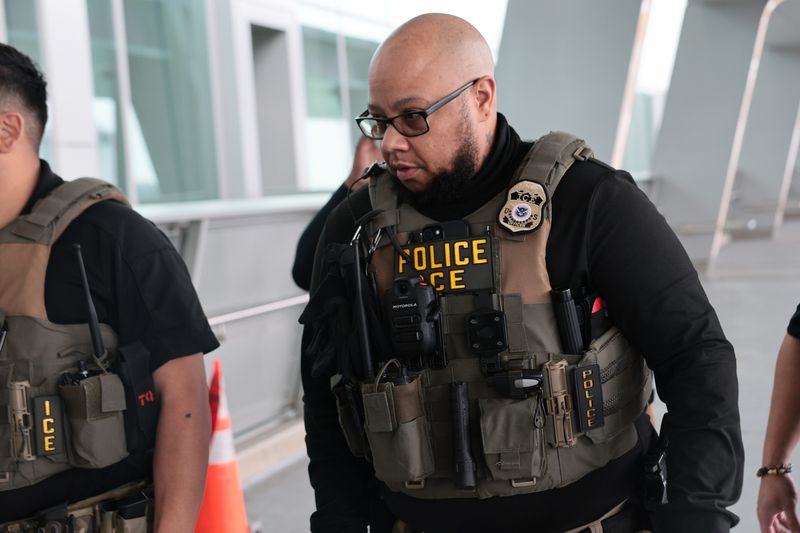
The Transportation Security Administration was created to federalize screening, placing trained federal officers at checkpoints under consistent national standards and direct public accountability. That model has never been perfect, but it has one essential virtue: when something goes wrong, we know who is responsible, and Congress has the authority to demand answers.
Washington is now moving in the opposite direction, and El Paso should be paying close attention.
The administration’s FY 2027 budget would force roughly 250 of the nation’s smallest commercial airports into the Screening Partnership Program — the track where private companies do screening under TSA rules. At the same time, it would eliminate about 9,400 TSA positions, including more than 4,500 front-line screening jobs, then redirect most of the supposed savings back into private contracts.
The budget advertises an immediate $52 million reduction in costs — but that figure rests on cost models the Government Accountability Office has already found leave out major federal expenses and “cannot be considered reliable.” The government’s own auditors have never identified a clear, consistent security advantage for private screeners over federal ones.
Layered on top of this is something new called GoldPlus. It has appeared in TSA-branded materials distributed at airports but has never been clearly explained to Congress or the traveling public. Under the current program, TSA still owns and supplies checkpoint equipment while contractors supply the people.
GoldPlus would go further: letting contractors manage both the screening workforce and the machines themselves — buying, deploying, and maintaining X-ray units, body scanners, and AI-driven systems, then staffing the lanes that use them.
TSA’s role would shrink to writing standards and certifying vendors. That may sound like modernization. What it does is push the power to make real-time security decisions — and the profits from long-term technology contracts — deeper into corporate structures the traveling public never sees and Congress rarely scrutinizes.
This is all unfolding against the backdrop of a manufactured crisis. For half of this fiscal year, TSA has operated without full funding. Officers have gone months without paychecks while still showing up for work and the agency scrambled to keep checkpoints open. Those same disruptions are now being cited as proof that the federal model “doesn’t work” and that private contractors would be more resilient. But private contractors depend on federal money too. The problem was never that TSA employs federal officers. The problem was that Congress chose to withhold funding and use the national security workforce as a bargaining chip.
For El Paso, the stakes are not abstract. El Paso International Airport is a lifeline — for Fort Bliss, for cross-border commerce, for families who depend on affordable flights to reach work, school, and medical care. TSA jobs here are among the few stable, middle-class positions anchored to that infrastructure. Converting them into lower-paid contractor positions with higher turnover does not strengthen security. It destabilizes it. When experience walks out the door and accountability is split between a federal regulator and a private operator, the chances of something being missed at the checkpoint only increase.
El Paso doesn’t have to accept this quietly. U.S. Rep. Veronica Escobar of El Paso, who sits on the Homeland Security Committee, pressed the TSA administration for answers regarding privatization. One thing was made abundantly clear: the push is already underway.
Local leaders — from the airport board to city and county officials — have every reason to demand full transparency before GoldPlus or any expanded privatization touches this region. That means independent cost and security reviews, not just a line in a White House budget. It means public hearings before any airport here is pushed into signing away federal screening.
The question is simple: The next time you stand in the early-morning line at the El Paso International Airport, ask yourself: who do you want making the call as to what goes on that plane — a trained federal officer accountable to the public? Or a private screening contractor whose bottom line depends on how much the company can cut from the security budget?
Before El Paso trades away accountability at the checkpoint, we should be certain we are not quietly walking back toward the very model that failed us a generation ago.
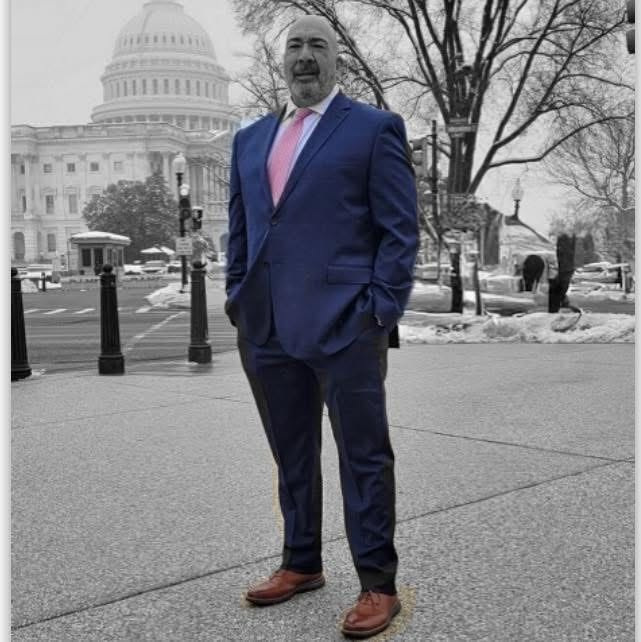
Gabriel R. Ochoa is president American Federation of Government Employees (AFGE) Local 1050.
This article originally appeared on El Paso Times: OPINION: El Paso, demand answers before TSA privatization comes home
Reporting by Gabriel R. Ochoa, Guest columnist / El Paso Times
USA TODAY Network via Reuters Connect