In El Paso, you can see the American economy in motion. It moves through our ports of entry, our rail yards, and our highways every day, carrying the products that keep factories running and businesses growing across the country.
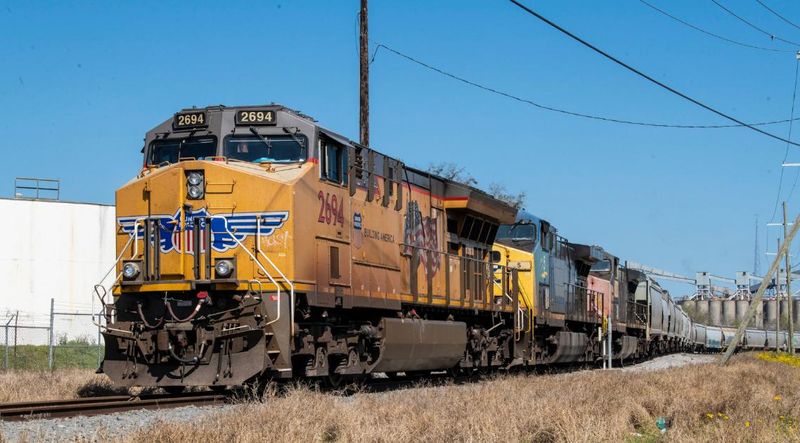
That is why the proposed merger between Union Pacific (UP) and Norfolk Southern (NS) matters to our region.

Freight rail is essential to how business gets done in El Paso, supporting the cross-border manufacturing and distribution networks that drive our regional economy. El Paso sits at the center of one of the most important manufacturing corridors in North America, responsible for a significant share of U.S.-Mexico trade and supporting hundreds of operations across industries from automotive to electronics to medical devices.
When rail works better, El Paso works better. This merger is about making that system stronger, faster and more competitive.
Union Pacific’s plan to introduce new premium intermodal routes is a clear example of what’s at stake. Three of those routes will move directly through El Paso, connecting Southern California to major markets like Jacksonville, Detroit, and Philadelphia. The impact is evident: shorter routes, with transit times reduced by as much as 95 hours.
That kind of efficiency changes the equation for businesses. It allows manufacturers to move products faster, reduce costs, and compete more effectively in national and global markets. It gives companies in El Paso, and across the border in Ciudad Juárez, a more reliable path to customers. For the business community, the priority is clear: reliable, efficient, and competitive service that supports growth.
It also strengthens the role of our Santa Teresa Intermodal Terminal, ensuring that our region remains central to how goods move across this country. Infrastructure decisions like this help shape where investment flows.
El Paso is already one of the most competitive business environments in the Southwest. We are seeing steady job growth, rising incomes, and continued diversification into advanced manufacturing, defense, and emerging industries. Major assets like Fort Bliss and new initiatives such as the Advanced Manufacturing District are positioning our region for long-term expansion.
But growth depends on connectivity.
If we want companies to build here, expand here, and hire here, we need transportation networks that keep pace with demand and connect them to markets. Faster, more direct rail service does exactly that. It opens new markets and reinforces our position as a gateway for trade.
Strengthening rail connectivity in El Paso strengthens Texas’s position as a national leader in trade and logistics.
The implications extend well beyond our region. Rail remains one of the most efficient and sustainable ways to move freight. Strengthening the rail network reduces pressure on highways like I-10, lowers emissions, and improves overall transportation reliability. At a time when supply chain disruptions have real economic consequences, investments that increase flexibility and reduce bottlenecks should be encouraged.
The federal regulator tasked with reviewing rail mergers, the Surface Transportation Board, has an important decision to make. This proposal merits approval because it reflects what our economy requires right now: modern infrastructure, smarter logistics, and the ability to compete at scale. Stronger rail means stronger supply chains. Stronger supply chains mean stronger businesses.
And stronger businesses mean a stronger region. That’s a future worth building and investing in.
Ricardo Mora is President and CEO of the El Paso Chamber.
This article originally appeared on El Paso Times: OPINION: A stronger rail network means a stronger El Paso
Reporting by Ricardo Mora, Guest columnist / El Paso Times
USA TODAY Network via Reuters Connect

By Ricardo Mora, Guest columnist | USA TODAY Network