On the evening of March 12, 2025, green flames erupted from the ground near the heart of Texas Tech University’s campus in Lubbock wreaking havoc across campus that night.
The smell of natural gas and widespread power outages lingered on the campus the next morning, forcing the university to send students on an early spring break as crews worked to restore the campus.

Original Reporting: Update: Texas Tech closes campus ahead of spring break after fires, explosion
Through an Avalanche-Journal open records request through Lubbock Fire Rescue, documents detail the nightmarish events first responders experienced that night, how crews responded and possible causes of the events.
Here is what they show.
Crews respond to green fires on Texas Tech campus
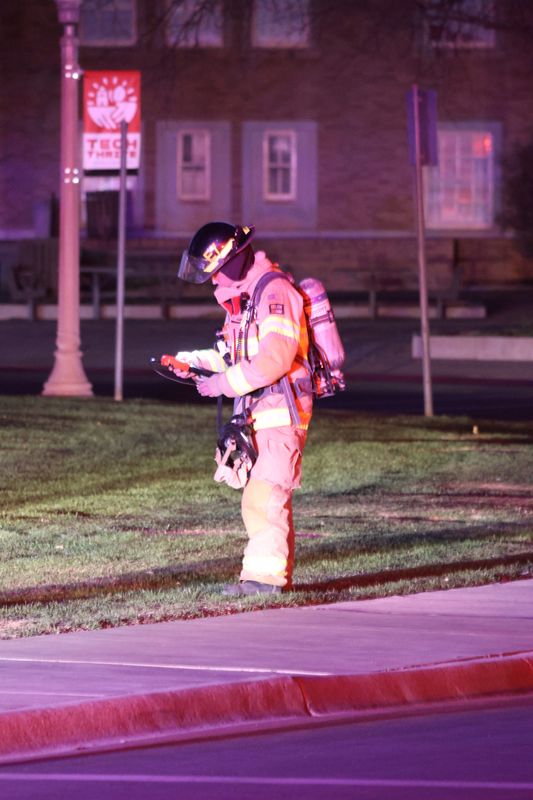
At 6:55 p.m. on March 12, Engine 4 (E4) was dispatched to the northside of the Engineering Key at Texas Tech for reports of a possible natural gas leak.
Firefighter Ethan Eckstein with Engine 4 wrote a summary of the incident. He stated that upon arrival, Texas Tech police pointed to a manhole cover that was slightly ajar, which prompted the crew to get a gas reading.
“As E4 approached the manhole they noticed the ground shaking heavily with a pulsating vibration that started at approximately a 10 ft radius around the manhole,” reads Eckstein’s report. “E4 was able to stick the tip of the gas detector in the open part of the manhole and it immediately started sounding an alarm.”
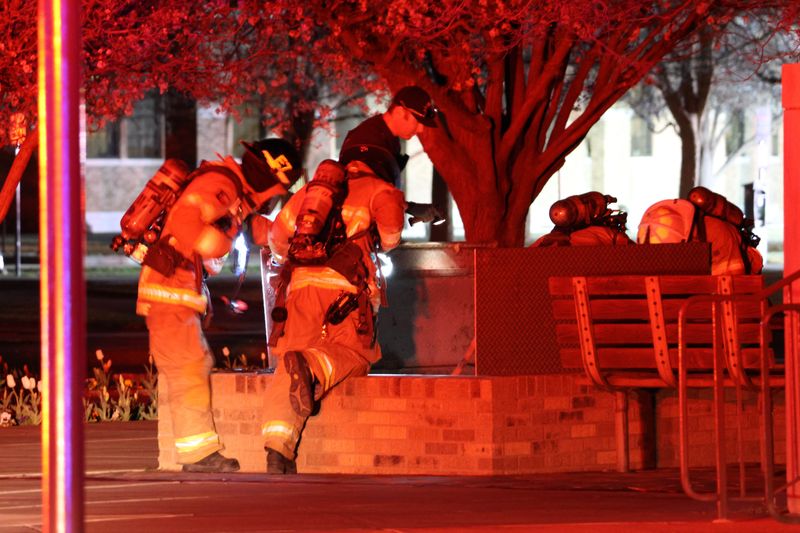
The crew asked Tech police where the manholes led and was notified that the tunnels led to “every building in the key.” This prompted the evacuation order of the Engineering Key and the call for a 1st alarm response.
That is when Battalion 1 was called to the scene, led by J.W. Ray, who took command of the scene. It was also during this time that E4 was made aware of a missing person inside the building at 907 Boston Ave. on campus but found no one in the building after searching it.
“At that point there was heavy black and purple smoke coming from the original manhole that E4 had checked,” Eckstein’s report reads.
E4 was dispatched to help crowd control until “Tech PD asked E4 if they could accompany them to the Maddox building in the key as they were informed that a bottle of anhydrous ammonia was left on in the basement of that building.”
It was not made clear as to why this drew concern from Tech police in the report; however, according to a TTU chemical document, the product can be used in fertilizer and is flammable.
Field incident commander witnessed more fire at key, reports at Rawls
As E4 was searching the building for a missing person, a report from incident commander Ray states that he “noticed that there was noise coming from the manhole and (he) could feel the ground shaking and vibrating from inside the command vehicle.”
When E4 exited the building from their search, Ray noticed “large green flames started shooting out of the manhole along with the sound of high voltage arcing.” Ray ordered crews away from the scene as he believed this to be an expanding natural gas incident as “the flames and noises from the manhole were increasing in intensity.”
As he was leaving the area, Ray noticed another manhole cover “being blown out of place” on the east side of the engineering team.
“(Engine 6) then advised by radio that there was another large plume of smoke to the northwest of our location,” reads Ray’s report. “I looked to the north and saw the plume. About the same time, dispatch notified me that there was a possible fire in the Rawls College of Business.”
That is when Ray called Division Chief Shawn Fogo about the escalating situation, who advised raising LRF’s response to a 2nd alarm, calling in more personnel.
As Ray called in the 2nd alarm, another crew member reported “another fire and heavy smoke” coming from the physical plant on the west side of campus.
Crews assigned to the Rawls College of Business building reported seeing a manhole with light smoke coming from it and scorched grass; however, no further incident occurred at the site.
A look at the heart of TTU’s emergency command center during the fires
LFR Division Chief Shawn Fogo responded to Tech due to the hazardous nature of substances beneath areas of Texas Tech.
According to his report, Fogo was at the engineering key during the beginning stages of the incident and reported seeing purple, brown, white and black smoke and “a large pressurized jet of orange flame.”
Others are reading: Texas Tech, Lubbock officials share early timeline of campus overnight fires, explosion
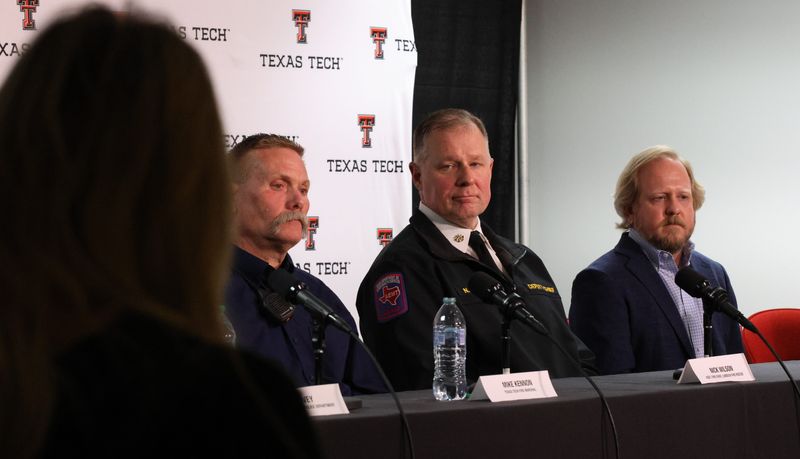
However, once it became evident that the situation was impacting other locations on campus, Fogo reported being relocated to the Texas Tech Emergency Operation Center along with LFR Fire Chief Richard Stewart and LFR Assistant Fire Chief Nick Wilson.
At the EOC, officials reported that being concerned that the incident could spread to other energy sources.
“Maps and schematics were produced and it was determined that both natural gas and electrical systems were in the area and a natural gas repair had occurred approximately one week prior at about 40 yards proximity to the initial manhole at the north end of the key,” read Fogo’s report.
With crews getting readings of 6 to 13% of Lower Explosive Limit readings of methane from the sites of the fires, Fogo reported that’s when Atmos Energy and Lubbock Power & Light both terminated utilities to campus.
“We worked on the assumption for the rest of the evening that there was a possible gas leak and a remaining electrical hazard in the area,” reads Fogo’s report. “Buildings and dorms were monitored for threats with little to no findings.”
Over the course of the night, fire crews were stationed at three locations on campus — Engineering Key, Rawls and the physical plant — getting readings still between 6 to 13% of methane, with readings at times spiking to 2000 to 3000 parts per million.
Fogo also reported that crews received 200 to 300 ppm readings for hydrogen cyanide — an extremely toxic chemical, according to the CDC, that can lead to death within minutes of exposure.
Trouble at LP&L’s Brandon Station on Texas Tech Campus
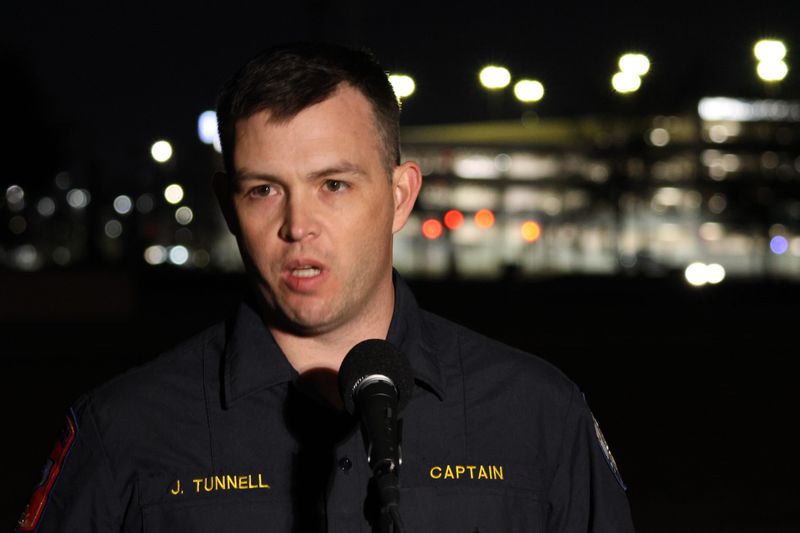
LFR’s John Tunnell arrived on campus around 6:43 p.m., where in his report stated that he witnessed an explosion and fire at LP&L’s Brandon Substation — north of the United Supermarkets Arena.
Tunnell also noted “three manhole covers that had been blown out of place with smoke and fire emitting” in the area, along with vegetation being on fire around the substation.
Soon after, Battalion 3 Chief Michael Cook arrived at the substation and saw black smoke emitted from the building.
“(Engine 8) crew along with LP&L managed to get in a walk door open and discovered that we had a switching station box inside the substation that was the cause of all the smoke,” reads Cook’s report. “There was a door that had been blown open at some point and there was still fire and smoke coming out of the switching station box.”
Others are reading: Power restored after outages impacted Texas Tech campus buildings, basketball facilities
Crews were able to gain control of the fire but were getting natural gas readings from the manhole throughout the night.
The A-J has sent a records request to the State Fire Marshal’s Office, which is leading the official investigation into the incident. However, SFMO reported that the final report on the fires wouldn’t be completed for a few more months.
This article originally appeared on Lubbock Avalanche-Journal: Lubbock Fire Rescue documents detail experience during Texas Tech fires, explosion
Reporting by Mateo Rosiles, Lubbock Avalanche-Journal / Lubbock Avalanche-Journal
USA TODAY Network via Reuters Connect