A heat dome building over Texas is helping fuel another stretch of dangerous summer heat, sending temperatures soaring into the triple digits and raising concerns about worsening drought and wildfire conditions.
The weather pattern, which began over the Texas Panhandle, is shifting west toward the Southwest and California this week while continuing to influence temperatures across Texas, Oklahoma and other parts of the southern U.S.

Forecasters say the heat dome will bring some of the hottest conditions of the summer to parts of the country, with temperatures climbing above 100 degrees and heat indexes reaching dangerous levels.
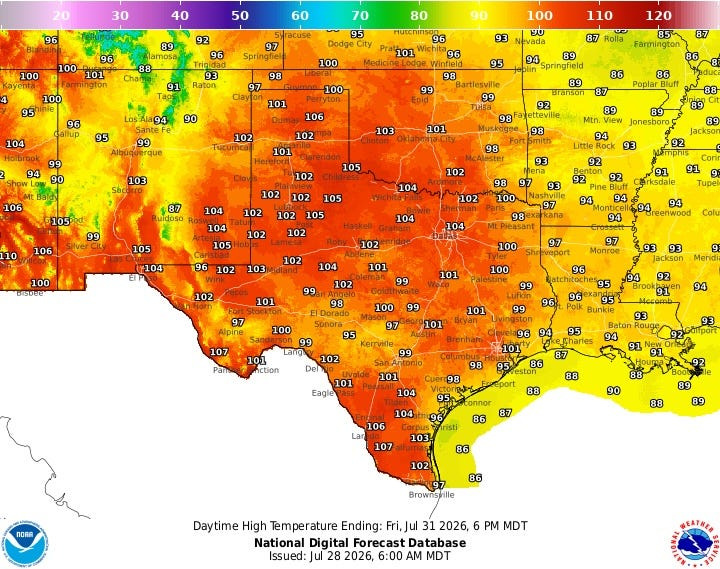
The National Weather Service’s Weather Prediction Center said persistent upper-level ridging will keep temperatures well above normal across parts of the southern U.S. Afternoon highs are expected to reach the upper 90s and low 100s, with some locations experiencing heat indexes between 105 and 115 degrees.
What is a heat dome?
A heat dome is a large area of high pressure that traps hot air near the surface, allowing temperatures to rise and remain elevated for several days.
The pattern acts like a lid over the atmosphere. As air sinks beneath the area of high pressure, it warms and dries out, reducing cloud cover and allowing more sunlight to heat the ground.
“Heat domes are caused by a strong high pressure that extends over a large area and feeds on the heat and even expands a bit,” AccuWeather Senior Meteorologist Alan Reppert said.
The longer the high-pressure system remains in place, the more heat can build, leading to prolonged stretches of dangerous temperatures.
How will the heat dome affect Texas?
Texas will feel the effects of the heat dome even as the hottest temperatures shift farther west later this week.
AccuWeather Senior Meteorologist Chad Merrill said high temperatures from the Southwest into Oklahoma and Texas will range between 100 and 111 degrees as the pattern evolves.
West Texas and the Panhandle are expected to see some of the most intense heat, while humidity will increase the danger in other parts of the state by raising heat indices.
The heat index measures how hot conditions feel when humidity is factored in. When humidity is high, sweat does not evaporate as efficiently, making it harder for the body to cool itself.
Warm overnight temperatures will also provide little relief, increasing the risk of heat-related illness for people without adequate cooling, outdoor workers and vulnerable populations.
Where will Texas be hottest? See the forecast by region
Could the heat dome increase wildfire risks?
Hot, dry conditions associated with heat domes can increase wildfire risk by drying out vegetation and creating conditions that allow fires to spread more easily.
The greatest wildfire concerns this week are expected across parts of the West, including areas of Washington, Oregon, British Columbia, the Sierra Nevada, Great Basin and northern Rockies, where several large fires are already burning.
In Texas, the combination of extreme heat, dry conditions and gusty winds can create more challenging conditions for firefighters and increase concerns in areas where vegetation is dry.
How long will the heat last?
The heat is expected to continue through the week as the ridge of high pressure remains in place.
Forecasters are watching how quickly the pattern shifts and whether cooler air or storm activity can bring relief. Until then, officials urge Texans to limit time outdoors during the hottest part of the day, stay hydrated and never leave children or pets inside parked vehicles.
Texas weather watches and warnings
Stay informed. Get weather alerts via text
Brandi D. Addison covers weather across the nation as the Weather Connect reporter for the USA TODAY Network and contributes to Texas Connect coverage across the state. She can be reached at baddison@usatodayco.com. Follow her on Facebook here.
Contributing: Janet Loehrke, Karine Zaiets and Ramon Padilla
This article originally appeared on El Paso Times: Heat dome builds over Texas as temperatures soar into the triple digits
Reporting by Brandi D. Addison, USA TODAY NETWORK / El Paso Times
USA TODAY Network via Reuters Connect
By Brandi D. Addison, USA TODAY NETWORK | USA TODAY Network