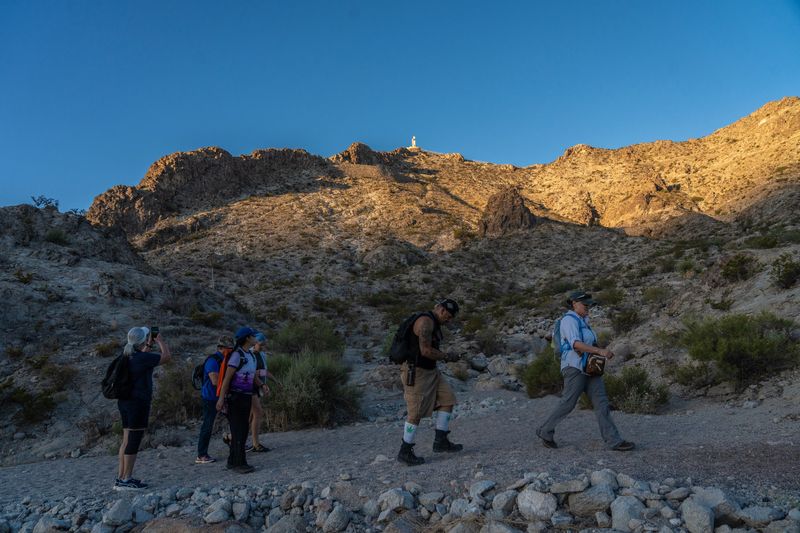
SUNLAND PARK, New Mexico — The sun had barely begun to rise above the Franklin Mountains as people began arriving in the parking lot at the base of Mount Cristo Rey for their morning hike.

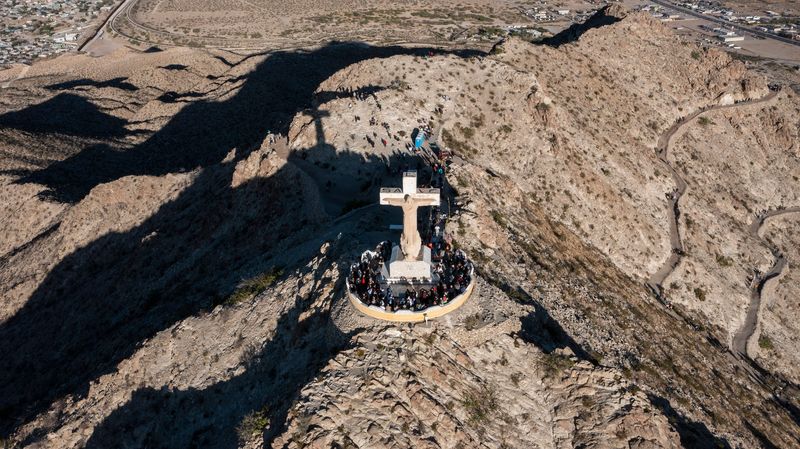
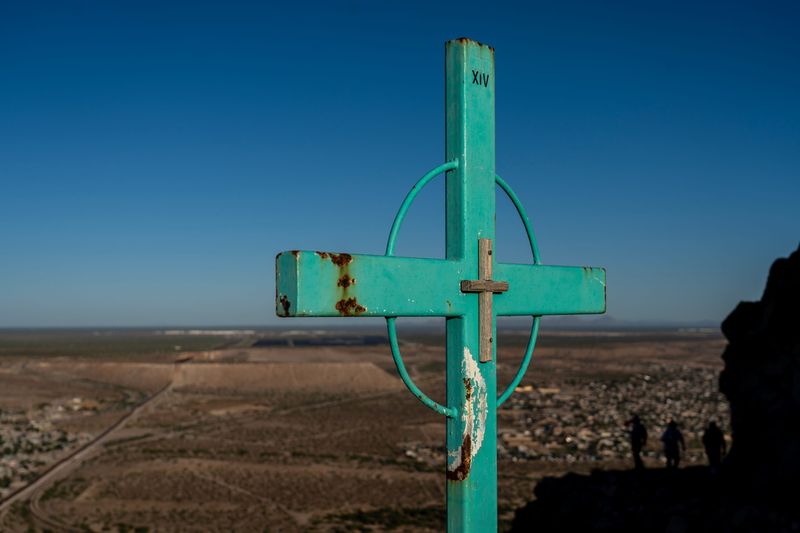
By mid-morning, families, hiking clubs, and individuals were streaming up the trail towards the 29-foot-tall limestone monument of Jesus with arms stretched out on the cross that looks out over the Borderland. From the top, hikers can see two countries, the United States and Mexico, and the U.S. states of New Mexico and Texas, and the Mexican state of Chihuahua.
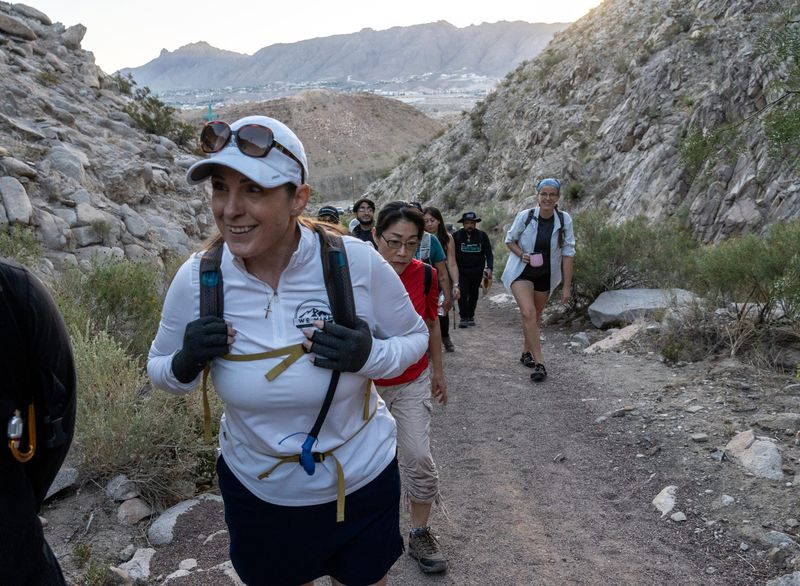
Sadie Salinas, 38, was one of those who had arrived for the sunrise to hike up the mountain on Saturday, May 30. She had never been up the mountain, but she heard the history of the site and thought of the tens of thousands of pilgrims who had made the hike prior to her as she walked up towards the cross.
Yet, despite knowing the history, Salinas said she was unaware of how close the mountain is to the border and of the Trump administration’s plan to extend the border wall along Mount Cristo Rey’s southern base.
“I didn’t know that there was no wall on this side of the mountain, and that there wasn’t even a fence,” Salinas said as she looked down towards the border. “It is really interesting to see how at this point we’re all really connected.
“It is kind of sad to think that this being such a sacred thing that they could cut into it and start blasting it … I understand the need to protect, but maybe there is a better way to do that other than dishonoring this mountain.”
Since 1939, hikers, bikers and Catholic pilgrims have made the ascent up the mountain — a sacred site to the faithful on both sides of the border. The mountain is especially sacred on Good Friday each year, drawing thousands from both sides of the border to celebrate Easter.
Construction plans have generated concerns that the border wall project could become a symbol of division. The Department of Homeland Security has said that the wall will not hinder access to the winding trail up the mountain.
“Access to the shrine will not be affected, as all attendees enter from the U.S. side,” a DHS spokesperson said. “The only individuals who could POSSIBLY be impacted by the border wall are illegal aliens attempting to illegally enter our country.”
Salinas had joined the hike after seeing a post from Lisa Enriquez, the founder of the organization We Hike, which has worked to build community and provide education on the outdoors since 2023. They’ve organized hikes across the region to build community and create awareness.
Enriquez, 51, organized the group of over 20 people to join for the morning hike. She hoped that many of those who joined the morning hike would walk away with an understanding of the encroaching border wall.
“All of this is one huge place where people come for tours, pilgrimages,” Enriquez said. “(The border wall) is going to take that away.”
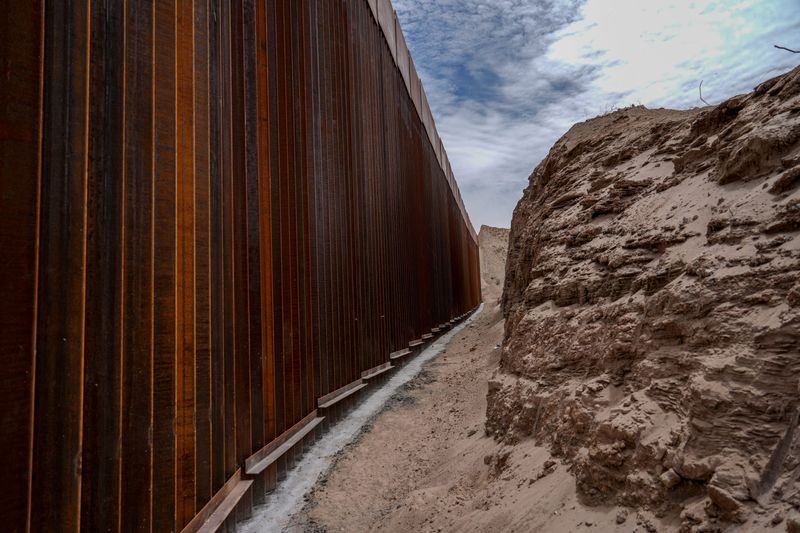
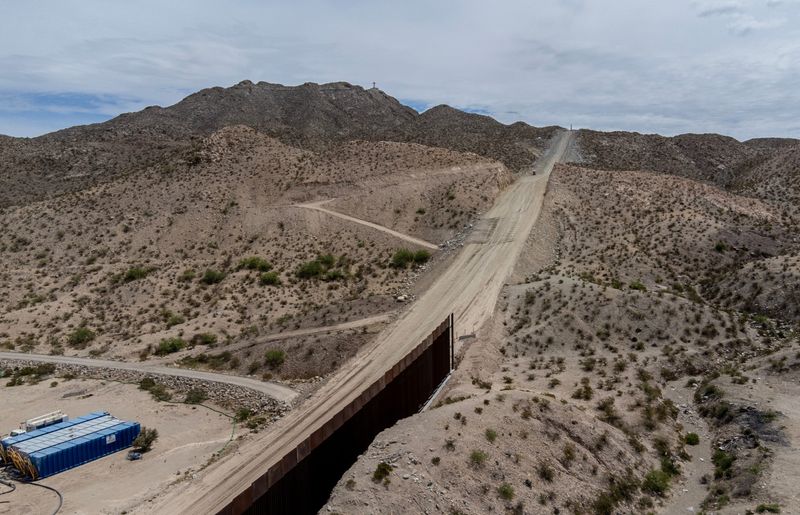
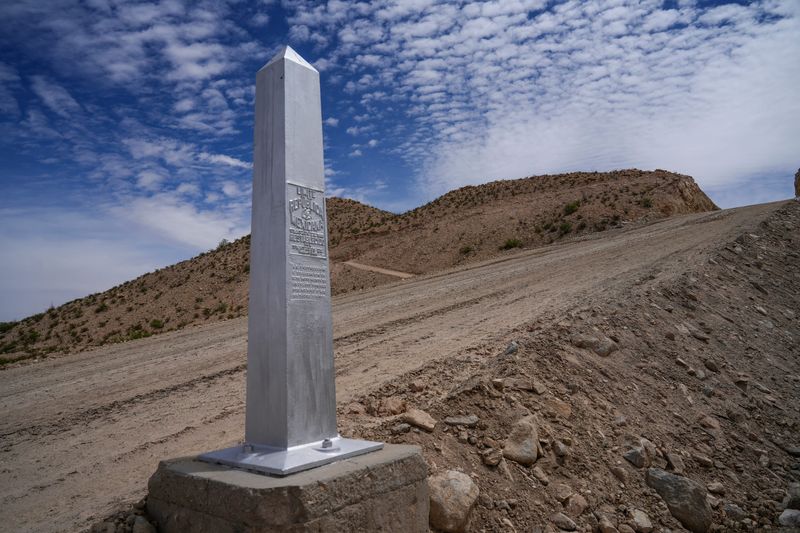
She looks down on the 1.3-mile-long stretch at the base of the mountain, hundreds of feet down from the peak, where the new border wall is planned. Mounds of dirt cast shadows to the southwest, towards where construction of the border wall is currently stopped.
“When you blow up the mountain and you blow up the ecosystem,” Enriquez said, “there is no repair.”
The president has wanted to extend the border wall at the base of Mount Cristo Rey since 2017.
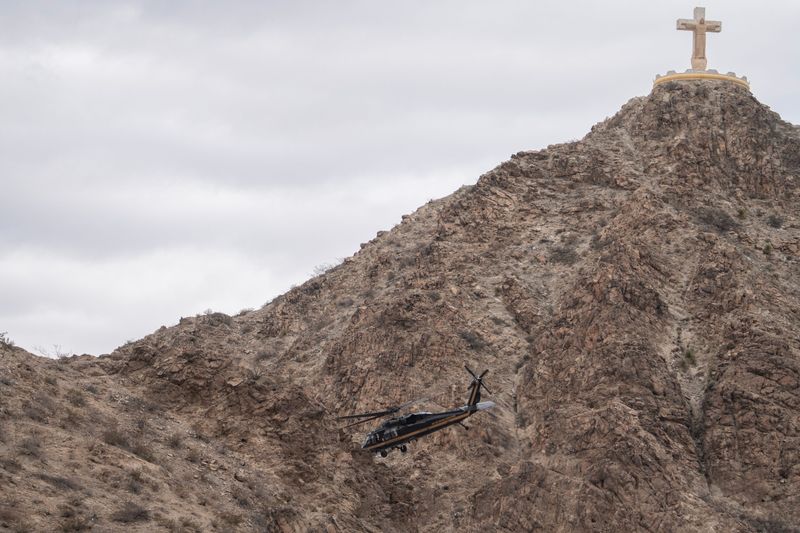
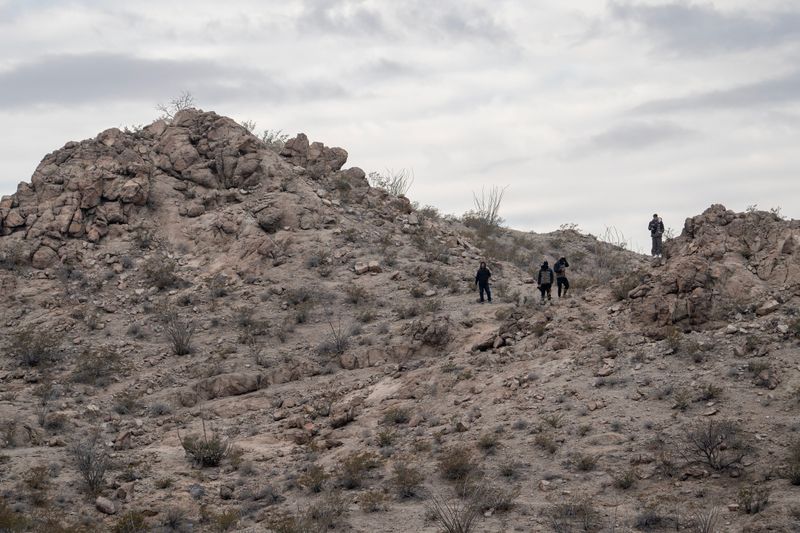
The strip of land is one of the last regions in the El Paso area where there is no wall, but it has become a popular migrant smuggling route. The Trump administration is looking to extend the border wall to block off this route.
The open section of the border has generated a sense of insecurity in the area, including robberies, vandalism and assaults, Ruben Escandon Jr., who works with the Mount Cristo Rey Restoration Committee, explained. His group has maintained and protected the mountain for decades, repairing damage done to the site.
He sees the wall as necessary to protect the monument and create a safe environment for pilgrims and tourists who come to climb the mountain.
“Our goal and our intent is to preserve Mount Cristo Rey,” Escandon Jr. said. “In the past, that fence that was built from San Diego all the way to the Texas Valley left a gap of about a mile and a half behind Cristo Rey. What that has caused was a funnel for drug trafficking, human trafficking, just smuggling of types of people who come through there.”
Wall projects across El Paso sector and southern border
The Mount Cristo Rey border wall is one of a multiple of wall projects under construction along the southern border. The Trump administration is also looking to implement technological upgrades as part of a “smart walls” strategy. It is also replacing existing structures and building secondary walls from California through Texas.
In the El Paso sector, which stretches from New Mexico’s border with Arizona through Hudspeth County in Texas, there are at least five border wall projects, including Mount Cristo Rey.
The Trump administration awarded a Montgomery, Alabama-based BCCG a Joint Venture and the Bozeman, Montana-based Barnard Spencer Joint Venture firms contracts in October 2025 worth as much as $1.59 billion for the project. Barnard Construction Company received another contract in April 2026 for the construction of a secondary border wall east of Santa Teresa towards the border with Arizona, worth $1.58 billion, according to a filing posted to USASpending.gov.
Former DHS Secretary Kristi Noem issued waivers for border wall construction for 8.5 miles of the project in the El Paso sector, including the project below Mount Cristo Rey, in June 2025. This paved the way for the projects to advance without performing environmental and cultural impact reports.
There are projects to build a secondary border wall on the mesa west of Mount Cristo Rey. Another section of the wall is under construction near Anapra, Mexico, closer to the mountain, with six- to nine-foot-deep trenches ready for sections of the wall to be erected. To the east, there is a project to replace sections of the border wall in El Paso with structures painted black.
The new wall construction to the west is nearing the land owned by the Catholic Church, creating a legal stand-off between the church and the Trump administration.
Diocese of Las Cruces challenges Trump’s land-grab
The federal government is seeking to take a portion of the 14.2 acres near Mount Cristo Rey from the Catholic Diocese of Las Cruces through eminent domain. But the diocese is responding to the land grab by attempting to block the federal government from taking land in Doña Ana County.
The diocese filed a lawsuit against the move to take control of the base of Mount Cristo Rey.
“The erection of a border wall through or along this holy site could irreparably damage its religious and cultural sanctity, obstruct pilgrimage routes, and transfer sacred space into a symbol of division,” the Diocese of Las Cruces said in the legal filings. “Any federal action to seize this land, construct physical barriers, or impede access to Mount Cristo Rey would constitute a significant infringement on religious freedom and the rights of worship.”
Kathryn Brack Morrow, the attorney representing the diocese, called the attempt to use eminent domain to take the land “an affront to religious liberty.”
Arturo Bañuelas, a retired monsignor of the Catholic Diocese of El Paso, said Mount Cristo Rey holds “a great symbolic meaning” for the Borderland.
“The statue of Christ, with extended arms, is a sign of welcome,” Bañuelas said. “It is a sign of welcome into life with God. It is a sign of welcome to the border community. It is a sign of welcome to people who are different from each other. And it is an openness of Christ to open your arms to welcome each other and treat each other with dignity and respect.”
Dangerous crossings
Among the arguments from advocates of building the wall across the Mount Cristo Rey gap is that it will protect not only the hikers and pilgrims that ascend the mountain, but also the migrants themselves.
The trek for migrants crossing Mount Cristo Rey can be dangerous. This risk was highlighted on May 14, when an emergency call was made at 3 a.m. to the Sunland Park Fire Department on behalf of two individuals who had fallen from Mount Cristo Rey.
Both were taken to the University Medical Center in El Paso, but neither would survive. One of the victims, a 21-year-old Venezuelan named Saraith de Valle Nieves Marquez, was pronounced dead by the El Paso Office of the Medical Examiner days later, on May 19.
The deaths are the latest tragedy along the border, where migrants have died in the desert, from falls from the mountain or from the border wall. Advocates for migrants point out that deterrents such as the border wall push migrants into more dangerous conditions in more remote locations.
“Given all the new technologies and other forms of mass vigilance, pursuits are not only dangerous but not necessary,” Juan Ortiz, an organizer with Casa Carmalita in El Paso, said. “Falls from the border wall, exposure deaths due to the creation of huge infrastructure projects like the wall, like data centers etc. (pushing people further out into the desert) are on the rise. Time and time again deterrence policy has shown to create more dangerous conditions, in already dangerous conditions for people.”
Lasting effects of border wall
The construction of new barriers comes as the southern border has seen the lowest number of border encounters in decades. The U.S. Border Patrol reports 76,568 encounters with migrants across the 1,954 miles of the southern border between October 2025 and April 2026. The El Paso sector has recorded fewer than 9,000 Border Patrol encounters with migrants in the same period.
But the Trump administration’s efforts to rapidly expand or replace the southern border wall have brought controversy as construction companies seek to erect the barriers quickly.
Contractors have damaged sacred sites along the border in both California and Arizona. Construction crews have carved through the sacred Kuuchamaa Mountain in California, while another crew damaged a massive 1,000-year-old fish-shaped Geo-glyph called “Las Playas Intaglio” in Arizona. The destruction of these sites comes after DHS waived cultural and environmental laws in the pursuit of putting up new structures.
While Escandon Jr., who works with the Mount Cristo Rey Restoration Committee, supports the construction of the wall, he said he is worried that construction blasts could cause long-term damage to the statue of Jesus atop the mountain.
Enriquez worries about what the border wall will mean for the desert ecosystem, the Borderland community and the mountain’s significance.
“Our community comes to these trails to find peace, connection and healing,” Enriquez said. “This wall, this barrier, is going to replace a symbol of faith and connection, with division, saying we are going to be dividing our people.”
Jeff Abbott covers the border for the El Paso Times and can be reached at:jdabbott@usatodayco.com; @palabrasdeabajo on Twitter or @palabrasdeabajo.bsky.social on Bluesky.
This article originally appeared on El Paso Times: ‘Dishonoring’ Mount Cristo Rey: Border wall project stirs debate
Reporting by Jeff Abbott, El Paso Times / El Paso Times
USA TODAY Network via Reuters Connect
By Jeff Abbott, El Paso Times | USA TODAY Network