The Corpus Christi Housing Authority Board of Commissioners voted on Tuesday, Jan. 6, to void agreements to purchase and lease 13 private apartment properties, torpedoing a workforce housing program aimed at serving households who make below the area median income but don’t qualify for low-income housing.
These participants now face the prospect of rent increases when their lease terms end and displacement. Representatives of the apartment complexes that had been convinced by the housing authority to take part in the program expressed concern for residents and fears of financial devastation. More than 1,500 apartments were designated for low- to moderate-income families through the program.

The unanimous decision was based on alleged failures to properly follow the Texas Open Meetings Act, which is the main accusation of a lawsuit filed by Nueces County against the Corpus Christi Housing Authority. The lawsuit also alleges TOMA violations related to the employment contract of now-former CCHA CEO Gary Allsup in 2024 and 2025.
After a lengthy closed session, board Chair Cathy Mehne stated that the housing authority board considered agreements without adequately informing the public and that the former CEO signed contracts purchasing and leasing properties without sufficient public notice and board approval.
This marks a departure from the CCHA’s previous position. Allsup, prior to his termination in September, maintained that the housing authority had been transparent in its decision-making and that the CCHA’s agendas met TOMA standards. CCHA’s response to the county’s lawsuit, filed Friday, Nov. 21, shows a general denial of the allegations and also contends that the court doesn’t have “subject matter jurisdiction.”
A statement from the Save Workforce Housing Coalition, a group of organizations that advocate for affordable housing in Corpus Christi, released after the meeting called the reversal “shocking and shameful.”
“The decision is based on empty claims — currently pending in court — that the organization did not properly notify the public of its plans,” the statement reads. “Anxious to brush this matter under the rug and avoid further scrutiny, the CCHA broke its promise to hundreds of working families who depend on the W.H.O. Program, removing a critical safety net and making it possible they will lose their homes.”
The workforce housing program
The Workforce Housing Opportunities Program had been intended to provide housing options for the “workforce,” meaning households earning between 60% and 80% of area median income.
In past interviews, Allsup has said the idea had been to target households that are “caught in the middle” — those that earned too much to qualify for low-income affordable housing but too little to afford market-rate housing.
As considered by federal standards, housing is affordable when a household spends no more than 30% of income on housing costs, combined with utilities.
Allsup, in past interviews, has asserted that the program filled an unaddressed need within the community.
To create the workforce housing program, the CCHA acquired 13 apartment complex properties.
Doing so made them property tax exempt, Allsup has said, with the private apartment owners then earmarking half of their housing unit inventory for workforce housing, charging lower rents.
Workforce housing advocates have pointed out that there are similar programs operated around the state.
Whether the acquisition of the properties makes them tax exempt has been a point of disagreement. The Nueces County Appraisal District has denied the tax exemption.
Several taxing entities, upon learning of the program in the spring, sharply criticized CCHA as taking off the tax rolls at least $330 million in what had been taxable property — an amount that equated to pulling millions of dollars out of their budgets.
Some have also been skeptical of whether the workforce housing program is needed and whether it met the mission of the CCHA.
The five-member board voted in May to pause the program after continued outcry from the public and policymakers.
A group of former owners and investors of the apartment properties in question filed a petition with the court on Wednesday, Nov. 19 intervening in the lawsuit.
In part, it asserts that CCHA had met TOMA requirements.
“There is a reason that Housing Authority property is tax-exempt: alleviating Housing Authority property of tax burdens stimulates the development of affordable housing,” the intervenors’ petition states. “Absent such an exemption, fewer apartment complexes would enter into workforce-housing agreements, gutting the supply of affordable housing throughout Texas.”
Buck Brice, deputy city attorney for the city of Corpus Christi, said during public comment in the Jan. 6 meeting that the city believes the housing authority violated the Open Meetings Act.
What apartment owners said during Corpus Christi Housing Authority board meeting
While making the motion to void the agreements, Mehne acknowledged the benefits of the program but said that “we cannot responsibly ignore the prior board’s failure to comply with the open meetings law or the former CEO’s actions taken without board approval and the legally required public notice and scrutiny.”
The board voted to void the agreements, returning the properties to the private companies, and to authorize the housing authority CEO, a position currently filled by Rhen Bass on an interim basis, to return all fees and rent the housing authority has received as a result of the agreements to the companies.
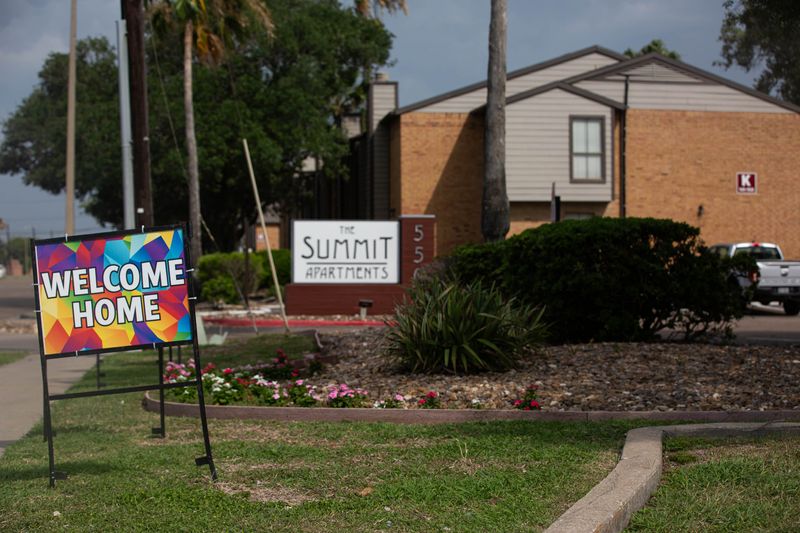
During the meeting, managers, owners and representatives of many of the impacted properties spoke, including Armon Bay Apartments, Churchill Square Apartments, Ocean Palm Apartments, Sandcastle Apartments, Southlake Ranch Apartments, The Icon Apartments, The Summit Apartments, The Veranda Apartments, Tuscana Bay South Apartments and Villas of Ocean Drive Apartments.
Each of these properties, along with Azure Apartments, Sawgrass Apartments and Stoneleigh Apartments, had agreed to reserve half of their units at a lower price for qualifying residents making below the area median income.
The apartment managers said that the program offered residents stability, as they didn’t have to worry about being priced out of their homes and forced to move. Now, they are concerned that residents will be displaced and families disrupted.
Robert Martinez is the owner of Rockstar Capital Management, which owns Churchill Square Apartments. The housing authority approached his firm in 2024, seeking participation in the program.
Martinez said his company fully committed to the idea and spent months coordinating on the agreements and refinancing the property through Fannie Mae, or the Federal National Mortgage Association.
“Loan approval was expressly conditioned on the housing authority’s partnership, long-term affordability commitments and the associated property tax abatements,” Martinez said.
Churchill Square designated 55 affordable units with rent reductions of up to $400 monthly; 52 affordable units are currently occupied.
Martinez said he jumped in with both feet, acting in good faith. Now, Martinez feels that Corpus Christi isn’t a reliable long-term partner and doesn’t honor agreements.
The property owners stressed that CCHA has never alleged that they have done anything wrong and that they are now facing severe financial impacts because they trusted the housing authority.
Joe Bruggeman is another property owner shaken by the housing authority’s reversal. Bruggeman described himself during public comment as a military veteran who saved his money to invest in apartment complexes, including six in Corpus Christi.
“In 2024, the representatives of the Corpus Christi Housing Authority, this organization, contacted me with a request that I participate in its newly created workforce housing opportunities program,” Bruggeman said.
Bruggeman believed in the goal of the program. He liked that the program allowed families of different socioeconomic backgrounds to live together.
He turned over five of his properties to the housing authority, paid upfront and annual fees of nearly $840,000, set aside 566 units for workforce housing and refinanced.
Now, he’s concerned about foreclosure.
“This will eliminate a program hundreds of local working families depend on to afford their rents, likely leaving them without homes,” Bruggeman said. “It will bankrupt my company and me personally.”
Staff reporter Kirsten Crow contributed to this story.
RELATED COVERAGE
This article originally appeared on Corpus Christi Caller Times: Corpus Christi Housing Authority voids workforce housing agreements
Reporting by Olivia Garrett, Corpus Christi Caller Times / Corpus Christi Caller Times
USA TODAY Network via Reuters Connect