Editor’s Note: Jack Becker is the editor of Caprock Chronicles and is a Librarian Emeritus from Texas Tech University. He can be reached at jack.becker@ttu.edu. Today’s article about the historic Bledsoe home is the second of a two-part series by frequent contributor Chuck Lanehart, Lubbock attorney and award-winning Western history writer.
The first Lubbock attorneys arrived about the time the county was organized, in 1891. Most were “prairie dog lawyers,” who traveled by horse or horse-drawn buggy throughout the South Plains and beyond seeking business. They rarely established permanent law offices in Lubbock, and most were gone by the turn of the century.

When more stable attorneys arrived in the early 20th century, they began to develop successful law practices and settled down with their families. One of these lawyers, W.H. Bledsoe, built a beautiful home near downtown Lubbock. Now, more than a century later, this remarkable structure still stands. Ironically—and appropriately—the Bledsoe home has been converted into law offices.
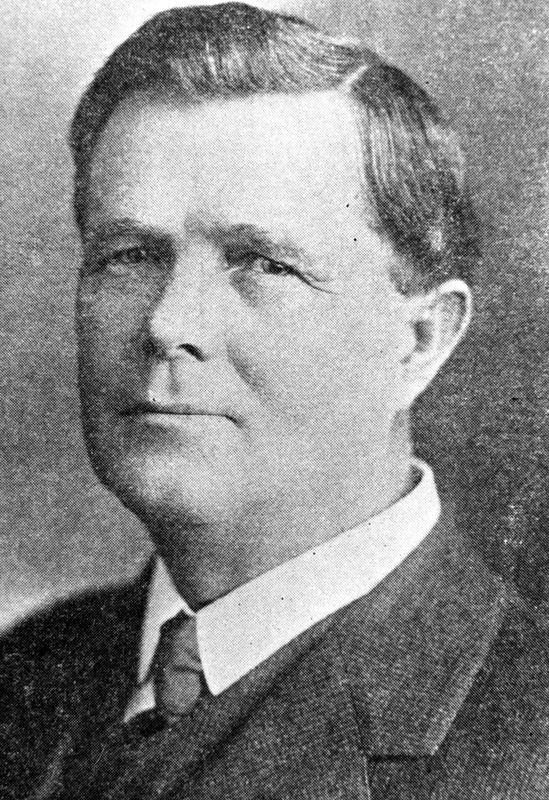
William Harrison Bledsoe was born in 1869 in Cleburne, Texas, where he attended public schools. He studied law at the University of Texas and was admitted to the State Bar of Texas in 1890. After a few years practicing law in Cleburne, in 1908 he moved to Lubbock, soon to become a boomtown with the arrival of the railroad the following year.
In 1912, Bledsoe successfully defended William H. Taylor, the first person tried for murder in Lubbock County, but his primary practice involved real estate law.
He helped establish the oldest Lubbock law firm still in existence, now known as Crenshaw, Dupree & Milam.
He also helped establish the South Plains Bar Association, served as Lubbock City Attorney, and was a member of the Lubbock School Board.
In 1915, Bledsoe became involved in politics and was elected to the Texas State Legislature. He was chairman of two important house committees, one of which investigated and impeached Governor James E. Ferguson, who was removed from office in 1917. He also served on a committee to reform the Texas Rangers in 1919. By 1923, he was a member of the Texas Senate and is credited with authoring the bill that established Texas Technological College (now Texas Tech University) in Lubbock, perhaps the most important accomplishment in the history of the city.
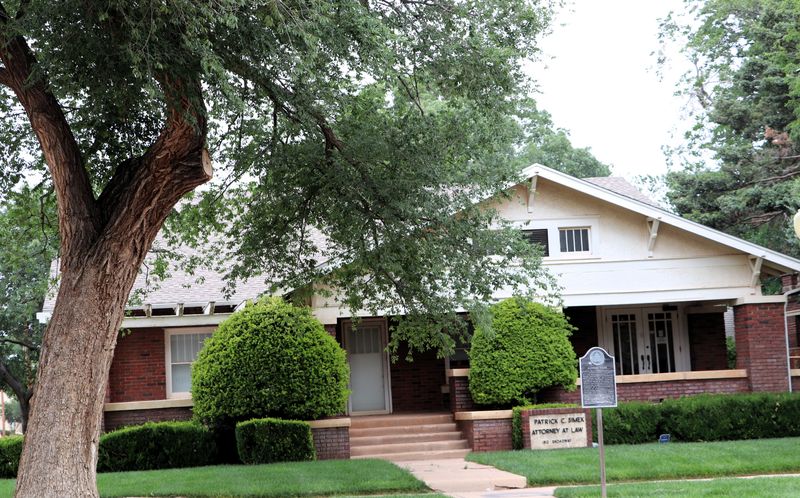
Bledsoe’s first wife, Alice Matthews, died in 1915. He and his second wife, Emma Boone (Lubbock’s first female lawyer), built a stately brick home at 1812 Broadway in 1921. After Bledsoe’s death in 1936 at age 66, Emma lived in the home until shortly before her death in 1983 at age 95. In January of 1985, Lubbock attorney Patrick Simek acquired the Bledsoe home and converted it into a law office. He continues to maintain his practice in the historic building, built in the bungalow style.
When Simek bought the house, some modernization was required, and therefore, new insulation, electrical wiring and storm windows were added. Minus a few walls, the house remains true to its original design, including 105-year-old brass doorknobs and hinges.
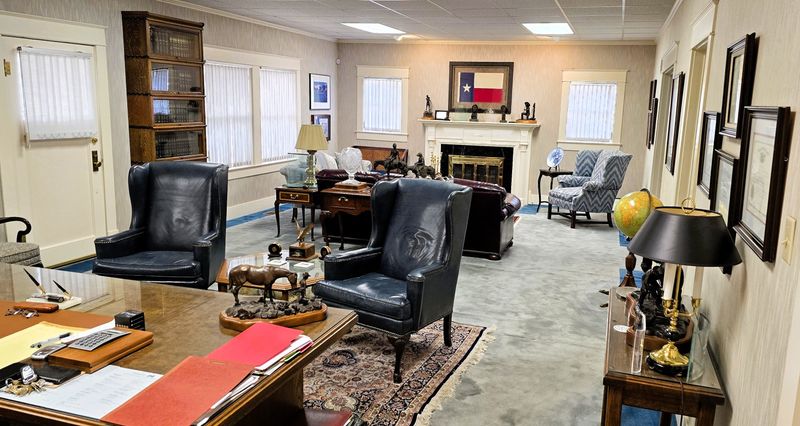
By removing a couple of walls, what once was formal living and dining space, and the music room now serve as Simek’s office. The original fireplace, with its beautifully carved mantel and virtually irreplaceable marble, is the focal point of this large room. French doors containing the original beveled glass lead the visitor from room to room.
The basement once housed coal bins and later, fuel oil furnaces, as well as Senator Bledsoe’s photography equipment. The remaining tiny space contained a bed and was frequently rented to Tech students, some of whom have returned to ask Simek if they might see where they once roomed.
The room is now cleared of bins, furnaces, and beds, and chances are that few former residents of the basement would recognize their old homes. Upstairs, where once there were two bedrooms, there is now a large conference room and library, and another, smaller office.
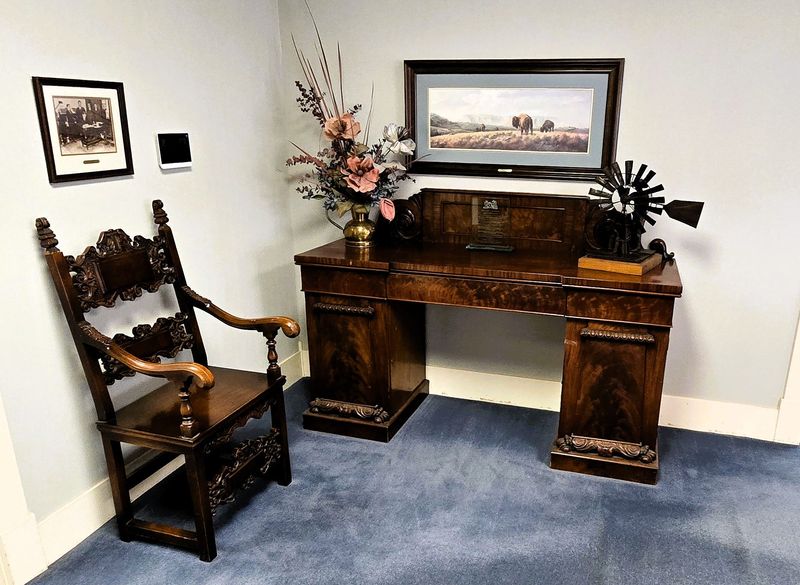
Many examples of the century-plus original furniture are still in use, including a cherry corner piece accent cabinet, dining room table, and the chair used by Texas Governor Pat Neff when he signed the bill which created Texas Tech.
Simek, a native of Seymore (one of the locations seriously considered for the Tech campus), arrived in Lubbock in 1966 for his freshman year at Tech.
His freshman and sophomore dormitory was Bledsoe Hall, yet he was unaware of the history of the man his residence hall honored. Simek is a proud Red Raider, with an engineering degree and a law degree.
“The home means a lot to me,” Simek said, “because of my ties to Bledsoe Hall and Texas Tech. This obviously was where Texas Tech had its beginnings because Senator Bledsoe lived here.”
As is noted by the marker in front of the house, the Bledsoe home has received local and state historical designation.
This article originally appeared on Lubbock Avalanche-Journal: Caprock Chronicles explores historic early Lubbock lawyer homes, pt. 2
Reporting by By Chuck Lanehart, special for the Avalanche-Journal / Lubbock Avalanche-Journal
USA TODAY Network via Reuters Connect
By Chuck Lanehart, special for the Avalanche-Journal | USA TODAY Network