Increased traffic, spiking home and rent costs and fear of a bust following what has felt like a boom has bred its own narrative during the last year’s AI buildout in north Abilene.
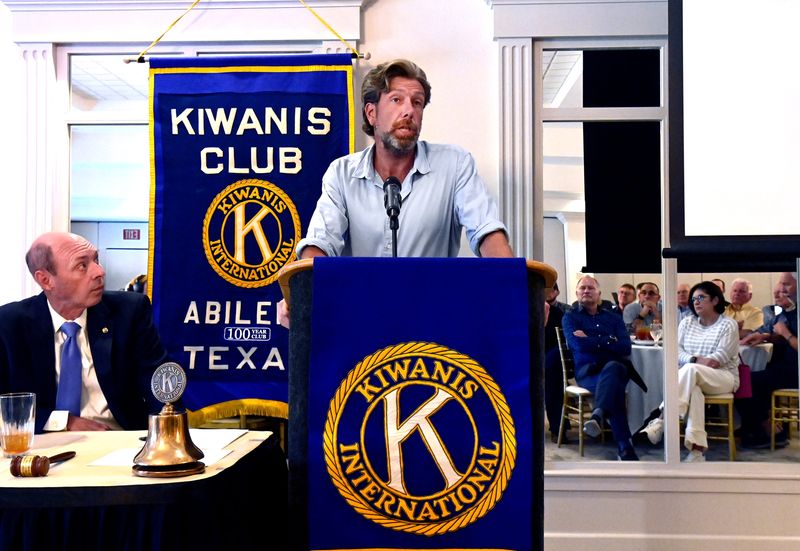
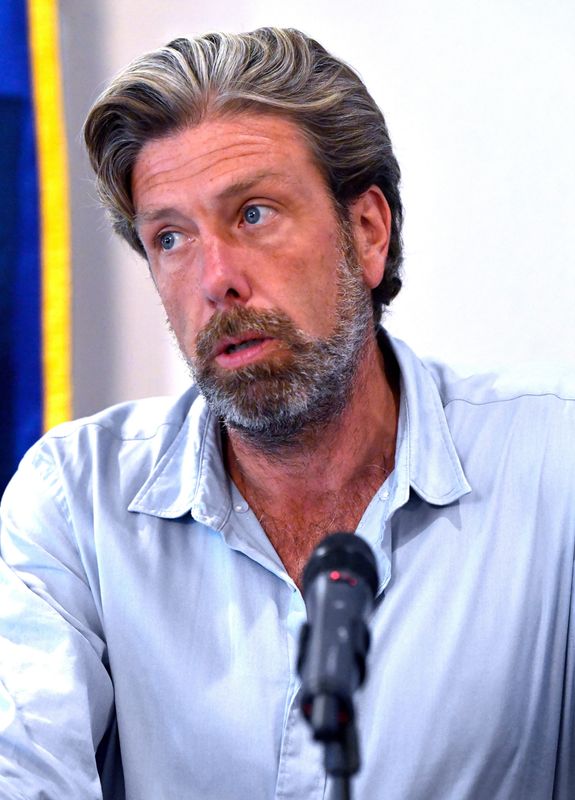
That’s some of what motivated Lancium CEO and co-founder Michael McNamara to appear as the speaker at the Kiwanis Club of Abilene’s weekly luncheon April 8.

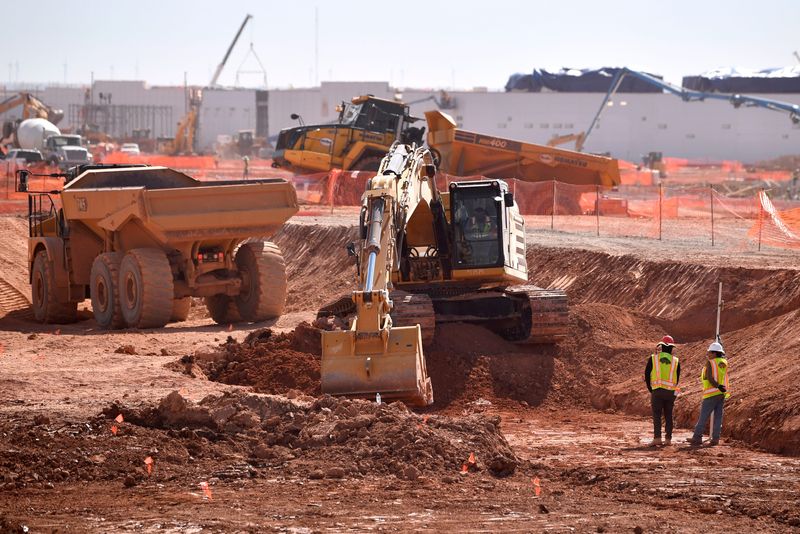
The Lancium Clean Campus is the home of the flagship Stargate data centers. Earlier in the month, it was announced that Microsoft would be taking over from Oracle the last two data center buildings under construction.
Questions and concerns about data centers are arising in communities across Texas, including San Angelo in the Concho Valley and Wichita Falls in North Texas.
For instance, Skybox Data Centers of Dallas announced Feb. 18 it intended to build a large data center in the Wichita Falls Business Park, the Times Record News reported that day. Construction is planned to start in 2026, and the first buildings are to come online in 2028 at the site.
In addition, the Wichita Falls Planning and Zoning Commission at its April 8 meeting approved rezoning about 360 acres of open land at Airport Drive and Central Freeway to allow for possible construction of another data center.
How it started in Abilene
Lancium broke ground on their project in 2022, the same month OpenAI’s ChatGPT launched.
“We always had the vision that there could be multi-uses of our campus, any electricity-hungry user,” McNamara said. “First it was going to be Bitcoin, because that was the only thing we could think of at the time.”
But the Bitcoin market proved to be a little too chaotic for the company’s taste, according to McNamara.
Then Softbank, who has been a partner on Project Stargate along with OpenAI and Crusoe Energy Systems, proposed the data centers might be a gigawatt in size, he said. At that scale, there would be no other like it in the world.
“The customer who was supposed to be here first was actually going to be Elon, and they were going to build the Colossus here,” he said, referring to Elon Musk. “But Elon can be very difficult. He walked away, and Oracle stepped into his shoes.”
A week after that, President Donald Trump announced Project Stargate in the White House, and the frenzy was on.
Why Abilene?
“We started the company nearly nine years ago. The idea was, as the energy system grew and added renewables as well as natural gas, you would see this really interesting phenomenon, which is negative pricing of energy,” he said.
Negative pricing in this context, simply put, is the phenomenon where there’s more potential energy than there are users who will consume it.
“Texas is blessed with the best oil fields, natural gas fields, wind resources and solar resources all in one location,” he said.
Only remote locations in the deserts of Chile or Inner Mongolia offer equivalent renewable resources.
“But those places have no natural gas,” McNamara pointed out. “So Texas is a very special and unique spot.”
But why Abilene? Because it turns out that after 145 years, the “Key City” nickname still applies.
Abilene earned that moniker after its 1881 founding because of its “key” position as a regional hub for transportation, commerce and agriculture.
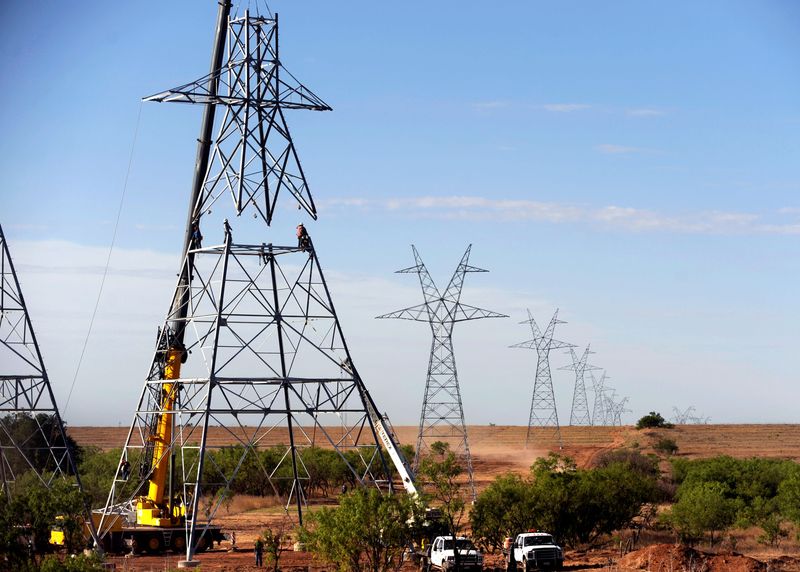
In 2013, that tradition continued as the Competitive Renewable Energy Zones finished laying 3,600 miles of new transmission lines. With the windfarm build out of the mid-2000s beginning to slow, new power lines were needed to move all that juice to the Texas cities that needed it.
A “highway for energy,” McNamara said that when CREZ finally opened, it was congested with renewable energy within 18 months.
“Abilene sits on two interchanges of that highway system, actually the two closest overlapping anywhere in West Texas,” he said. “It is the world’s best location for large energy users.”
Don’t call it a boom. Call it the future
With an original $15 billion cost, McNamara said the data center cost is “well over” $50 billion now.
“We’d be darn close to the biggest project in America today,” he said.
Long has West Texas labored under threat of a boom-and-bust merry-go-round driven by the oil and gas industry. It’s a cycle many regard as inevitable, price fluctuation on oil’s global market can turn days of high cotton into weeks of grits and gravy.
But a crucial difference here is that AI isn’t a commodity, and as long as public demand remains for artificial intelligence, it’s going to need data centers to support it.
“Everything at that site today is fully-financed on a long-term basis, de-risked and under construction,” McNamara said.
He added Oracle will be the tenant at Lancium for the next 15 years, as well as Microsoft for the next 20.
“They’re not going anywhere. You’re naturally nervous about a boom-bust cycle,” he said. “But what I see is the value where we’re turning $100,000 of compute into $10 million.
“Maybe it’s not as useful in the future, and we only turn it into $5 million? But it still underwrites the very large infrastructure investment that’s happening now.”
This article originally appeared on Wichita Falls Times Record News: As Wichita Falls anticipates data centers, Abilene’s are well underway
Reporting by Ronald W. Erdrich, Abilene Reporter-News / Wichita Falls Times Record News
USA TODAY Network via Reuters Connect