This week’s Beachcombing Report is a little different. Instead of documenting what washed up on a Texas beach, we followed what could be one of the sources of the plastic pollution that eventually reaches our coastlines.
I have found a lot of nurdles over the years, but nothing prepared me for what I saw along the Victoria Barge Canal in San Antonio Bay.

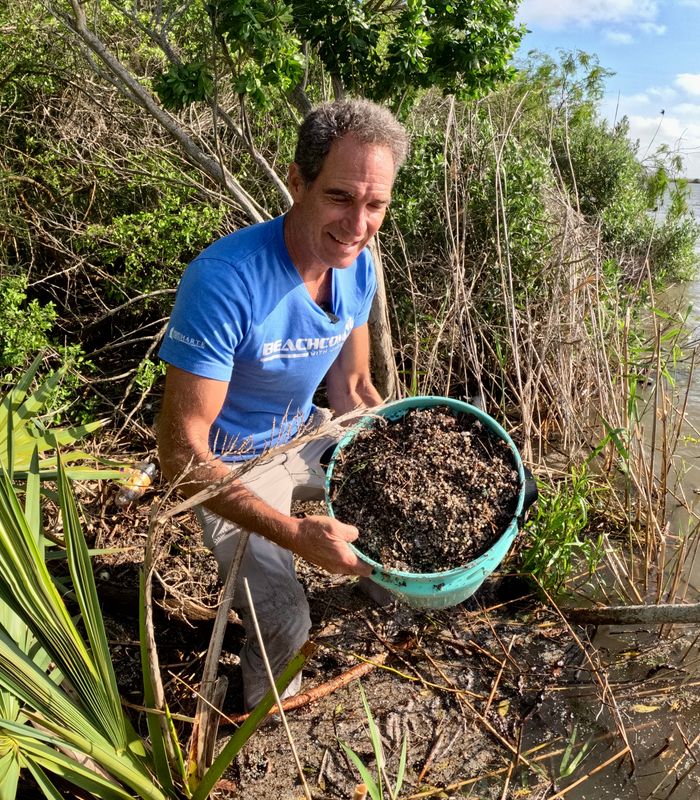
Within just 10 minutes of searching, I filled an entire 5-gallon bucket with plastic pellets known as nurdles. We estimate that a bucket that size can hold roughly 320,000 nurdles.
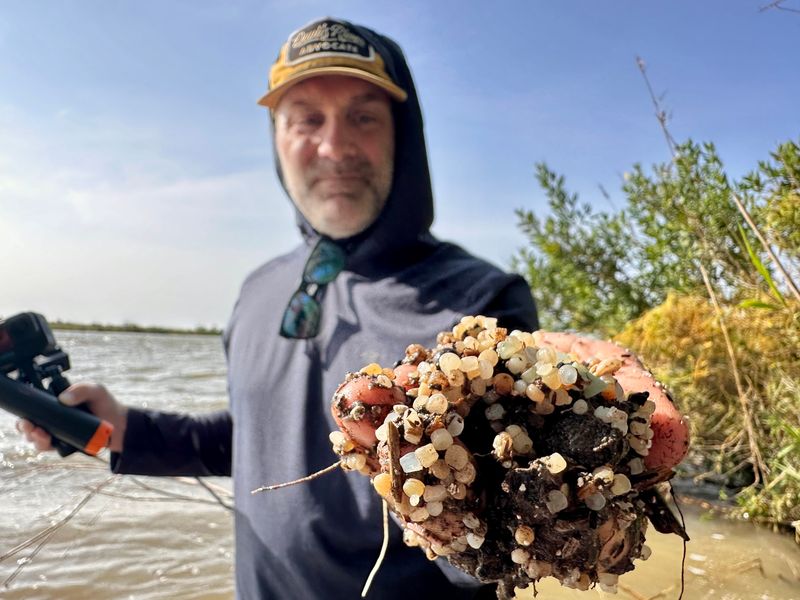
Nurdles are small plastic pellets used as the raw material for manufacturing plastic products. They are one of the most common forms of plastic pollution found in coastal environments and are frequently mistaken for food by fish, birds and other wildlife. Nurdles can also absorb toxic chemicals from the surrounding water, creating additional risks for animals that ingest them.
After volunteers reported unusually high concentrations of nurdles to the Nurdle Patrol database, I joined the San Antonio Bay Partnership and the Gulf Trust to investigate the area by boat.
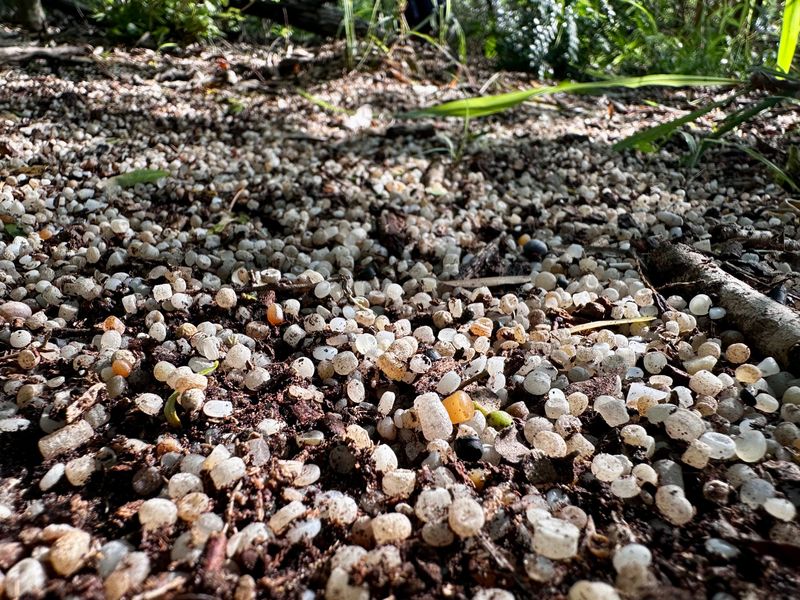
What we found was unlike anything I had ever seen. Along the shoreline were deposits of nurdles inches thick. Thousands of pellets floated on the water’s surface, while a dense line of nurdles extended nearly 20 feet into the shoreline vegetation and stretched at least 200 feet along the bank.
As we traveled up the canal, we observed a continuous trail of floating nurdles extending for miles. Based on the varying colors, shapes, sizes and degrees of weathering, this pollution has likely been accumulating for a long time and may even represent multiple releases or sources.
At the Harte Research Institute, the Nurdle Patrol project values reliable data. The extraordinarily high counts reported by volunteers at this site proved to be accurate. Our hope is that identifying the source of this pollution will prevent further harm to these sensitive bay habitats.
This discovery demonstrates exactly why NurdlePatrol.org exists: to empower communities to document pollution, verify concerns and provide the data needed to drive meaningful environmental action.
Jace Tunnell is the director of community engagement for the Harte Research Institute at Texas A&M University-Corpus Christi. His Beachcombing series appears in newspapers, as a weekly video on YouTube and KEDT PBS, and as a weekly feature on KEDT NPR.
Follow Jace at harteresearch.org, Facebook (@harteresearch) and Instagram (@harteresearch).
This article originally appeared on Corpus Christi Caller Times: 320,000 nurdles in 10 minutes: Tracing plastic pollution in Texas bay
Reporting by Jace Tunnell, Harte Research Institute / Corpus Christi Caller Times
USA TODAY Network via Reuters Connect
By Jace Tunnell, Harte Research Institute | USA TODAY Network