A Cincinnati-area school board planned its district’s response to U.S. Immigration and Customs Enforcement in a closed executive session, prompting accusations from a former board member that officials were concealing information from the public.
Forest Hills school board officials say the closed-door meeting was a way to ensure student privacy.

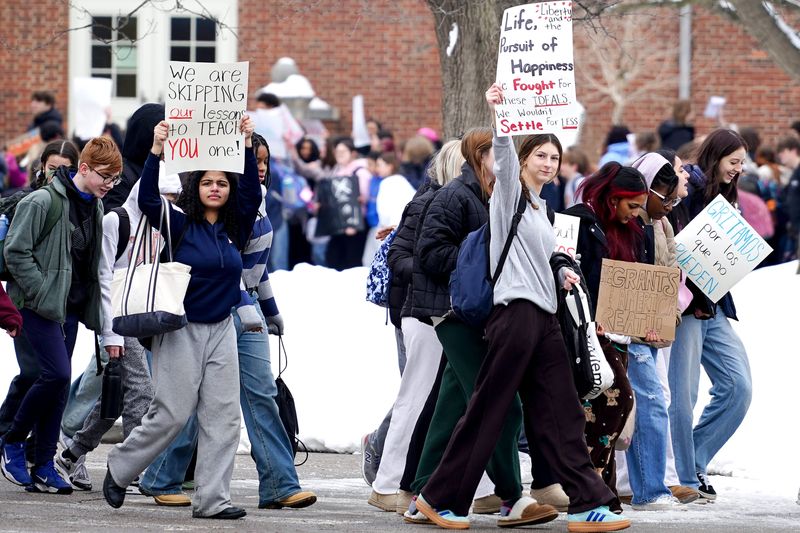
The move reflects wider fears among some district officials across Greater Cincinnati that ICE is using public information to target students. As a result, some school officials are avoiding public mention of their response to the issue amid student protests over ICE’s presence in Cincinnati and talks of increased deportations in southwest Ohio.
But despite the lack of public-facing school procedures on ICE, several districts have distributed ICE-specific security training internally to staff since President Donald Trump made his deportation directive in January 2025.
School board member says sharing ICE Response Plan could put kids at risk
When asked about using executive session to discuss ICE response and other sensitive security information, several districts referred The Enquirer to existing policies about interrogation of students by law enforcement. Those policies were passed in public board meetings years before Trump authorized immigration enforcement in schools.
And while districts have distributed ICE-specific training materials internally, public sharing of that content in board meetings or otherwise remains slim.
That’s been the case for Forest Hills Local School District. There, school officials are utilizing private, closed-door proceedings to curb fears that ICE is using public data about districts to target students.
Jeremy Ward, a current Forest Hills board member and teacher at Loveland City Schools, said security protocols like the ICE Response Plan don’t need to be made public beyond fire or police departments for basic safety reasons.
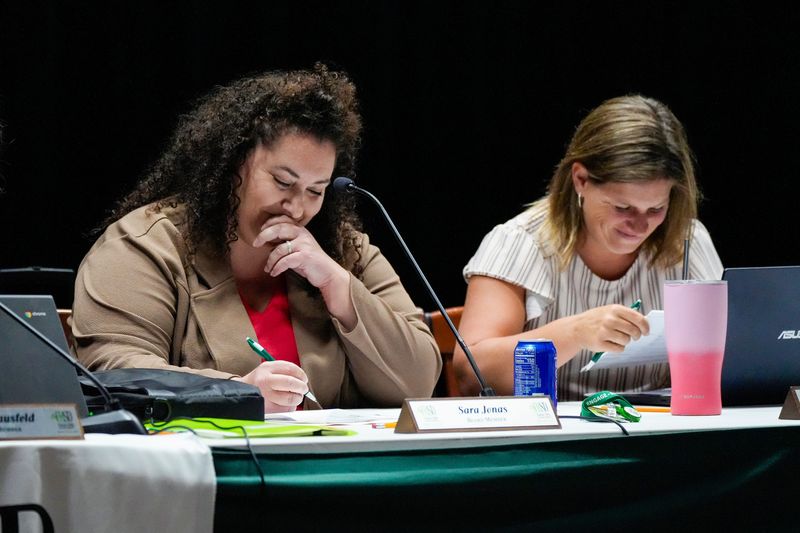
Sara Jonas, the former school board member at Forest Hills that introduced the contentious anti-critical race theory resolution, shared the district’s ICE Response Plan in a Feb. 13 Facebook post. The plan, which Jonas procured via a public records request, was redacted in some parts by the district’s legal counsel per Ohio Revised Code, which protects security records.
“Instead of this school board prioritizing the celebration of the 250th anniversary of America through the U.S. Department of Education’s History Rocks! tour, they are meeting in executive session … to create an ICE Response Plan,” Jonas wrote in her post, attaching the redacted records of the plan.
“But please Forest Hills Board of Education, keep telling the community your priorities aren’t political,” she added. There was a proposal by the Ohio Department of Education and Workforce that the district host the History Rocks! tour, led by U.S. Secretary of Education Linda McMahon. But the event never came to fruition.
In another Facebook post, Jonas said the board is holding executive sessions “in order to keep information from becoming available to the public.”
State law allows officials to meet in executive session to discuss “details relative to the security arrangements and emergency response protocols for a public body or a public office, if disclosure of the matters discussed could reasonably be expected to jeopardize the security of the public body or public office.”
Ward said Forest Hills’ privacy precautions have intensified given recent reports of the Department of Homeland Security requesting the data of anti-ICE social media accounts.
DHS has previously stated that ICE uses “publicly available information on the internet and on social media platforms” to “achieve its mission.”
“We know they’re looking online, they’re searching, … subpoenaing Facebook and Instagram,” Ward said. “Our whole point was if we can do this as part of a safety meeting and keep it out of public record, that seems like a better choice.”
Ward said he wonders whether Jonas’s decision to post the plan to Facebook was “worth putting kids at risk.”
Jonas did not respond to emailed questions.
How districts are responding to potential ICE activity
All but two of the eight largest school districts in the region responded to an Enquirer request for information about their ICE response materials. Mason City Schools and Northwest Local Schools did not respond.
The protocols that districts shared run the gamut from general statements referring to existing security policies to in-depth action plans shared directly with staff and parents.
Chris Gramke, director of communications at Oak Hills Local Schools, said the district has not put together training for staff on what to do if ICE enters school grounds beyond reinforcing established security protocols. There is also no specific communication plan in place to alert families of potential ICE activity on or near school grounds, Gramke said.
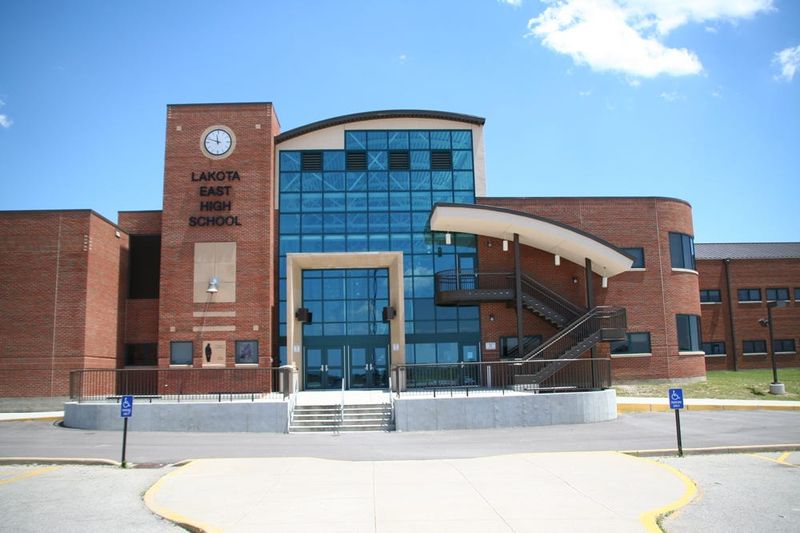
Lakota Local Schools echoed similar sentiments about adherence to existing protocols, specifically policies about interrogation of students by law enforcement. In those cases, district leaders would be notified, a judicial warrant would be required, and legal counsel and the student’s parents would be notified before any further action took place, Lakota’s director of community relations Betsy Fuller said.
Princeton City Schools said it’s following the same protocols it shared last year, when an Enquirer survey showed it was the only district in the region with a comprehensive ICE response plan.
“We want Princeton families to trust our protocols and know that our staff is trained to keep your children safe and calm until any situation is resolved,” Princeton’s director of communications Tricia Roddy said. “If there is any law enforcement activity or dangerous situation near a bus stop or school grounds, we reroute buses and keep our students clear of that area.”
In contrast to other districts, Forest Hills’ plan explicitly refers to ICE. It outlines what to do during and after an ICE encounter for a range of staff, including front office workers, principals and building administrators, bus drivers and district communications personnel.
Documenting the date and time, officer badge number, documentation presented and action taken by school staff during a potential ICE encounter are all part of Forest Hills’ guidelines.
Milford Exempted Village Schools shared existing safety procedures and guidelines for what to do if an ICE agent is present in a reminder email obtained by The Enquirer sent Jan. 16 to staff. Cincinnati Public Schools offered a similar reminder last month, updating a document for staff titled “Supporting Immigrant and Refugee Families, A Guide for Cincinnati Public Schools.”
The document has been used for ICE preparedness training since January 2025, Cincinnati Public Schools said.
The district outlines how to address a range of scenarios, including responding to requests for student records, contacting child welfare agencies in the event that a parent is detained and securing an interpreter through the district’s department of student services. The district also provides a step-by-step process for schools on how to respond to ICE enforcement activity.
Cincinnati Public Schools’ attorney Dan Hoying presented the school board with an update at the Feb. 9 business meeting in which he listed all the levels of staff, from front office staff to principals, that receive the training materials.
“I think recent events have brought this to the forefront again and so we will be revisiting training. We do ongoing counseling,” Hoying said. “We get calls about this all the time, and these are the principles that we counsel on and we’ll continue to train on.”
Districts respond to ICE without clear directives from state, federal leaders
Forest Hills joins several other districts across the region piecing together ICE response plans in the absence of clear guidance from the Ohio Department of Education.
As of February this year, the state education department has yet to publish any sort of directive to K-12 schools regarding how they should prepare for potential ICE activity on campuses.
“It’s so disjointed right now,” Ward said of districts’ responses to ICE.
Regardless, unions and other school entities are jumping to action amid the heightened anxiety around ICE felt in the region.
Last month, the state’s largest teacher’s union, the Ohio Education Association, issued a statement saying it strongly opposes any presence of ICE in or around Ohio’s public schools. The union also sent a letter to its over 120,000 members spelling out what to do if ICE appears at their respective school.
At the federal level, the state of ICE activity in schools has remained clouded by opposing messaging from Trump and DHS. It started in January 2025, when Trump authorized immigration enforcement on school property.
But DHS maintains that the Trump directive merely allows ICE to enter schools to target adult criminals hiding to avoid arrest, not students.
In September 2025, DHS asserted via a press release that ICE does not raid schools despite “media force-feeding the public stories about parents and children being scared to return to school.”
This article originally appeared on Cincinnati Enquirer: Why Cincinnati districts are scared to talk about ICE response plans
Reporting by Grace Tucker, Cincinnati Enquirer / Cincinnati Enquirer
USA TODAY Network via Reuters Connect