It’s been seven years since city, county, development and professional soccer officials agreed to a new Columbus Crew soccer stadium on land just west of Nationwide Arena and Huntington Park.
The effort to keep one of Major League Soccer’s founding franchises in the city was meant to preserve the city’s identity as a major sports town and the millions of dollars in potential revenue that could bring.

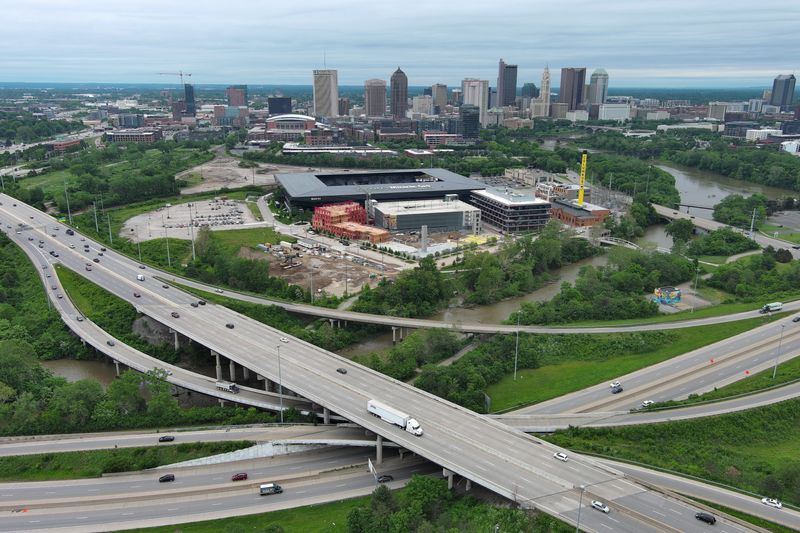
But “Save the Crew” was more than just building what is now ScottsMiracle-Gro Field, the $314 million home of the Crew. It also envisioned cultivating a barren landscape west of the Arena District into offices, restaurants, housing and parkland.
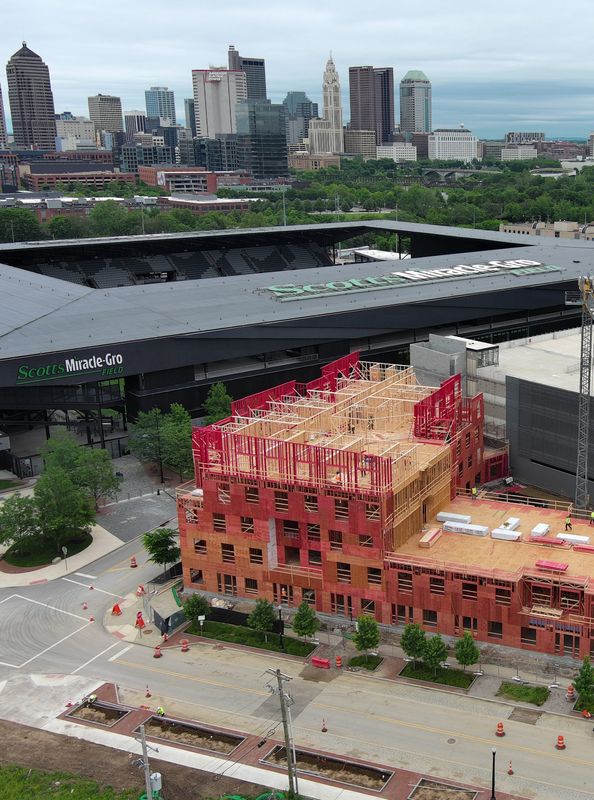
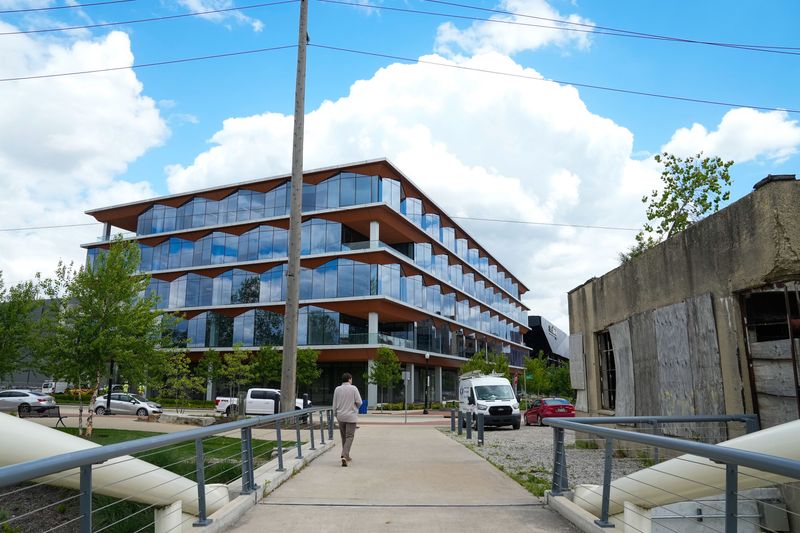
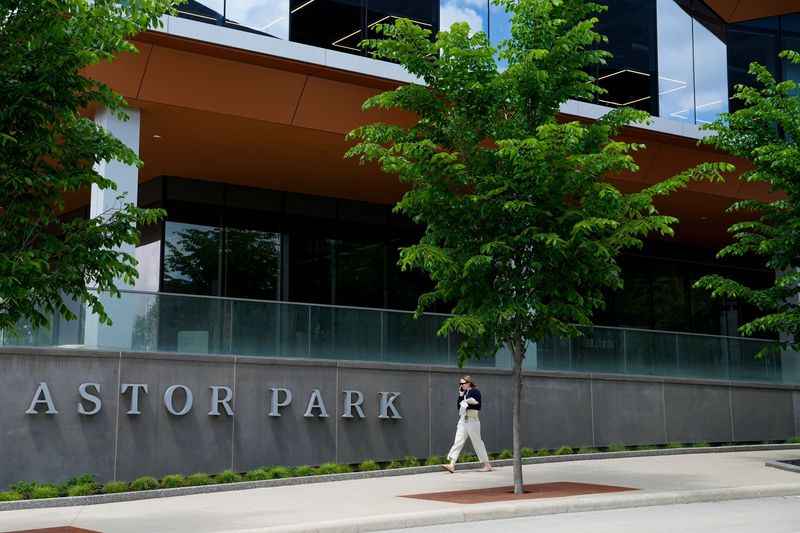
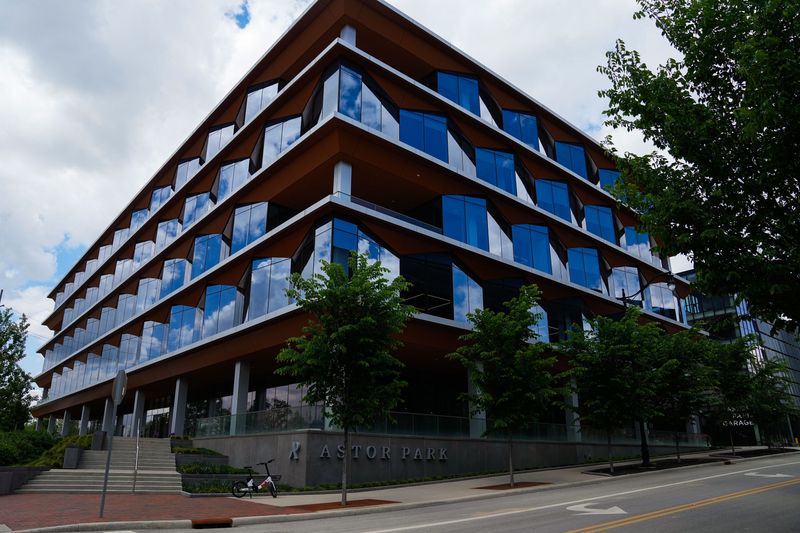
The 15-acre site at and around the stadium called Astor Park today includes a five-story office building; a 685-space city-owned parking garage; and an upscale housing complex, now under construction, that was scheduled to open three years ago.
The effort to consolidate all of this in the already thriving Arena District has not been easy or quick. Development has squared off against the COVID-19 pandemic, financial challenges, labor and materials shortages and time itself. And while officials admit progress has been slower than expected, they are confident the area’s development will happen.
Today, there are cranes, heavy equipment and workers pouring concrete. It’s solid evidence that the housing component is nearing completion — a 261-unit apartment building, the first of two that are expected to total 440 apartments, a quarter of whose units will be for those earning no more than 80% to 100% of the area’s median income.
The Pizzuti Companies is developing the site in partnership with Crew owners, the Edwards family and Haslam Sports Group.
The original 2019 development agreement has had several updates, including a practice facility and training complex for Columbus Crew SC (now operating as the OhioHealth Performance Center adjacent to the former Crew Stadium near the Ohio Expositions Center).
And the recently built out $30 million Kilbourne Run Sports Park on the Northeast Side (created in partnership with Columbus Recreation and Parks and a $10 million Columbus investment) includes artificial turf fields, natural grass pitches and a championship stadium.
The mix of retail, entertainment, housing and office buildings next to the stadium in Astor Park remains the centerpiece of the original agreement.
While the still-unoccupied apartments are the latest phase of Astor Park, the site’s office building is headquarters of BBI Logistics. A Pickle Park and Pub is planned on the 17,250 square feet of ground-floor, to include five indoor pickleball courts, one outdoor court, golf simulators, a pickleball store and a restaurant and bar.
A Columbus-owned and operated parking garage has begun charging $5 to $30 fees, depending on event schedule.
Crew ownership satisfied with progress, even with delays
There is a lot of work ongoing in the area, but is it meeting the promises made when the stadium was built?
“If we’re being really candid, did we hope we’d have more done? Yes,” said Josh Glessing, who served as chief of strategy and development for seven years at Haslam Sports Group (Crew owners) and is current president of the Milwaukee Bucks basketball team. “Were we met with substantial challenges that the rest of the development world is fighting against too? Yes.”
But Glessing said that patience, and what’s currently in place and being built, including Class A-plus office space, upscale apartments and a workforce housing component are worth it.
“That’s really, really, really hard [to get] anywhere in the county right now,” he said. “Really hard in urban cores.”
“We don’t only measure [success] by what’s on our footprint. We measure it by the corridors that we help create,” he said, referring to Grandview Yard, Franklinton, Scioto Peninsula and others, each of which feeds off and enhances the others.
The area around the stadium was originally known as Confluence Village, changed to Astor Park, in a nod to the Astor House hotel in New York City where the United States Football Association (now known as the US Soccer Federation) was founded. There was also a feeling that the name was easier to pronounce.
“We’re incredibly proud of what we’ve accomplished. But we know we can do more still,” Glessing said.
Will public investment bring long-term revenue?
Extending the Arena District westward will prove to be worthwhile, even with delays, Columbus and Franklin County officials say.
“It has shifted the timeline,” said Nicholas J. Bankston, Columbus City Councilman and chairman of both the finance and economic development and small business committees. “But the great part is that it is continuing on as it was committed. Our investment was really about the broader development and the surrounding neighborhood.”
The city’s investment of more than $100 million will continue paying future dividends, he said.
“All of that is a semblance of city money setting the stage for private development to come in. I think it really builds and complements on the momentum. It’s a sight to see when all venues are activated. It shows the excitement that people see in the downtown,” Bankston said, referring to evenings when all three teams are playing: the Blue Jackets, Clippers and Crew.
The county’s $51 million in county-backed bonds for stadium construction also are expected to pay dividends.
“It’s taken a bit, but it’s moving,” Franklin County Commissioner John O’Grady said. “We knew it was going to be a quality investment … between the sales tax gains and all the things in and outside of the stadium, the shops and restaurants. We want to see this move along.”
Single-road access
Moving traffic has been an issue, especially when the trio of pro events happens on the same day. As the only entrance-exit for vehicles to Astor Park and soccer events, Nationwide Boulevard has been nicknamed Sports Street, Champions Row and less complimentary titles when gridlocked.
Besides a multi-use path bridge over the Olentangy River, Nationwide Boulevard is the area’s only access. And with a single parking garage, there are concerns not only from prospective residents, but also those attending Crew games and workers nearby.
“I do question, with this being the only parking structure, and it being limited to so many floors. And all the new buildings… and all that expansion. I’m just worried about whether that’s going to be enough parking, and how are you going to get out of here if this is the only road,” said Matthew Schmitz, who works at the logistics headquarters.
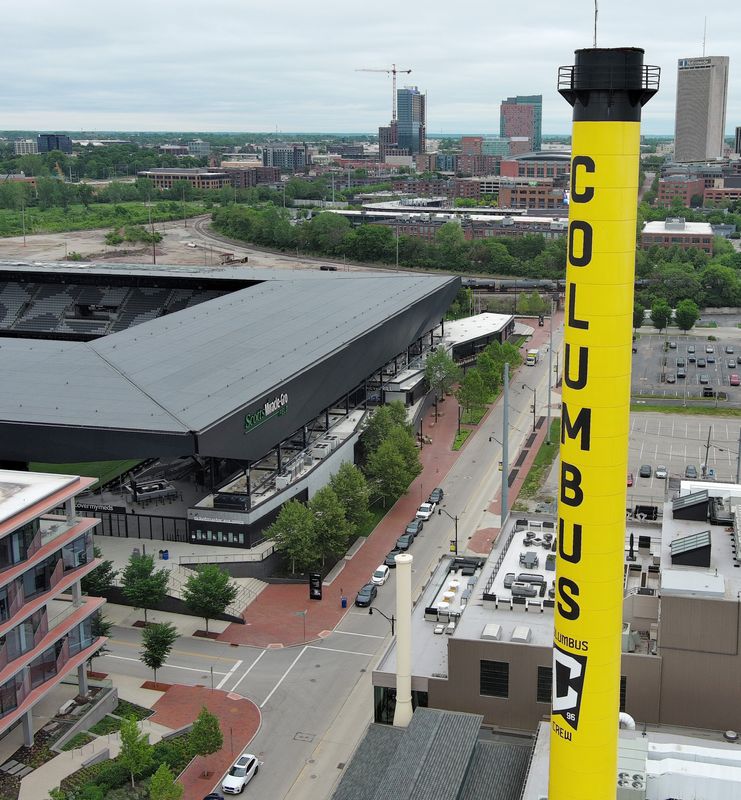
Bordered by Interstate 670, the Olentangy River and CSX Railroad tracks, the area is tucked out of view, identified prominently by the vestiges of a Columbus Municipal Light plant, whose tower now bears the Crew logo below COLUMBUS spelled vertically.
Mary Shepro, President of Business Operations for the Crew, dismissed traffic issues as inherent to big-time events.
“It’s pretty rare that we have the full Arena District activated all on the same night,” she said, saying it happens just a handful of times a year. “We successfully manage that.”
The stadium has a maximum capacity of about 20,000 people.
“We’ve already maxed out what that traffic pattern, for the most part, is going to look like,” she said.
An increasing number of fans walk, ride scooters or bicycles or take ride sharing to the matches, Shepro said.
And there’s been conversations about more pedestrian bridges to connect to Fanklinton or elsewhere, said Bankston.
Public money rose to keep Crew in Columbus
Early on, the city had said it would cap public funds at $50 million for the Crew-related project.
But a Dispatch report at the time revealed the city’s contribution more than doubled to include the parking garage, sewer and other utility upgrades, along with roads, sidewalks and other infrastructure.
Following that report, Mayor Andrew Ginther announced in 2019 at a groundbreaking ceremony for the stadium that the city’s total cost was about $113 million, describing “additional funds for infrastructure for this incredible new jobs center.”
“I didn’t major in math, but the last time I checked, $113 million in infrastructure for a new jobs center leveraging $1.04 billion in private investment is a pretty good return for the taxpayers of central Ohio,” Ginther said at the event.
Mike Stevens, the city’s current development director, said the money for improvements “aligned with investments we made because of the Crew,” but were not directly connected.
Stevens said that the Arena District’s approximate $1 billion in investment income generated over the past 20 years, should be repeated in the next 20, “in no small part due to the contribution of the Astor Park development.”
What kind of housing will be by the Crew?
The new housing project will have amenities including a stylish co-working space, pergola and outdoor kitchen, hammock garden, fitness center, concerts, wine & bourbon tastings, lobby espresso bar, dog spa, podcast studio, artists studio, and movie nights on the lawn, according to Pizzuti Companies’ website.
The website lists an opening date of 2023. But rents have not been set for the complex, and with work underway it’s not expected to open until 2027.
Bankston said everyone should benefit from a tax abatement on the property and other details in the agreement that required workforce housing.
“The great thing is that everyone who lives in that building will have access to those first-class ameneties. It’s a great story about how we don’t segment out folks, because you’re not at a certain income level.”
The city has described the overall project as “not simply mixed-use, but mixed-income.”
Future buildout still being decided
While work continues, there also are portions of Astor Park, including land directly north of the stadium, whose purpose Glessing called undecided and “challenging.” He has said that this area can be “the most dense part of the development.”
Common space, parkland and public art, similar to features around Nationwide Arena and Huntington Park, are still in the works.
A narrow strip of greenery connects to the pedestrian bridge along the river and draws visitors on scooters and bikes to tree cover, seating and a canoe/kayak shed, said Shepro.
The goal of melding office space, restaurants, housing and other features is still being worked on, even as professional soccer is now firmly anchored in Columbus, Glessing said. “We set out to bring world-class soccer to Columbus, to shine a light on Columbus, leveraging ‘the world’s game.’ “
At least nine 2028 Olympics soccer matches will be held in the Astor Park stadium, to be called Columbus Stadium for the Olympics because the Olympics does not permit commercial branding on its venues. “That’s something we’re incredibly proud of,” said Glessing, noting the momentum, revenue and future development to follow. Not to mention the recently awarded National Women’s Soccer League franchise, which will bring additional games.
Others, including the city’s chief sports fan, are also optimistic about the area.
“We are sitting here on this sports street and I can’t really identify another street in the country that has the same amenities we have,” said Linda Logan, president and CEO of The Greater Columbus Sports Commission, whose mission is to bring sporting events to the city and raise its image. “It’s just a hub of prosperity. And I think the investment to make it so inviting — the brick streets, the green space and then you add Astor Park — it really adds to the makeup of a really awesome district.”
Ken Paul, executive director of the Franklin County Convention Facilities Authority, agrees.
“I see it as a continuation of great development that has breathed new life to a portion of our downtown that was underutilized and underdeveloped and put to great use,” he said.
From atop the 28th floot of the Hilton Downtown, Paul said “It looks as if our community was very intentional in how we planned for our sports facilities and surrounding development in a way other cities are trying to duplicate.”
Councilman Bankston said that Astor Park’s future can be measured as more than “one team and one facility.”
“It’s performing well above what we expected,” he said of the Arena District’s jobs, admissions and other revenue.
It shows the excitement that people see in really wanting to be Downtown.
“What I don’t see when I look around the country that I see here, is that It’s not just the arena or the ballpark or the stadium on some island… it’s really about a larger anchor to this larger neighborhood. You have a 24-hour neighborhood that is driving economic opportunities for our community. It’s just the anchor to this larger neighborhood.”
Growth and development reporter Dean Narciso can be reached at dnarciso@dispatch.com.
This article originally appeared on The Columbus Dispatch: Seven years later, development around Crew stadium finally taking shape
Reporting by Dean Narciso, Columbus Dispatch / The Columbus Dispatch
USA TODAY Network via Reuters Connect
By Dean Narciso, Columbus Dispatch | USA TODAY Network