It’s been 50 years. How is that even possible?
One moment you’re a 12-year-old kid in cutoffs. The next moment, you’re on a high-fiber diet and getting mail from the AARP.

I’ll never forget the U.S. bicentennial in 1976. Maybe I was just the right age to appreciate it or maybe it truly was a magical time.
From my perspective, the entire country was draped in red, white and blue. Everyone seemed so patriotic, and the Fourth of July felt extra special.
‘Listen, my children’
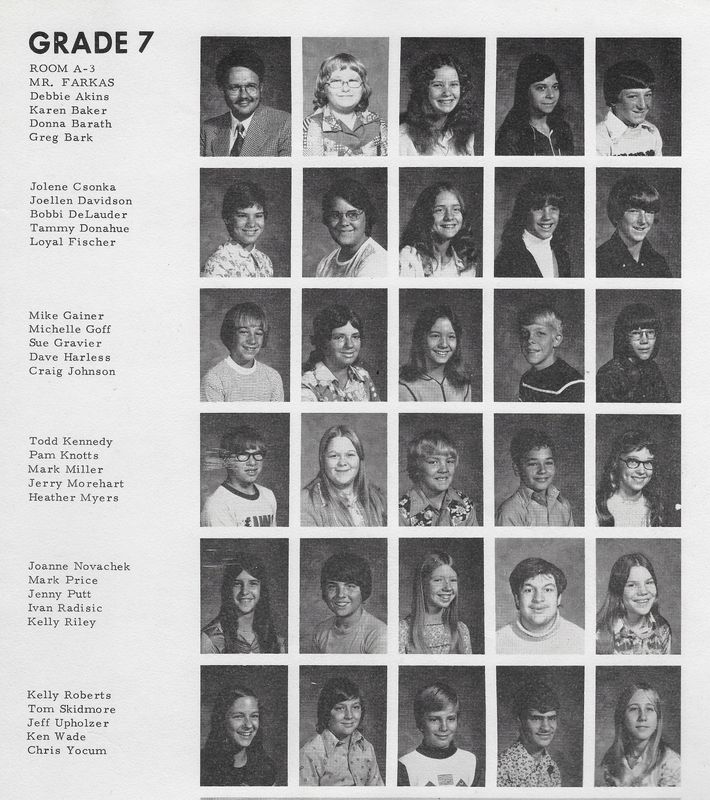
My teachers at Manchester Middle School were fully committed to immersing their students in the bicentennial experience. We spent a great deal of time learning about American history and the Revolutionary War.
We took a field trip to see a matinee screening of the 1972 musical “1776.” During a class on personal finances, we adopted mimeographed “bicentennial bucks” as our official currency.
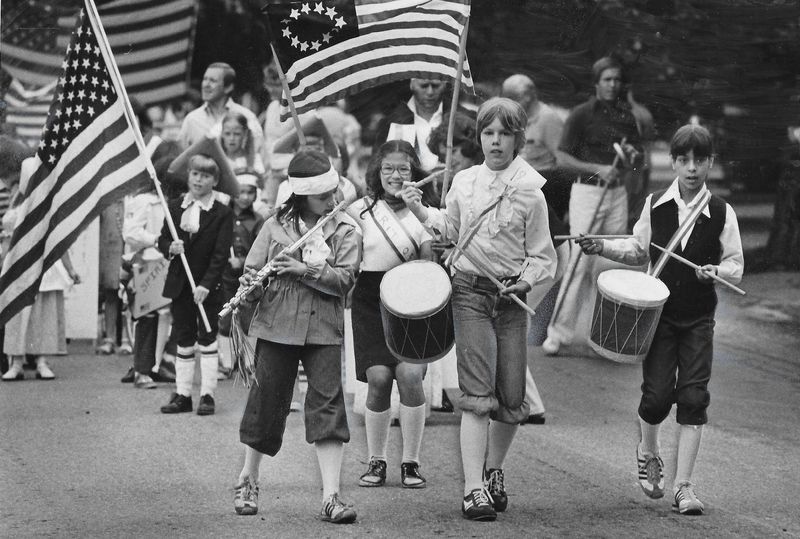
We designed Colonial-era newspapers that contained news from the battlefront. We marched through the hallways as “The Spirit of ’76,” and I even got to pound a drum.
The front cover of our school yearbook, “1776-1976 Bicentennial Memories,” featured a photo collage of the U.S. Constitution, Statue of Liberty and Liberty Bell. Talk about patriotic!
With concerted effort, we memorized Henry Wadsworth Longfellow’s 1860 poem “Paul Revere’s Ride.” I recall walking around my Turkeyfoot Lake neighborhood to rehearse the lines: “Listen, my children, and you shall hear of the midnight ride of Paul Revere. On the 18th of April in ’75, hardly a man is now alive who remembers that famous day and year.”
If any neighbors overheard me, they must have thought I was really patriotic. Or really weird.
Can you say awkward?
One unfortunate day, this awkward boy went out of his way to humiliate himself in front of his class. An assignment called for presenting a costumed speech about the bicentennial.
I could’ve selected any figure in U.S. history — George Washington, Paul Revere, Ben Franklin, Benedict Arnold — but, no, that would have been too rational. Instead, I decided to dress up as an old tree that had witnessed the battle of Bunker Hill.
As part of the not-so-elaborate attire, I wrapped my body in brown paper from Acme grocery bags and glued on construction paper leaves. With a black marker, I added details like bark and knots and stems.
When the big moment arrived, I shuffled out in my bulky garb to address a gathering of what seemed to be the entire seventh grade. Gulp.
“Hello,” I began. “I’m a tree. I may not look like a tree, but I’m a tree just the same.”
There may have been giggles. There may have been silence. I can’t be sure. Mercifully, I have blocked out the rest of that mortifying event.
In retrospect, I should have just held up a big sign that said: “Bullies, please beat me up after school.” And possibly: “Yes, girls, I’m a dork.”
Quarters, currency and cans
Everywhere we looked, we saw tributes to America’s 200th birthday. Even in our pockets.
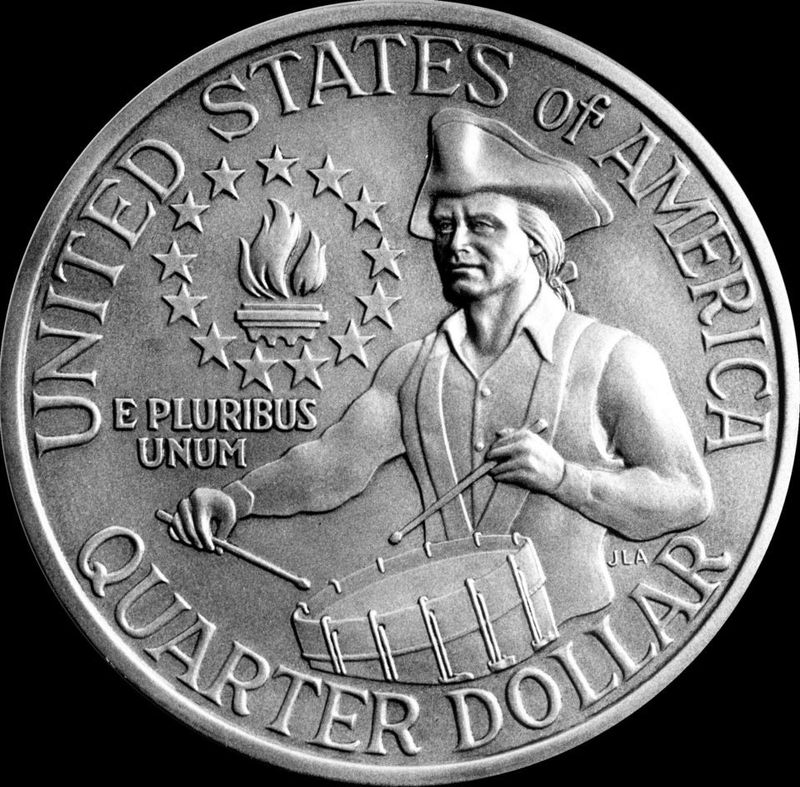
The U.S. Mint produced bicentennial quarters that featured George Washington’s profile with the dates 1776-1976 and a Colonial drummer on the reverse side. I pressed the shiny silver discs into coin folders to keep forever, but the craving for sweets eventually became too great and I raided the collection to buy Bubble Yum and Pop Rocks.
From time to time, I’ll rediscover the 1976 quarters in my change, worn smooth and dull from 50 years of handling. When I see those coins, I always feel a glint of joy.
I still own a crisp $2 bill that the Federal Reserve produced in 1976 to commemorate the bicentennial. It features a portrait of President Thomas Jefferson on the front and an illustration of the signing of the Declaration of Independence on the back. After 50 years, the currency is worth exactly, um, $2.
An unusual pastime of 1976 was collecting 7 Up cans. As part of its “United We Stand” campaign, the soft drink company created 50 cans — each bearing the outline of a different state and identifying facts such as capital city, nickname and year of statehood.
The reverse side had red-and-blue 7 Up logos in inscrutable patterns on a white background, but if you stacked all 50 cans in rows, they formed a picture of Uncle Sam. I never had the patience for it, but I was impressed to see completed collections at the homes of friends.
‘Bicentennial Minute’
1976 was a jumble of star-spangled moments.
I remember CBS airing the “Bicentennial Minute,” a nightly, 60-second segment in which a revolving cast of famous narrators — for example, Walter Cronkite, Betty Ford or Milton Berle — highlighted a moment of history pertaining to the Revolutionary War.
They began with “200 years ago today …” and ended with “And that’s the way it was.” Not a single one of them dressed up as a tree.
I remember reading “Today’s Great American,” a biographical feature published daily in the Akron Beacon Journal, never dreaming that I’d one day write for the newspaper.
I remember buying frozen bomb pops — red, white and blue — from the Jingle Skoot truck that circled our neighborhood.
I remember pinning up a Kiss poster that had the leather-clad band re-creating “The Spirit of ’76” in kabuki makeup.
I remember attending my first rock concert at Blossom Music Center. The headlining act, fittingly, was America.
Expo on Akron Innerbelt
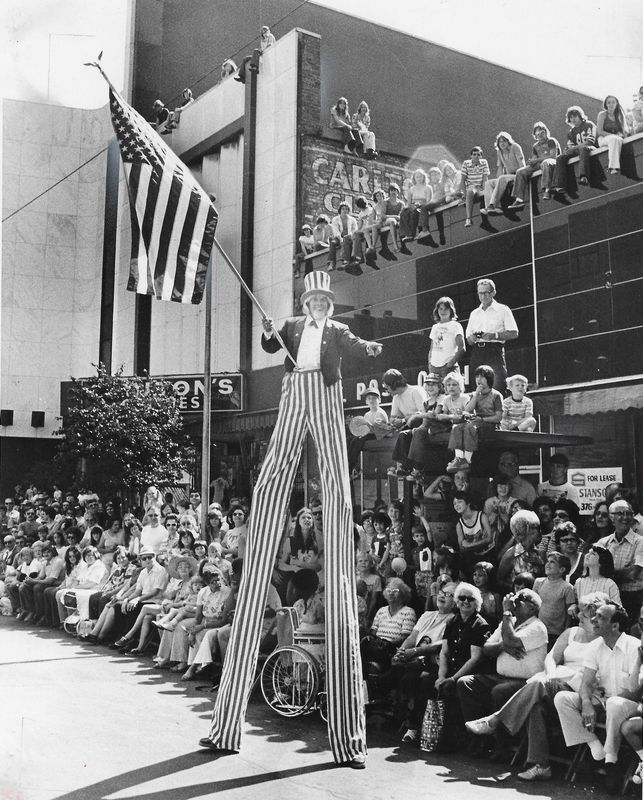
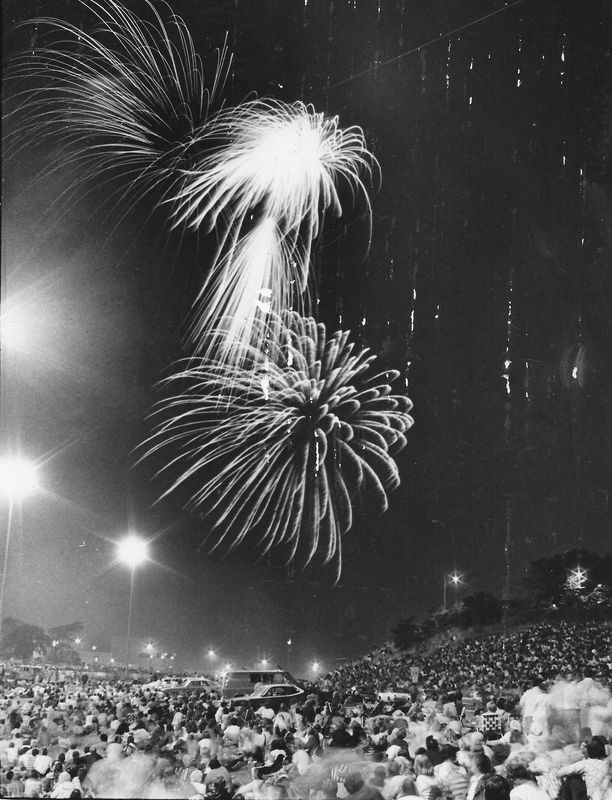
Virtually every community in the region had a bicentennial celebration that summer. Akron shut down its innerbelt for a three-day expo July 3-5.
The festivities included a giant parade, stilt walkers, skydivers, hot air balloons, acrobats, circus animals, bicentennial exhibits and fireworks.
What I remember most is high wire performer Karl Wallenda, then 71, holding a balancing pole while walking across a steel cable stretched 500 feet across the innerbelt. About halfway across, he stopped to do a headstand 80 feet above the pavement!
Thousands of people cheered from the surrounding hills as the daredevil completed his journey to the other side.
The Fourth of July ended quietly — at least for me. I remember sitting on our porch as night fell on Turkeyfoot Lake. The dark water shimmered with the reflections of house lights and stray fireworks. It was mesmerizing.
“This is America’s 200th birthday,” I remember thinking.
And that’s the way it was 50 years ago today. Give or take.
As Aerosmith singer Steven Tyler put it: “The past is gone. Oh, it went by like dusk to dawn.”
If any 12-year-old kid is reading this, I offer a little advice: Enjoy every moment.
The tricentennial will be here before you know it.
Mark J. Price can be reached at mprice@thebeaconjournal.com
This article originally appeared on Akron Beacon Journal: U.S. bicentennial felt so magical in 1976 | Mark J. Price
Reporting by Mark J. Price, Akron Beacon Journal / Akron Beacon Journal
USA TODAY Network via Reuters Connect
By Mark J. Price, Akron Beacon Journal | USA TODAY Network