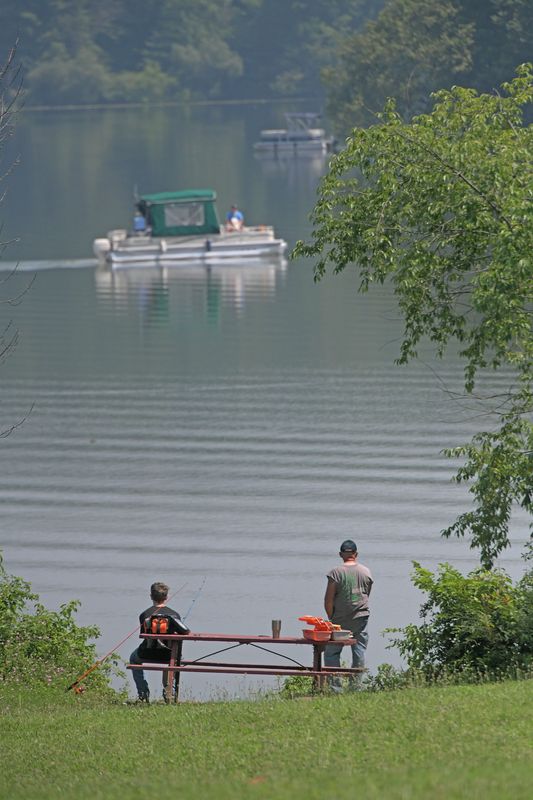
A body of water that produces 40% of Mansfield’s drinking water is doing well, according to a recent sediment study.
SANTEC conducted the study and provided details at the April 7 Mansfield City Council meeting. The study also assessed water balance and dredging options.

City Engineer Bob Bianchi and Kyle Blakley, a geotechnical engineer with the company, addressed council members about the results of the study.
“We found that the reservoir is performing well. The water supply is reliable,” Blakley said. “Through 2075, the reservoir can maintain function with current water demand despite sediment buildup.”
Bianchi said it’s more important to look at water demand. The city uses 9.5 million gallons a day, with 4.5 million gallons coming from Clearfork, which was constructed in 1949. The other 60% comes from a network of wells.
“No immediate corrective action is needed,” Blakley said.
He said sediment, which consists primarily of fine-grained silt or silty sand, can affect water capacity.
About 5.5 million cubic yards of sediment has accumulated at the reservoir, reducing capacity by 26%. The largest amount of sediment is located within the original stream channels and at the headwaters.
Dredging and sediment placement options include three scenarios: one-time large-scale dredging, recurring maintenance and targeted intake dredging.
Blakley said major dredging could cost “tens of millions of dollars” and take 5-10 years to secure funding.
Recurring maintenance dredging is considered cost-effective, estimated at $9 million to $22 million per cycle.
According to the SANTEC study, targeted intake dredging can cost $400,000 to $1 million, with options for dewatering and beneficial upland use.
Project Works Director Louis Andres said the city is taking a proactive approach with the study. Answering a question from Councilwoman C. Antoinette Daley, Bianchi said any dredging would depend on the water demand.
Miller concerned about algal blooms at Clearfork Reservoir
In separate news regarding the reservoir, local activist Eric Miller addressed council and requested a hearing to evaluate risks to the long-term water supply caused by harmful algal blooms.
Miller said such algal blooms can “massively overpopulate a body of water.”
He said a hearing could incorporate expert testimony, citizen input on economic and infrastructure implications and evaluate preventative strategies for long-term protection of the reservoir.
Miller presented a letter also signed by Rick Crusoe and Mark Kaufman.
City wants to do more hydrant testing
In another matter, Bianchi and Fire Chief Dan Crow talked to council about hydrant testing.
“Each year, we do about a quarter of our hydrants in the city,” Crow said. “We’re doing work, but we’re not meeting the standard. We weren’t testing every hydrant every year.”
Bianchi said the city has about 2,800 hydrants, and the Environmental Protection Agency requires hydrants be flushed every four years.
The goal is to implement a pilot project to improve the processes. Under the project, the fire department would complete all annual inspections and a contractor would handle all flow-testing.
Bianchi proposed hiring TrueNorth Companies as the contractor. For the first year, 900 flow tests and 1,900 inspections would take place.
mcaudill@gannett.com
419-521-7219
X: @MarkCau32059251
This article originally appeared on Mansfield News Journal: Report shows Clearfork Reservoir doing well regarding sediment buildup
Reporting by Mark Caudill, Mansfield News Journal / Mansfield News Journal
USA TODAY Network via Reuters Connect