Four hours into its June 3 meeting, and five hours after protesters filled the front lawn of Pataskala City Hall, the city Planning and Zoning Commission voted the way many in its packed meeting room clearly had hoped.
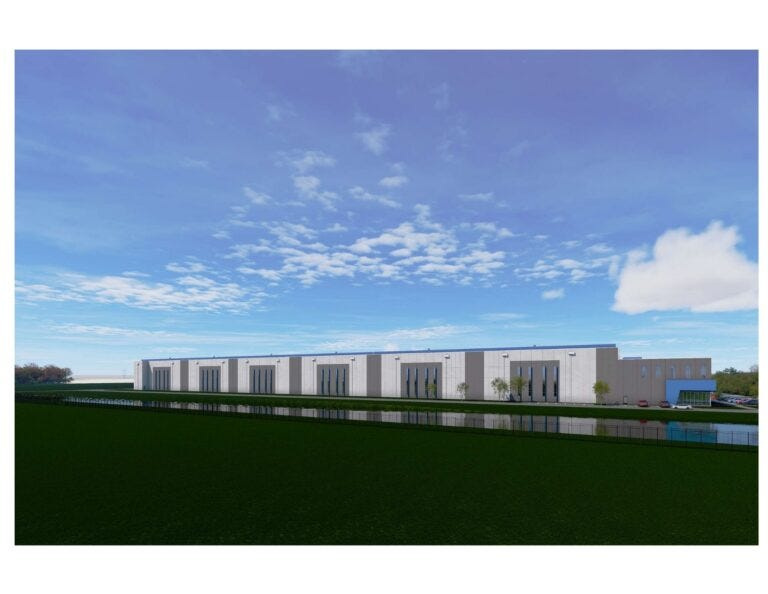
To the cheers of a standing-room-only crowd, who sat through four hours of questions and answers, the commission voted 5-2 to recommend that the City Council reject Aligned Data Centers’ site plan for proposed 200-Megawatt data center on 89 acres at Broad and Mink streets, in the Pataskala industrial park.

The council will have the last word on the matter and will be required to hold a public hearing before it votes, Planning and Zoning Director Scott Fulton said.
Planning and Zoning staff recommended approving the plan, which if the council approves it, would allow the Plano, Texas-based company to seek permits from the city, Ohio Power Siting Board and Ohio Environmental Protection Agency.
The company bought the land in 2023 and applied to begin the review process in November. Planning staff said the company answered their questions and those the commission and the public posed in three earlier hearings.
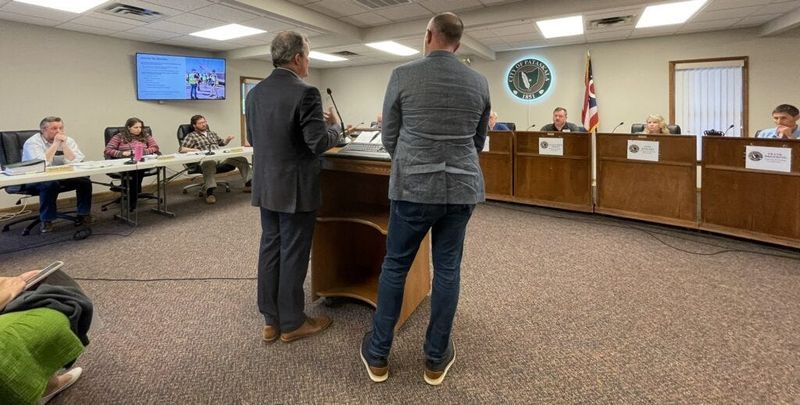
David Robinson, general counsel and executive vice president for strategic development at Aligned Data Centers, said the site is perfect because it is zoned for industrial uses and is next to American Electric Power facilities that could power the site.
He said the company made changes to address residents’ earlier concerns, reducing the number of buildings from four to three, building a tall earthen wall-like berm and landscaping it with trees and bushes and adding windows to provide visual breaks in the walls.
He also said the company will seek to join the Joint Economic Development District, which would provide the city with additional income tax revenue. The company expects to employ about 111 people there long-term, generating $110,000 a year under the city’s 1% income tax and an additional $190,000 if in the JEDD. And during construction, when far more people would be working on the site, that number would rise to about $1 million a year.
Further, the company will not seek or accept local property tax abatements, land enablement manager Joseph Giannini said. The site, which generates $3,868 a year in property taxes would provide an estimated $34.4 million when fully built out.
Giannini also said the company will build, with Bloom Energy, its own, natural-gas fed fuel-cell source of electricity for the campus so as not to put a strain on the local utility grid.
Robinson said water usage and wastewater discharge concerns are moot because the facility will use a “closed loop” cooling system, which means it will truck in deionized water that has all minerals removed, and it will reuse that water repeatedly rather than draw from the city water system or wells. And there is no wastewater discharge, Robinson said, other than what the people working in the facility use for bathroom facilities and cleaning.
“This is a site-plan application,” he said. “I think we have satisfied all of the code requirements.”
But that wasn’t good enough for the majority of commission members, who peppered Robinson and his colleagues for more than two hours about studies the company had done on noise and heat that would be produced by the facility.
The company’s experts said the noise would be minimal during normal working conditions: “There are no dry coolers with 32-foot fans and no turbines,” said Gregory Miller, of Trinity Consultants.
And the air temperature at a neighbor’s home 1,000 feet away would be less than a degree higher than the ambient temperature, depending on how the wind blows, mechanical engineering director Travis Ciccarello said.
Commission member Anne Rodgers questioned the heat and noise studies the company provide. She said the city should get second opinions from independent sources.
Several board members said they felt the application was incomplete because it did not include details about the power sources from AEP and Bloom Energy – details that the Ohio Power Siting Board and the Ohio EPA will determine.
“You’re asking us to depend on the state of Ohio, which has failed us,” Rodgers said, referring to what she described as a hands-off approach to regulating such entities.
Before voting against the application, commission member Timothy Bush said the project “doesn’t promote the health and safety of the community.”
And Alexander Smiley, who also voted “no,” said he thought the proposal was one of the best he had seen for a data center but that it still would not be in compliance with the Pataskala codes “in the sense that it would be a nuisance.”
Among more than a dozen people who spoke during the public comment period was Mary Miller, of Pataskala, who said she works in the technology field and uses artificial intelligence daily, so she is not against those resources, but she sees an immediate need for more regulation. She also attended the protest organized by the Licking County Democratic Club before the meeting.
“I really feel that data centers are necessary, but I also feel that Ohio is being taken advantage of,” she said. “There’s no oversight and no regulation. Farmers can do what they want with their land, but we have to put some limits on this.”
Alan Miller writes for TheReportingProject.org, the nonprofit news organization of Denison University’s Journalism program, which is supported by generous donations from readers. Sign up for The Reporting Project newsletter here.
This article originally appeared on Newark Advocate: Pataskala planning board recommends rejecting Aligned Data Center plan
Reporting by Alan Miller, TheReportingProject.org / Newark Advocate
USA TODAY Network via Reuters Connect
By Alan Miller, TheReportingProject.org | USA TODAY Network