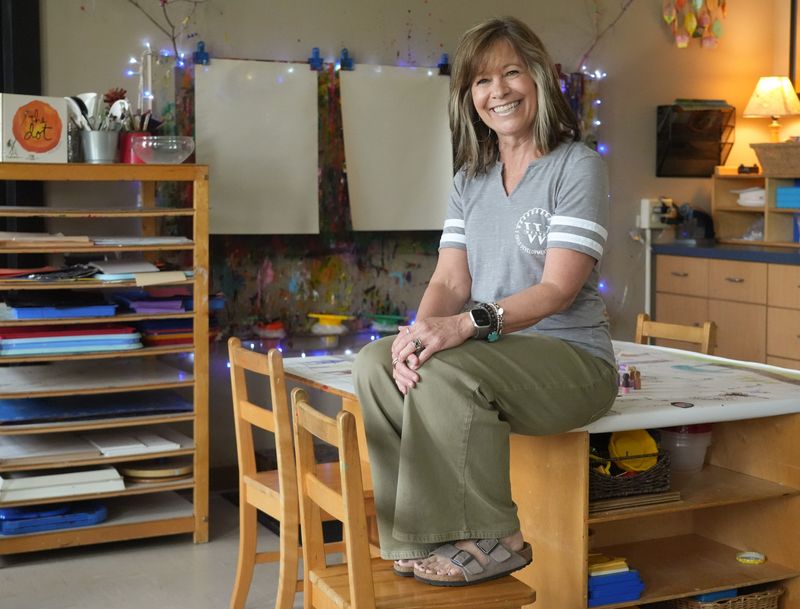
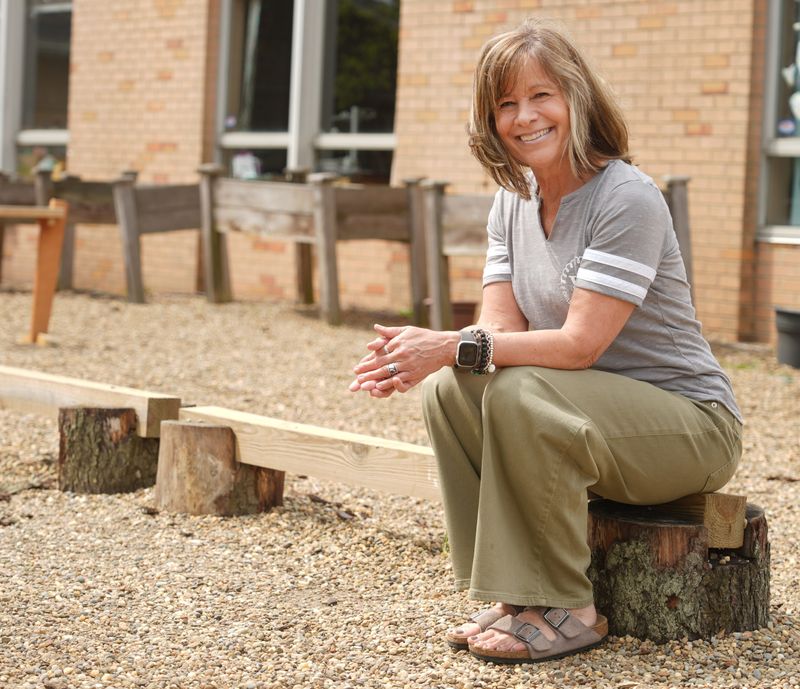
Susie Stoffer serves as the executive director/principal at Weaver Child Development Center in Canton.

“My heart is so full — principal and kindergarten teacher,” she said. “Truly, the best of both worlds. Leading the school while still experiencing the joy and wonder of the classroom.”
Alongside her work at Weaver, she serves as an adjunct professor and provides professional development in leadership and Reggio-inspired practices.
“With over 30 years in education and degrees in education, counseling, and leadership, my greatest lessons have come from hands-on experiences with children, families, and life itself,” Stoffer said.
She and her husband, Mike, live just outside of Louisville with a golden retriever named Bernie — who “pretty much runs the show!” They are also grateful for their blended family of four adult children.
“This season of life is especially meaningful as our family continues to grow and celebrate new milestones,” she said.
What sets Weaver Child Development Center apart?
At Weaver, we believe childhood should be protected, not rushed. Our classrooms are places where curiosity is taken seriously, and children are given the time and space to explore, ask questions, and figure things out.
We are a Reggio-inspired school serving children from toddlers through sixth grade, with our seventh and eighth grade expansion just around the corner. We’re a small school by design, which allows us to truly know our students — their interests, how they think, and what they are curious about.
Learning here often begins with something a child notices or wonders about. One simple question can turn into building projects, writing books, designing and problem-solving together. We want them to love learning, think deeply, and see themselves as capable people in the world.
Just as important is the way our staff works together — our teachers collaborate regularly, engaging in weekly dialogue and reflection to study children’s thinking and consider how best to extend their learning.
Would you detail what the Reggio Emilia approach to education is?
The Reggio Emilia approach is an educational philosophy that began in the town of Reggio Emilia, Italy, after World War II. It views children as capable, curious and full of potential.
Rather than seeing learning as something delivered by the teacher, Reggio schools view learning as something that grows through relationships — between children, teachers, families and the environment.
Teachers carefully observe and listen to children, then design experiences that extend their thinking. The environment is considered the “third teacher,” meaning the classroom itself is intentionally designed to invite exploration, creativity and collaboration. Documentation — photographs, conversations and student work — helps us make children’s thinking visible.
At its heart, the Reggio approach respects children as active participants in their own learning.
What has been the most rewarding aspect of working with elementary children?
Watching children discover that they are capable. There is a moment when a child realizes they can read a sentence on their own, solve a problem or explain an idea to their classmates. You can almost see their confidence grow in real time.
Children are wonderfully honest thinkers. They ask big questions, notice details adults often miss, and approach learning with genuine curiosity. Being part of that process — and helping protect that sense of wonder — is incredibly rewarding.
What has been the most spontaneous thing you have done lately?
That’s an interesting question, because my husband and I really value a simple life. We’ve come to appreciate that the everyday moments are often the most meaningful, and we’re intentional about not rushing through them.
That said, I’m always open to spontaneity if it leads to something beautiful to discover. In a classroom, that often means being willing to pause, listen, and follow an idea as it unfolds. Being open to spontaneous moments can lead to deeper thinking, creativity and connections that might not happen otherwise.
Sometimes the best learning begins when we step away from the plan and trust where the moment leads.
Do you enjoy or dislike surprises?
I think surprises can be really fun — it just depends on the surprise.
The best surprises are the ones that bring joy or thoughtfulness into someone’s day. In a school setting, those happen all the time. A child says something unexpected, makes a connection no one saw coming, or turns a simple idea into something much bigger.
Those are my favorite kinds of surprises — the kind children bring every day.
Editor’s note: Five questions with … is a Sunday feature that showcases a member of the Stark County community. If you’d like to recommend someone to participate, send an email to newsroom@cantonrep.com.
This article originally appeared on The Repository: ‘My heart is so full.’ Meet Susie Stoffer, principal at Weaver Child Development Center
Reporting by Patricia Faulhaber, Special to the Canton Repository / The Repository
USA TODAY Network via Reuters Connect