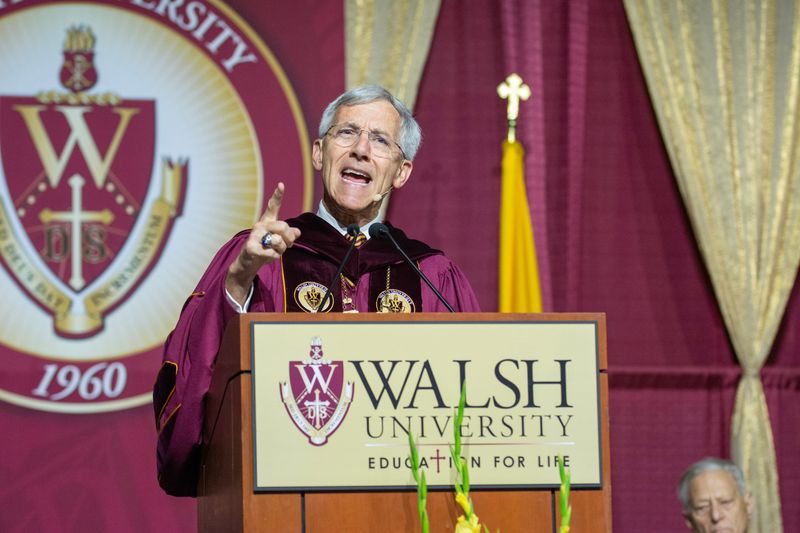
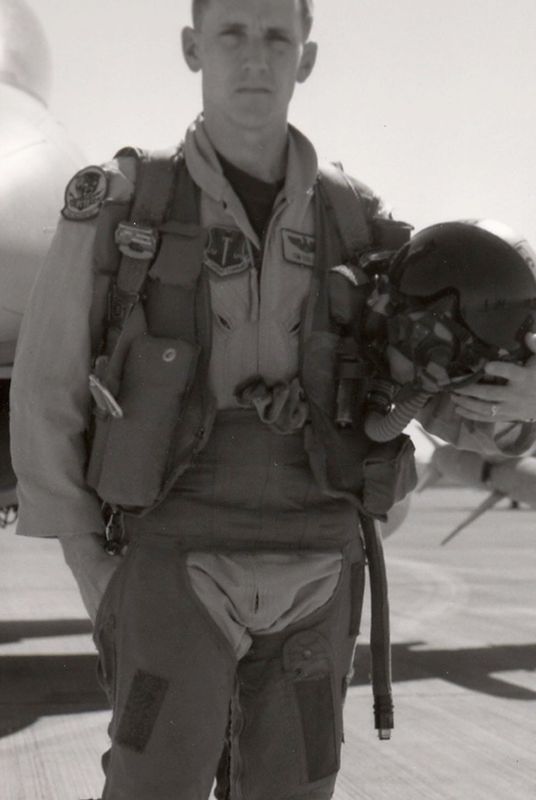
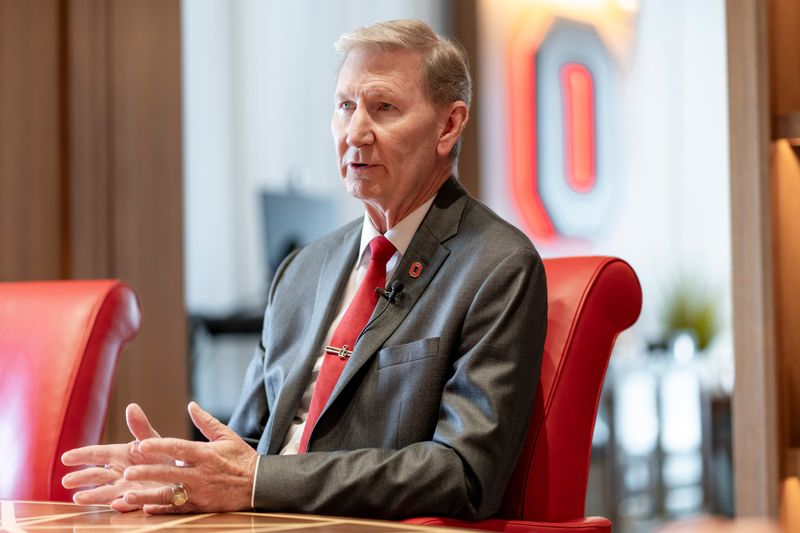
As a youngster embarking on his military career at Georgia Military College and later the Air Force Academy, Walsh University President Tim Collins’ purpose was serving his country.

After a successful career as a fighter pilot and instructor in the U.S. Air Force, his purpose shifted again as he took on various leadership roles at Johns Hopkins University. But in 2019, Collins began thinking about what was next.
That new purpose found him. A consultant suggested he was the right fit to lead a university. He took over as president of Walsh, a private Catholic university with more than 2,100 students in North Canton.
“I felt like I can do this. I felt like I was being called to do this,” Collins said. “This is still very much service.”
Collins is among a growing number of retired military members leading public and private colleges and universities — big and small — across the country. In Ohio, in addition to Collins, Northeast Ohio Medical University President John Langell is a retired U.S. Air Force colonel and Ohio State University President Walter “Ted” Carter is a retired U.S. Navy vice admiral and former superintendent of the U.S. Naval Academy.
Elsewhere, the University of Arkansas, Coppin State University, Hampton University, University of Kansas, Liberty University, Norwich University, University of Texas at El Paso and Wingate University are among those being run by Air Force, Army, Coast Guard, Marine Corps and Navy veterans.
A study by the Governing Boards of Universities and Colleges found “in order to continue to diversify the presidencies, search firms, boards and search committees will need to continue to cultivate and be open to candidates who are coming from nontraditional paths to the presidency.”
College and university leaders now face increased pressure related to issues such as racial injustice, decline in public trust in higher education and lingering effects of the pandemic and they have seen a decline in traditional candidates coming from the academic world.
Military leaders often possess strong skills in strategy, organizational management, crisis response and team cohesion.
“The military is renowned for cultivating exceptional leaders who thrive in diverse and challenging environments — qualities that translate seamlessly to guiding institutions of higher education,” G.I.Jobs.com managing editor Dan Fazio wrote in the February edition of the magazine, which featured showcased presidents with military backgrounds.
‘Military people are trained early on about service.’
Collins, who became Walsh’s seventh president, said military members have specific skill sets they bring to the table — especially officers.
They are mission focused. They know how to manage resources and are strategic planners, he said.
“I had a lot of responsibility at a young age (in the Air Force),” Collins explained. “We were always thinking about strategy and as Walsh’s president I have to look forward and plan for the future.”
Military leaders also build their teams.
“You have to build organizations where you work together,” he added.
Discipline learned in the military helps with a multitude of skills from time management to being direct and intentional with actions.
“Those attributes can be attractive to higher education,” Collins said. “Higher education has changed a lot. This is one of the most demanding periods in the history of higher education. People don’t value a higher education. The government wants to be more involved. Enrollment is dropping.”
Langell, president of the Northeast Ohio Medical University, leadership is complex and is shaped by individual life experiences. But both he and Collins agreed they also want to serve.
Whether it’s their country or the students and staff at their schools, they learned long ago to put others first.
“Military people are trained early on about service,” Collins said. “This public service is about the future. It’s about putting my thumbprint on people who are building our society going forward. It feels like a natural function of my service in this public role.”
Carter, the Ohio State president who received the Distinguished Flying Cross with combat distinction for valor and the Bronze Star for flying combat missions in Iraq, Afghanistan, Kuwait, Bosnia and Kosovo, said during a Veterans Day ceremony on campus last year that the call to serve does not end when veterans retire from the military.
“We understand that service continues even after we take the uniform off,” he said.
‘The structured, mission-driven and service-oriented nature of military leadership aligns well with the demands of higher education, especially in times of change and uncertainty.’
Great leaders share a few essential traits, including being able to unify and support a high-performing team around a compelling mission and vision, as well as being able to adapt a leadership style to fit the moment.
The U.S. military’s culture is deeply rooted in leadership development. From the moment an officer is commissioned in the military, they are put on a path of structured and continuous professional growth, Langell said.
The general focus, he said, should be on servant leadership grounded in integrity, transparency and trust.
“Those qualities are what transform a leader from good to great and allow a team to reach its highest potential,” Langell added.
“The structured, mission-driven and service-oriented nature of military leadership aligns well with the demands of higher education, especially in times of change and uncertainty,” he said. “But in the end, it’s less about background and more about results — how effectively a leader brings people together, builds trust and helps the university thrive.”
At universities, Langell said, the focus tends to be on professional development and academic excellence rather than developing great leaders.
These skills make great professors but doesn’t address developing good leaders, he said.
“I think that is why some university trustees see leaders with military backgrounds as attractive candidates for presidencies,” Langell said. “These candidates often possess strong skills in strategy, organizational management, crisis response and team cohesion.”
‘The hard part of leadership is getting up and doing simple things every morning whether you feel like it or not.’
Mike Kachilla, a professor in the University of Mount Union School of Business who developed and runs a leadership program at the school, said former military members are attractive to colleges and universities because they are adaptable.
A Marine Corps colonel who spent 22 years in the service, Kachilla said anyone who spent time in the military has learned to adapt. One day, they might be leading a squadron and the next keeping track of equipment worth millions or recruiting.
That adaptability coupled with other leadership skills of delegation, organization, self-discipline, self-confidence and self-sacrifice make good leaders.
A good leader can run any organization, Kachilla added.
“I tell my students, the hard part of leadership is getting up and doing simple things every morning whether you feel like it or not. You suck it up and do it because you are leaders,” he said.
That’s what leaders like Collins and Langell do every day, Kachilla said.
The other thing they do is never stop learning.
Higher education is essential to create strong communities and leaders who help to improve the quality of life for its members, Langell said. To do that, educational intuitions have to invest in leadership development.
“Investing, as the military has, in intentional pathways to cultivate the next generation of academic and administrative leaders will ensure the long-term success of higher education and the community we serve,” he said.
Reach Amy at 330-775-1135 or amy.knapp@indeonline.com.
This article originally appeared on The Repository: More colleges, including Walsh, are hiring presidents with military service
Reporting by Amy L. Knapp, Massillon Independent / The Repository
USA TODAY Network via Reuters Connect