This is part of an Enquirer special report exploring older Cincinnatians’ struggle to secure affordable housing.

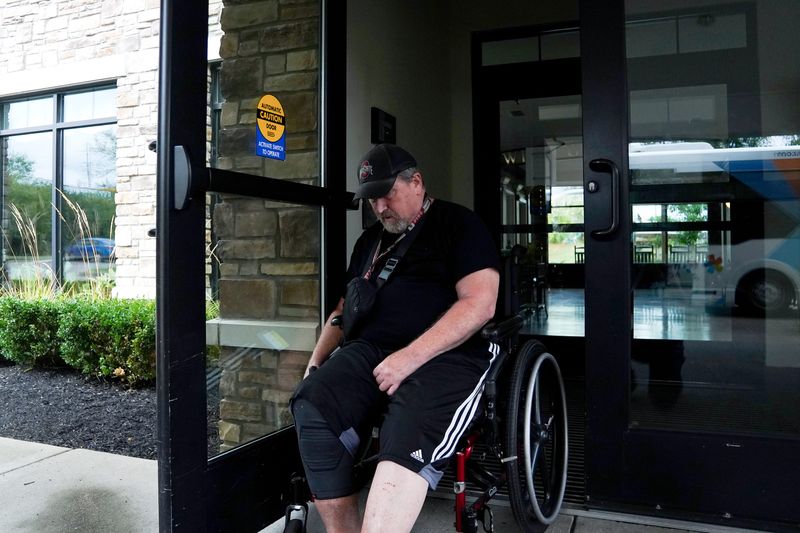
A few years after a stroke left Paul Jaymes partially paralyzed at age 57, he moved into senior housing way earlier than he’d expected.
West Union Square, a low-income senior housing complex in Colerain Township, was advertised with 70 units, a built-in coffee area, salon and movie theater. It was also closer to two of his three adult children.
Since 2018, he said, living in the Cincinnati Metropolitan Housing Authority-owned property has been disappointing.
The accessibility button to the building’s front door breaks often. When he tries to open the door himself, he risks tipping over his wheelchair. The electricity has gone out several times, disabling the elevators and taking away his ability to get to work.
Recently, management shut the trash chutes on each floor – a problem for Jaymes, who now has to carry trash bags to the gated dumpster across the street via wheelchair. A lot of the seniors there are stressed about this, he said.
“These aren’t life and death things, but it’s all one giant safety issue,” he said. “And whenever we call about a maintenance problem or the doors being broken, they claim they don’t have money to fix it.”
The housing agency, commonly called CMHA, said no formal complaints had been filed or submitted to management until July 31 of this year, and that Jaymes has been offered a reasonable accommodation to assist with trash removal.
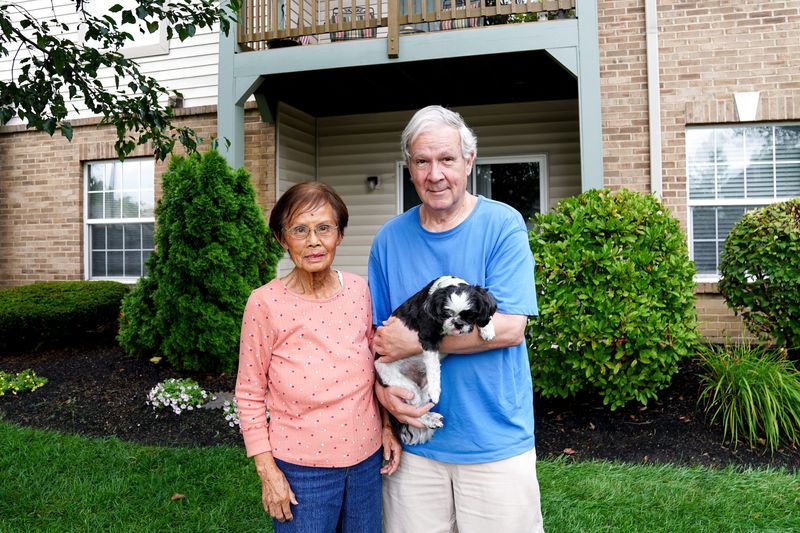
About 6 miles southwest of Jaymes’ apartment, Terry Murray, 76, and his wife Mickey Murray, 89, who struggles with stairs, encountered their own set of issues at Evergreen Retirement Community in Hartwell. What was meant to be the last place they ever wanted to live turned into an exhausting cat-and-mouse game to get building management to address basic maintenance issues in a timely manner, they say.
Two leaks, 11 mice and one snake later, they decided to move out of the one-story cottage less than two years into their stay.
Looking back, Terry calls the decision to move to Evergreen “a huge mistake.”
Both men, as seniors, live on fixed incomes and expected a roof over their heads where they could get support, timely help with maintenance problems, and to be treated with dignity and respect. Both said that wasn’t what they got.
Instead, Jaymes spent over 100 hours and Murray shelled out $80,000 trying to fight for the quality of life they were promised.
Millions of seniors stuck due to accessibility issues
For seniors today, finding the right place to live out the rest of their lives is intimidating for a number of reasons. Cost is just one factor.
Seniors contend with rising property taxes, increased medical expenses and a lack of housing options in general that fit their fixed income, lifestyle and accessibility needs.
Jaymes and the Murrays thought both West Union Square and Evergreen would be the ideal places to land after experiencing health issues that challenged their mobility.
Millions of seniors in the U.S. are dealing with these same problems. They often feel stuck between options that aren’t fully suited to their needs, whether that’s at home or somewhere else.
Still, there aren’t enough accessible housing units available in general for the number of older adults who need them.
“The accessibility issue is one that is going to be very, very pressing in the years to come,” said Jennifer Molinsky, a researcher who leads Harvard’s Housing and Aging Society Program.
Jaymes said he collects lease violations for speaking out
Every weekday morning before his 8 a.m. shift at Easterseals Redwood’s research kit packaging facility, Jaymes, 70, rolls his wheelchair into his kitchen, grips the edge of the counter, stands up and allows tremors to take over his body.
It’s an attempt to get this stroke-related symptom “out of his system,” he said, before he starts his day.
Because he can live independently now and his health care costs are no longer a major burden, he busies himself with his new part-time career and enjoys attending Cincinnati Shakespeare Company shows with his daughter, going to Reds’ games or fishing.
“I can’t believe I’ve come this far in 13 years,” he said. “I didn’t think I’d speak again. I didn’t think I’d stand up for any of my kids’ weddings.”
Like many people Jaymes’ age, health issues are expected. But what’s not a given is discrimination, something he believes is happening at his subsidized senior housing complex. Yet it’s something he feels particularly compelled to speak out against even if he collects multiple lease violations while doing it. His neighbors called him a “sacrificial lamb” for calling out maintenance issues and getting in trouble, which he said has happened multiple times with a recent change in on-site property management.
“I have to get mad and be motivated to spend so much time and energy doing this,” he said. “I think (the people in leadership) avoid these issues because they fear them themselves. They look at what we’re dealing with in our old age and they don’t want it to happen to them, so they don’t want to hear from us.”
CMHA told The Enquirer via email that West Union Square was “designed with an older generation in mind,” and it contains additional accessible features such as lower cabinets and sinks, handlebars in the bathrooms and larger door openings for wheelchairs.
“The building has no maintenance issues,” wrote Michelle Knight, CMHA spokesperson, and that “all items in the building that were reported to management have been repaired within a reasonable amount of time.”
But Jaymes’ concerns at West Union Square keep piling up and they’re pushing him out the door.
Last year, birds flew into the building through an open vent and made a nest in a vent above his stove. Management did nothing at first, he said, so he filed a nuisance complaint with the county’s public health department. CMHA said this was fixed once Jaymes submitted a work order. Public health inspectors determined that CMHA was in violation of state and county regulations, according to records obtained by The Enquirer.
While some of these are new problems, “the doors have been a problem since day one,” Jaymes said. Most recently, the accessibility button to the front door was broken for over seven weeks. He said he called the local building inspector, who then called the fire department, but the issue still wasn’t resolved.
“Here I am still fighting to just get in the door,” he added. “I’m just so disappointed.”
All of these accessibility challenges combined have forced Jaymes to spend countless hours “trying to get help,” he said.
But the trash chutes closing indefinitely is the final straw. In his eyes, the building is no longer truly accessible.
An influx of mice didn’t stop rent increases
Mickey Murray, who’s in the early stages of dementia, was the main reason Terry began looking to move out of their two-story condo back in 2019.
“She’s getting progressively worse,” said Terry, who became worried for her safety when she would climb the stairs in their old home. In a few years, he wonders whether Mickey will recognize him at all.
Mickey did most of the housework when Terry worked long hours as a truck scheduler in the oil industry. Now the roles have reversed.
At home, Terry does the cooking. Restaurants can be hard. It’s not uncommon that Mickey will ask a waitress the same question multiple times when they’re out to dinner.
But the move to Evergreen made life more stressful.
A leaking bedroom window took four months for maintenance to repair, said Murray, followed by a roof leak that took even longer. Then came a steady stream of mice inside the house and in their garage. Murray said he caught 11 mice before Evergreen management called a pest control worker.
The rent kept going up, regardless of his complaints: the $4,100 rent they paid in June 2019 jumped to $4,950 six months later.
“I knew how expensive it was going to be,” said Murray. “I did not know that they were going to blow me off on fixing leaking windows and leaking roofs.”
Shannon Ruedlinger, who became Evergreen’s executive director earlier this year, said staff works with contractors to “promptly resolve maintenance matters.”
“Monthly costs range based on the level of support needed,” said Ruedlinger. “Our focus is on providing each resident with a warm, safe, welcoming home.”
Can money buy quality of life for seniors?
Following the debacle at Evergreen, Terry and Mickey bought a one-story condo in Dent, on the West Side.
They figured they were better off on their own, and they had the finances to do it.
Their monthly payment went from $5,060 at Evergreen to less than $700 in their new home after they took out a loan and made a $72,000 down payment.
They’re on track to pay off their mortgage within the next decade. “I’m gonna die in this place,” said Murray.
Murray said he owes his life savings to BP’s medical plan for retirees, which allowed him and Mickey to receive coverage at employee rates for the rest of their lives after Murray worked at the oil company for 30 years. While millions of American seniors skip treatment because of the cost of health care, the Murrays haven’t had to do that.
The medical plan ended up paying for most of the treatment associated with Murray’s colon cancer, which required surgery to remove, and the immunotherapy infusions to treat the bladder cancer that followed. Without it, “I’d be broke,” said Murray. “I wouldn’t have any money.”
Jaymes doesn’t have the option for a new mortgage, let alone a market-rate rental unit. He pays $671 a month at West Union Square and spends about $288 a month on Access bus rides.
His paralysis stifles his ability to work more, and to stay in his CMHA unit, his income must remain between 30%-60% of the area median income, which is between $21,575 and $43,151. But Jaymes is OK with that because he loves his job and he technically likes his apartment, too. He even hopes to regain some of the strength in his left hand through occupational therapy one day.
He’s just tired of fighting his building management for a better quality of life. “I feel like I’m being dumped on,” he said. “Living here could be a lot easier.”
Jaymes is seriously considering moving to another apartment complex, but he’ll still need rent-restricted housing that’s accessible.
His choices in Greater Cincinnati are few and far between.
This article originally appeared on Cincinnati Enquirer: Hartwell retirement community resident pays $80K to flee mice, leaks
Reporting by Sydney Franklin and Elizabeth B. Kim, Cincinnati Enquirer / Cincinnati Enquirer
USA TODAY Network via Reuters Connect